


Neuroinflammation as a target for glaucoma therapy
- PMID: 30539803
- PMCID: PMC6334605
- DOI: 10.4103/1673-5374.245465
Neuroinflammation as a target for glaucoma therapy
Abstract
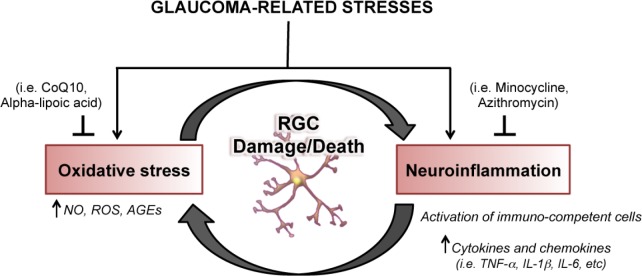
The pathogenesis of glaucoma is still not fully clarified but a growing body of evidence suggests that neuroinflammation and immune response are part of the sequence of pathological events leading to the optic neuropathy. Indeed, inflammation - involving the activation and proliferation of resident glial cells (astrocytes, Muller cells and microglia) and the release of a plethora of anti- and pro-inflammatory cytokines, chemokines and reactive oxygen species - has been reported as common features in clinical and experimental glaucoma. In the insulted retina, as for other neuronal tissues, pathogenic and reparative aspects coexist in the inflammatory process, with extent and persistency affecting the final outcome. In view of this, therapies aimed at modulating the immune and inflammatory responses may represent a promising approach for limiting the optic nerve damage and the loss of retinal ganglion cells associated with glaucoma.
Keywords: glaucoma; immune response; inflammasome; microglia; neurodegeneration; neuroinflammation; oxidative stress; retinal ganglion cells.
Conflict of interest statement
None
Figures
References
-
- Amantea D, Certo M, Petrelli F, Tassorelli C, Micieli G, Corasaniti MT, Puccetti P, Fallarino F, Bagetta G. Azithromycin protects mice against ischemic stroke injury by promoting macrophage transition towards M2 phenotype. Exp Neurol 275 Pt. 2016;1:116–125. - PubMed
-
- Baltmr A, Duggan J, Nizari S, Salt TE, Cordeiro MF. Neuroprotection in glaucoma - Is there a future role? Exp Eye Res. 2010;91:554–566. - PubMed
-
- Blumberg D, Skaat A, Liebmann JM. Emerging risk factors for glaucoma onset and progression. Prog Brain Res. 2015;221:81–101. - PubMed
-
- Levkovitch-Verbin H, Waserzoog Y, Vander S, Makarovsky D, Piven I. Minocycline upregulates pro-survival genes and downregulates pro-apoptotic genes in experimental glaucoma. Graefes Arch Clin Exp Ophthalmol. 2014;252:761–772. - PubMed
-
- Parisi V, Centofanti M, Gandolfi S, Marangoni D, Rossetti L, Tanga L, Tardini M, Traina S, Ungaro N, Vetrugno M, Falsini B. Effects of coenzyme Q10 in conjunction with vitamin E on retinal-evoked and cortical-evoked responses in patients with open-angle glaucoma. J Glaucoma. 2014;23:391–404. - PubMed
Publication types
LinkOut - more resources
Full Text Sources
