


Can Reproductive Life Plan-based counselling increase men's fertility awareness?
- PMID: 30541376
- PMCID: PMC6327788
- DOI: 10.1080/03009734.2018.1541948
Can Reproductive Life Plan-based counselling increase men's fertility awareness?
Abstract
Background: Many men have limited knowledge about reproductive health and fertility. The aim of the study was to evaluate if Reproductive Life Plan (RLP)-based counselling during a sexual health visit could increase men's fertility awareness.
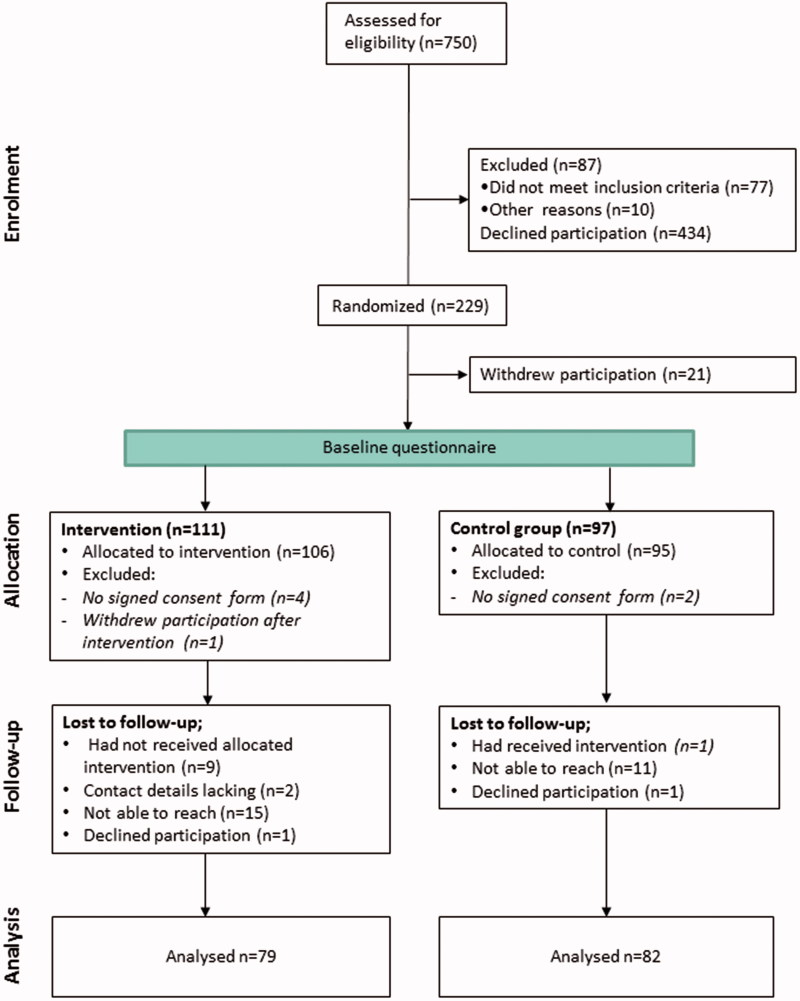
Material and methods: The study was a randomized controlled trial including 201 men aged 18-50 who visited either of two participating sexual health clinics in Sweden for sexually transmitted infection testing during 2014-2016. All men received standard care, and men in the intervention group (IG) also received oral and written RLP-based information about lifestyle and fertility. Awareness about fertility and lifestyle-related factors were the main outcomes, measured through a questionnaire before the intervention and through a telephone survey after three months. Impressions from the counselling were also assessed at follow-up.
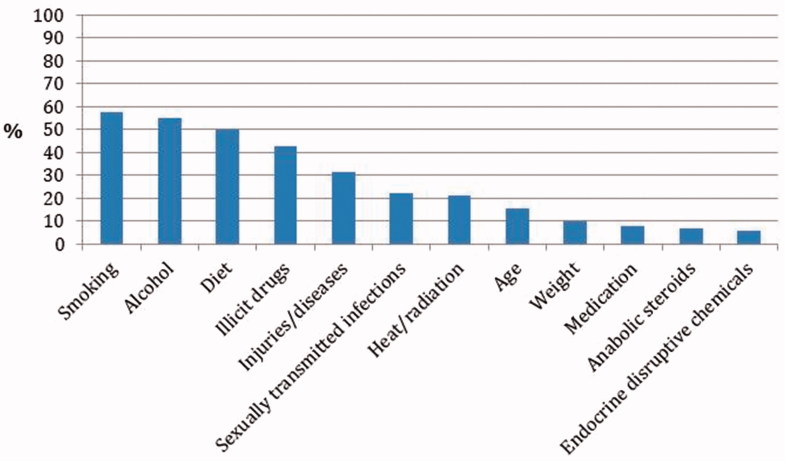
Results: A majority (71%) of men wanted children in the future. General fertility awareness increased from a mean score of 4.6 to 5.5 out of 12 (P = 0.004) in the IG. The mean number of accurate lifestyle factors (that could affect fertility) mentioned increased from 3.6 to 4.4 (P < 0.001) in the IG. There were no improvements in the control group. Among the men in the IG, 76% had a positive experience of the counselling, and 77% had received new information.
Conclusion: The intervention managed to increase different aspects of men's fertility awareness. In the future, the format for preconception care for men needs further development. Including men in preconception health policy guidelines and identifying suitable actors for care provision would be important first steps.
Keywords: ClinicalTrials.gov Identifier; Counselling; NCT02736214; fertility awareness; lifestyle; men; preconception care; reproduction.
Figures
References
-
- Homan GF, Davies M, Norman R. The impact of lifestyle factors on reproductive performance in the general population and those undergoing infertility treatment: a review. Hum Reprod Update. 2007;13:209–23. - PubMed
-
- Bunting L, Tsibulsky I, Boivin J. Fertility knowledge and beliefs about fertility treatment: findings from the International Fertility Decision-making Study. Hum Reprod. 2013;28:385–97. - PubMed
-
- Daniluk JC, Koert E. Childless Canadian men’s and women’s childbearing intentions, attitudes towards and willingness to use assisted human reproduction. Hum Reprod. 2012;27:2405–12. - PubMed
Publication types
MeSH terms
LinkOut - more resources
Full Text Sources
Other Literature Sources
Medical
