


Sphingosine 1-phosphate (S1P) reduces hepatocyte growth factor-induced migration of hepatocellular carcinoma cells via S1P receptor 2
- PMID: 30543684
- PMCID: PMC6292590
- DOI: 10.1371/journal.pone.0209050
Sphingosine 1-phosphate (S1P) reduces hepatocyte growth factor-induced migration of hepatocellular carcinoma cells via S1P receptor 2
Abstract
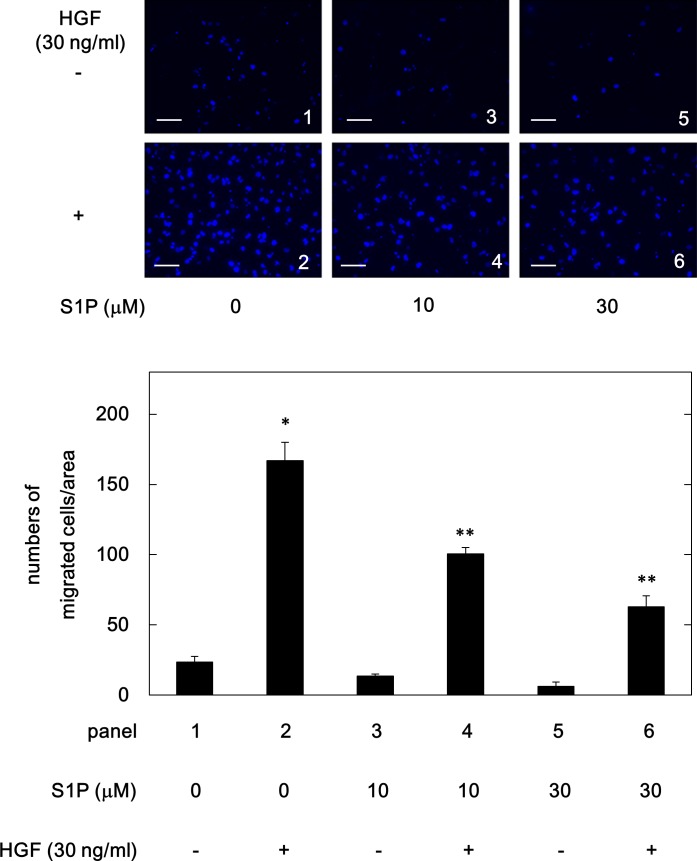
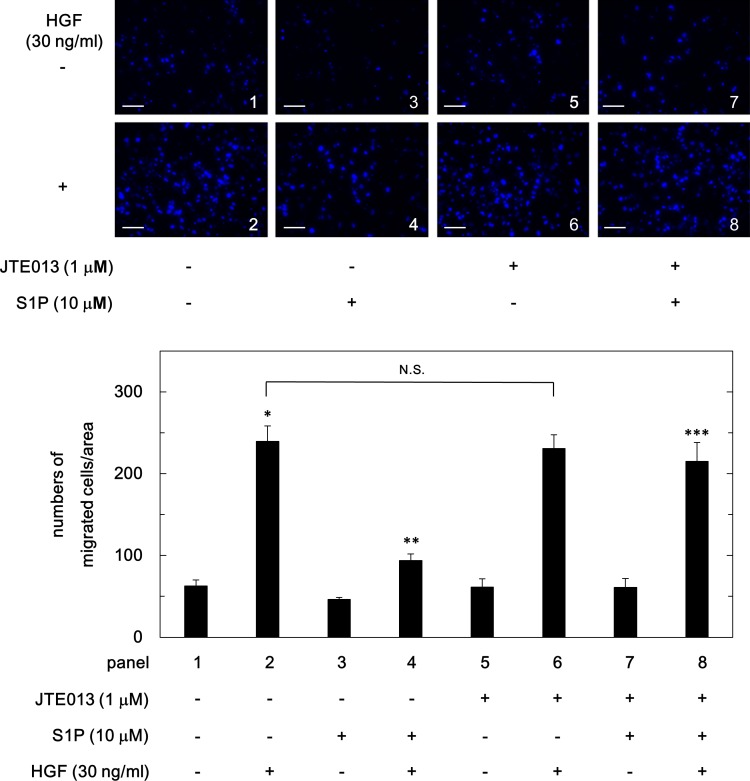
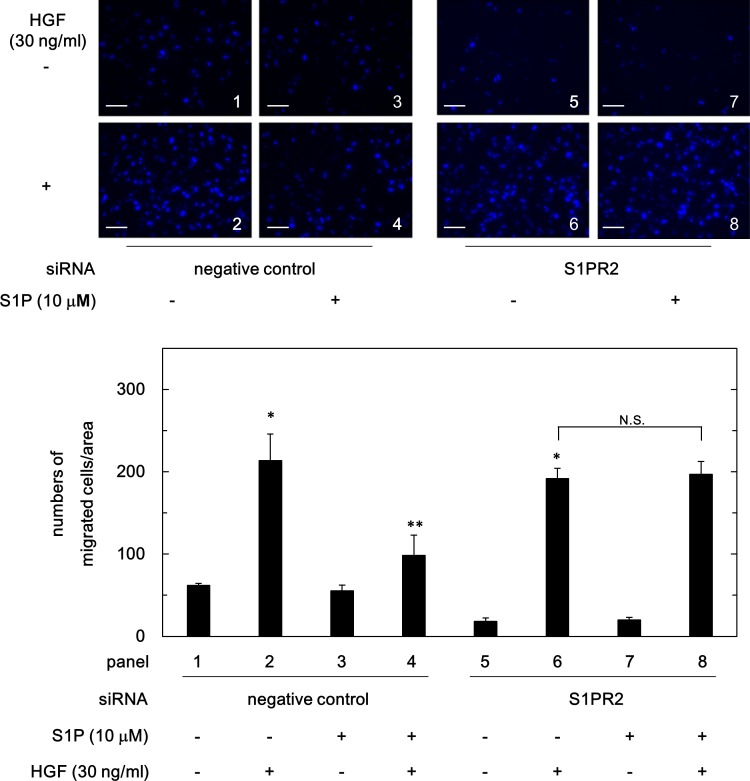
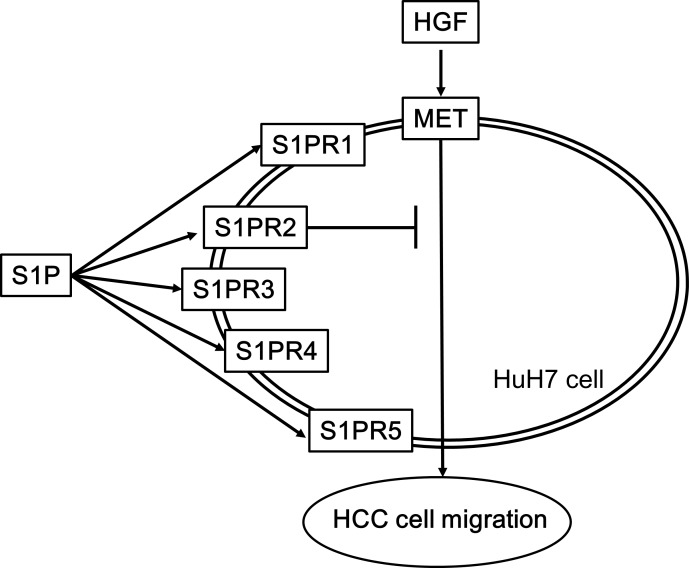
A bioactive lipid, sphingosine 1-phosphate (S1P), acts extracellularly as a potent mediator, and is implicated in the progression of various cancers including hepatocellular carcinoma (HCC). S1P exerts its functions by binding to five types of specific receptors, S1P receptor 1 (S1PR1), S1PR2, S1PR3, S1PR4 and S1PR5 on the plasma membrane. However, the exact roles of S1P and each S1PR in HCC cells remain to be clarified. In the present study, we investigated the effect of S1P on the hepatocyte growth factor (HGF)-induced migration of human HCC-derived HuH7 cells, and the involvement of each S1PR. S1P dose-dependently reduced the HGF-induced migration of HuH7 cells. We found that all S1PRs exist in the HuH7 cells. Among each selective agonist for five S1PRs, CYM5520, a selective S1PR2 agonist, significantly suppressed the HGF-induced HuH7 cell migration whereas selective agonists for S1PR1, S1PR3, S1PR4 or S1PR5 failed to affect the migration. The reduction of the HGF-induced migration by S1P was markedly reversed by treatment of JTE013, a selective antagonist for S1PR2, and S1PR2- siRNA. These results strongly suggest that S1P reduces the HGF-induced HCC cell migration via S1PR2. Our findings may provide a novel potential of S1PR2 to therapeutic strategy for metastasis of HCC.
Conflict of interest statement
The authors have declared that no competing interests exist.
Figures


References
-
- Liovet JM, Zucman-Rossi J, Pikarsky E, Sangro B, Schwartz M, Sherman M, et al. Hepatocellular carcinoma. Nat Rev Dis Primers. 2016; 2: 1–23. - PubMed
-
- Natsuizaka M, Omura T, Akaike T, Kuwata Y, Yamazaki K, Sato T, et al. Clinical features of hepatocellular carcinoma with extrahepatic metastasis. J Gastroenterol Hepatol. 2005; 20: 1781–1787. 10.1111/j.1440-1746.2005.03919.x - DOI - PubMed
-
- Sneag DB, Krajewski K, Giardino A, O’Regan KN, Shinagare AB, Jagannathan JP, et al. Extrahepatic spread or hepatocellular carcinoma: Spectrum of imaging findings. AJR Am J Roentgenol. 2011; 197: W658–W664. 10.2214/AJR.10.6402 - DOI - PubMed
-
- Poon RTP, Fan ST, Lo CM, Liu CL, Wong J. Difference in tumor invasiveness in cirrhotic patients with hepatocellular carcinoma fulfilling the Milan criteria treated by resection and transplantation. Impact on long-term survival. Ann Surg. 2007; 245: 51–58. 10.1097/01.sla.0000225255.01668.65 - DOI - PMC - PubMed
-
- Toso C, Mentha G, Majno P. Liver transplantation for hepatocellular carcinoma: Five steps to prevent recurrence. Am J Transplant. 2011; 11: 2031–2035. 10.1111/j.1600-6143.2011.03689.x - DOI - PubMed
Publication types
MeSH terms
Substances
LinkOut - more resources
Full Text Sources
Medical
