


Sulfonamide Inhibition Studies of a New β-Carbonic Anhydrase from the Pathogenic Protozoan Entamoeba histolytica
- PMID: 30544802
- PMCID: PMC6321117
- DOI: 10.3390/ijms19123946
Sulfonamide Inhibition Studies of a New β-Carbonic Anhydrase from the Pathogenic Protozoan Entamoeba histolytica
Abstract
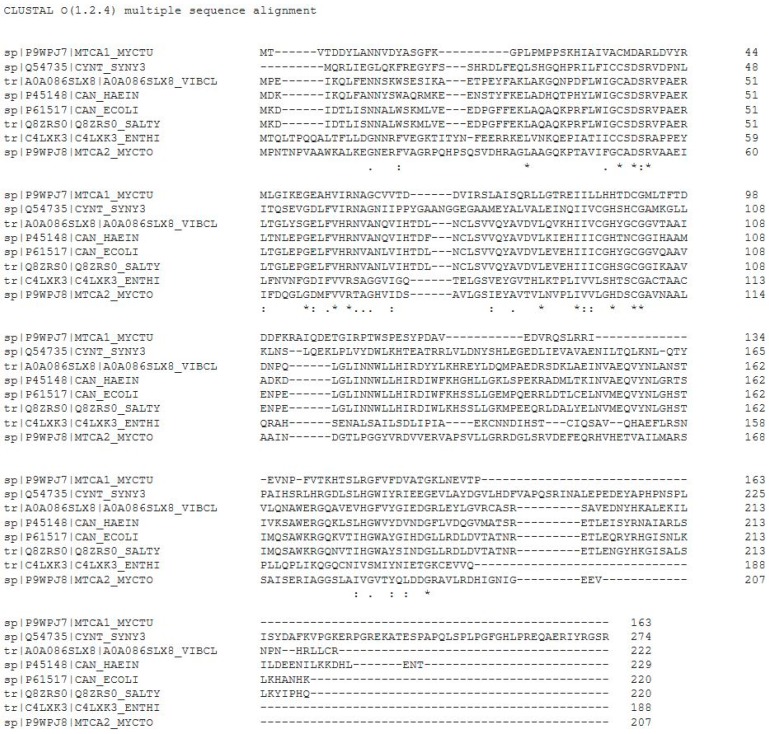
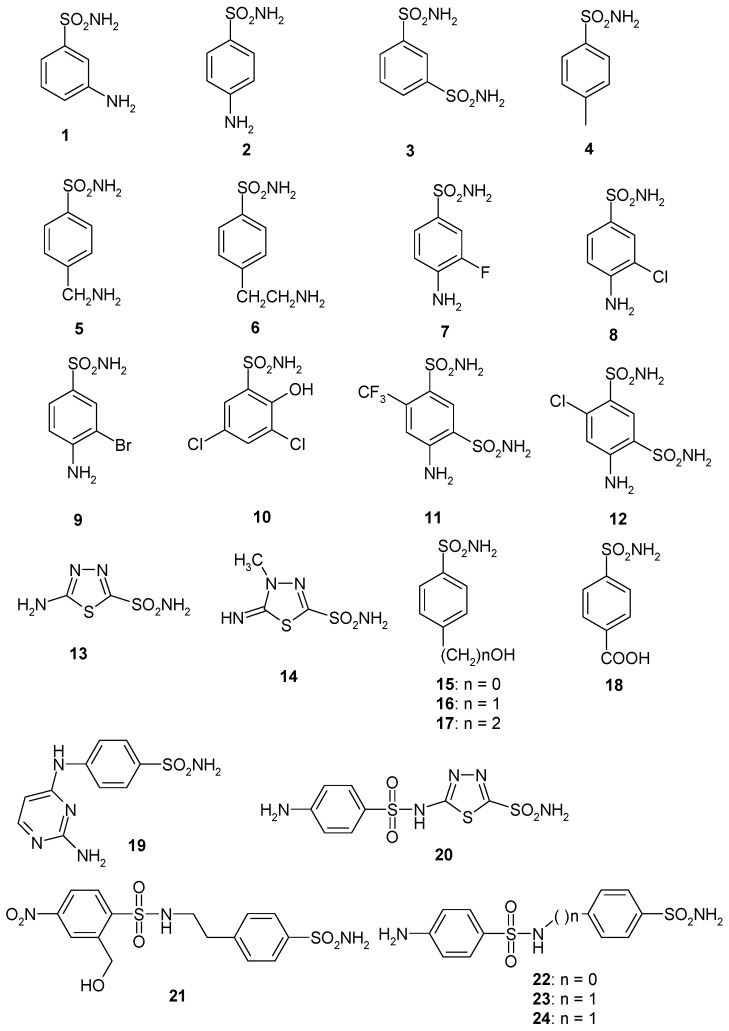
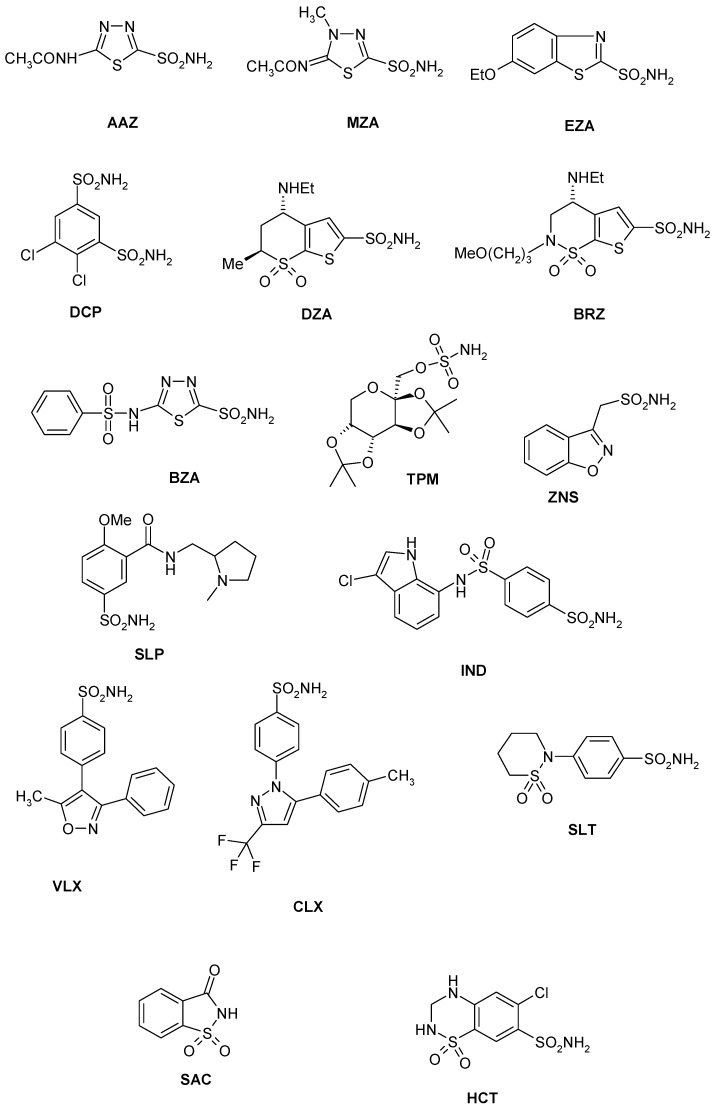
A newly described β-carbonic anhydrase (CA, EC 4.2.1.1) from the pathogenic protozoan Entamoeba histolytica, EhiCA, was recently shown to possess a significant catalytic activity for the physiologic CO₂ hydration reaction (kcat of 6.7 × 10⁵ s-1 and a kcat/Km of 8.9 × 10⁷ M-1 s-1). A panel of sulphonamides and one sulfamate, some of which are clinically used drugs, were investigated for their inhibitory properties against EhiCA. The best inhibitors detected in the study were 4-hydroxymethyl/ethyl-benzenesulfonamide (KIs of 36⁻89 nM), whereas some sulfanilyl-sulfonamides showed activities in the range of 285⁻331 nM. Acetazolamide, methazolamide, ethoxzolamide, and dichlorophenamide were less effective inhibitors (KIs of 509⁻845 nM) compared to other sulfonamides investigated here. As β-CAs are not present in vertebrates, the present study may be useful for detecting lead compounds for the design of more effective inhibitors with potential to develop anti-infectives with alternative mechanisms of action.
Keywords: Entamoeba histolytica; carbonic anhydrase; inhibitor; metalloenzymes; protozoan; sulfamates; sulfonamides.
Conflict of interest statement
The authors do not declare conflict of interest.
Figures
References
-
- Costa J.O., Resende J.A., Gil F.F., Santos J.F.G., Gomes M.A. Prevalence of Entamoeba histolytica and other enteral parasitic diseases in the metropolitan region of Belo Horizonte, Brazil. A cross-sectional study. Sao Paulo Med. J. 2018;136:319–323. doi: 10.1590/1516-3180.2018.0036170418. - DOI - PMC - PubMed
MeSH terms
Substances
LinkOut - more resources
Full Text Sources
Research Materials
Miscellaneous
