


His Resynchronization Versus Biventricular Pacing in Patients With Heart Failure and Left Bundle Branch Block
- PMID: 30545450
- PMCID: PMC6290113
- DOI: 10.1016/j.jacc.2018.09.073
His Resynchronization Versus Biventricular Pacing in Patients With Heart Failure and Left Bundle Branch Block
Abstract
Background: His bundle pacing is a new method for delivering cardiac resynchronization therapy (CRT).
Objectives: The authors performed a head-to-head, high-precision, acute crossover comparison between His bundle pacing and conventional biventricular CRT, measuring effects on ventricular activation and acute hemodynamic function.
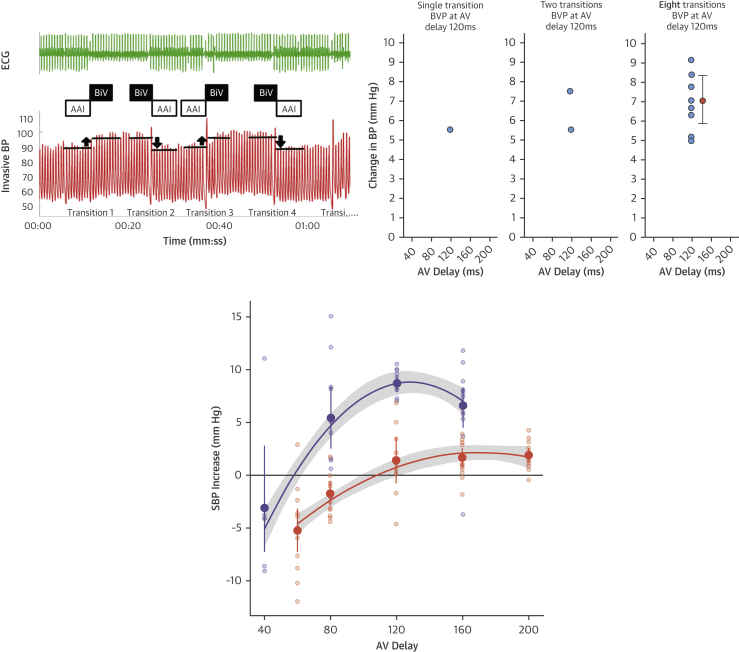
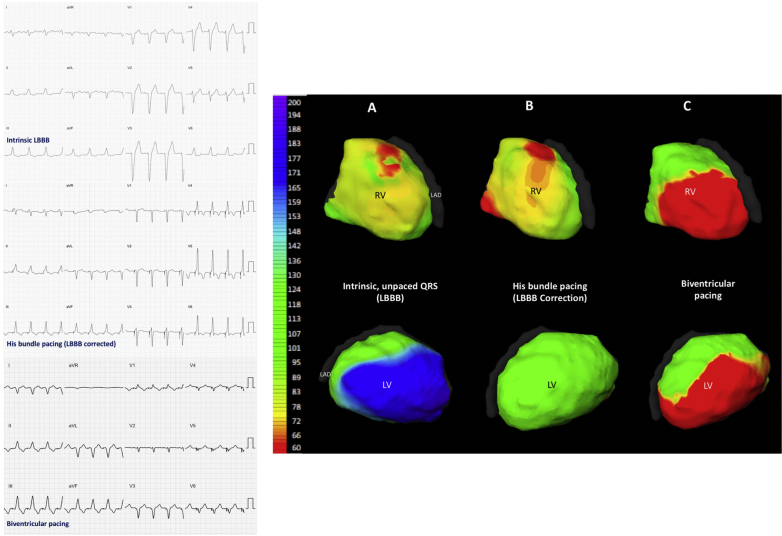
Methods: Patients with heart failure and left bundle branch block referred for conventional biventricular CRT were recruited. Using noninvasive epicardial electrocardiographic imaging, the authors identified patients in whom His bundle pacing shortened left ventricular activation time. In these patients, the authors compared the hemodynamic effects of His bundle pacing against biventricular pacing using a high-multiple repeated alternation protocol to minimize the effect of noise, as well as comparing effects on ventricular activation.
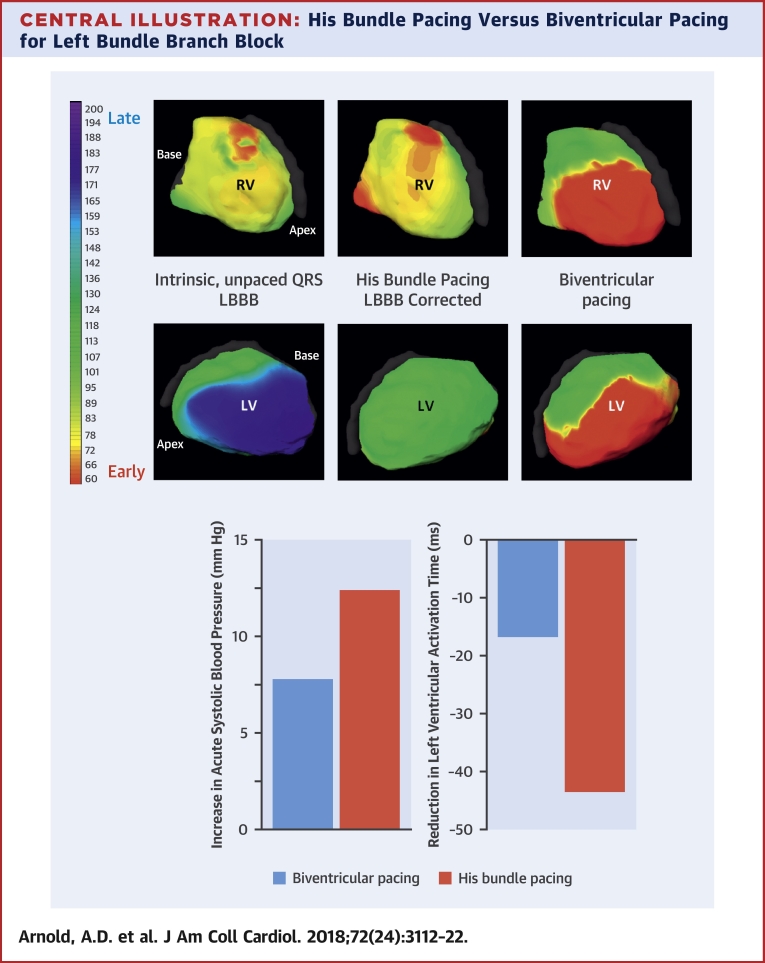
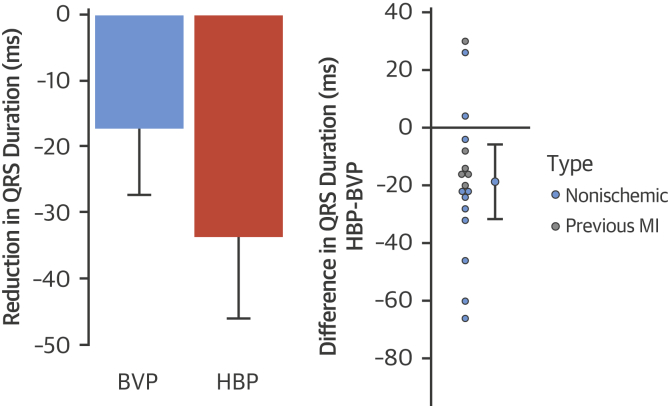
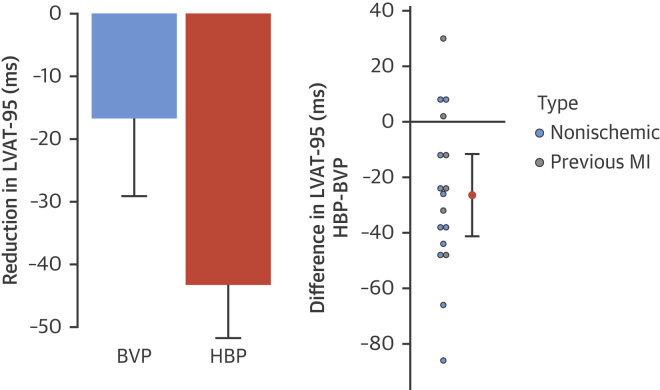
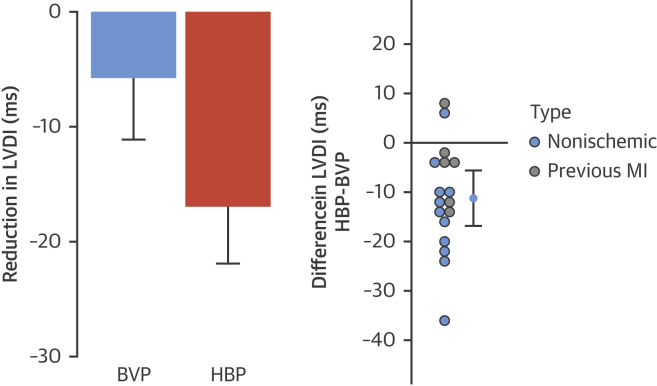
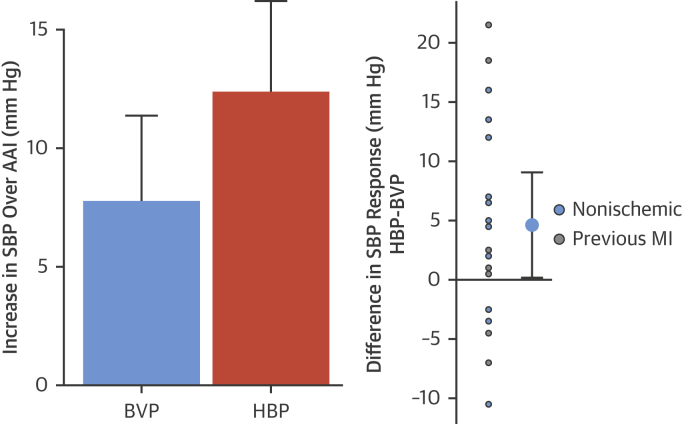
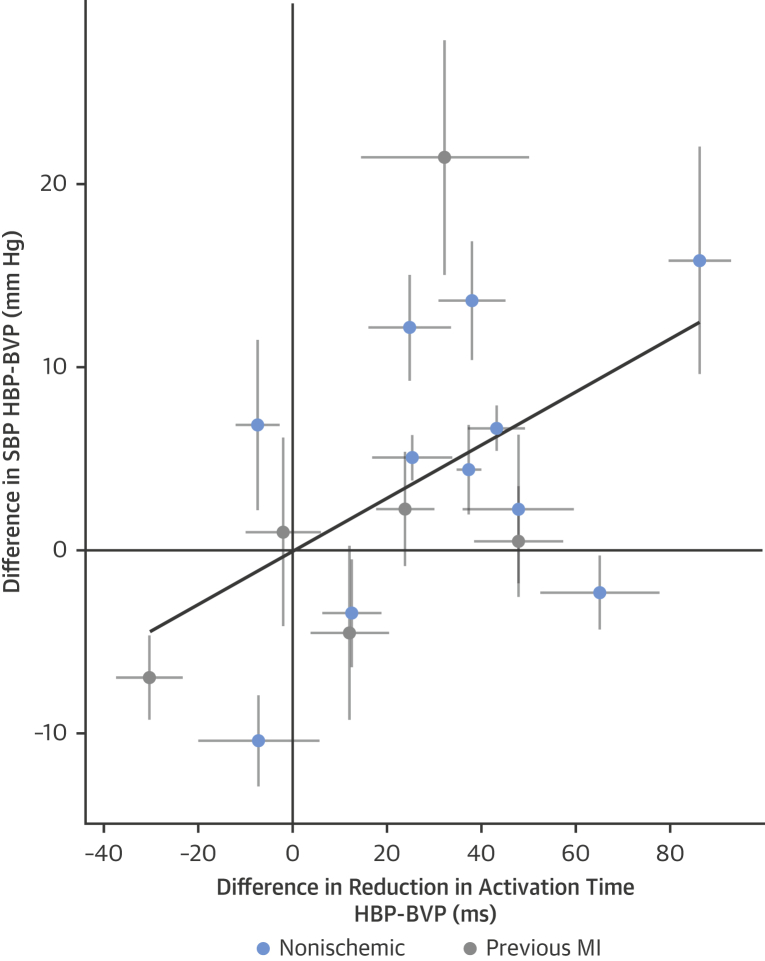
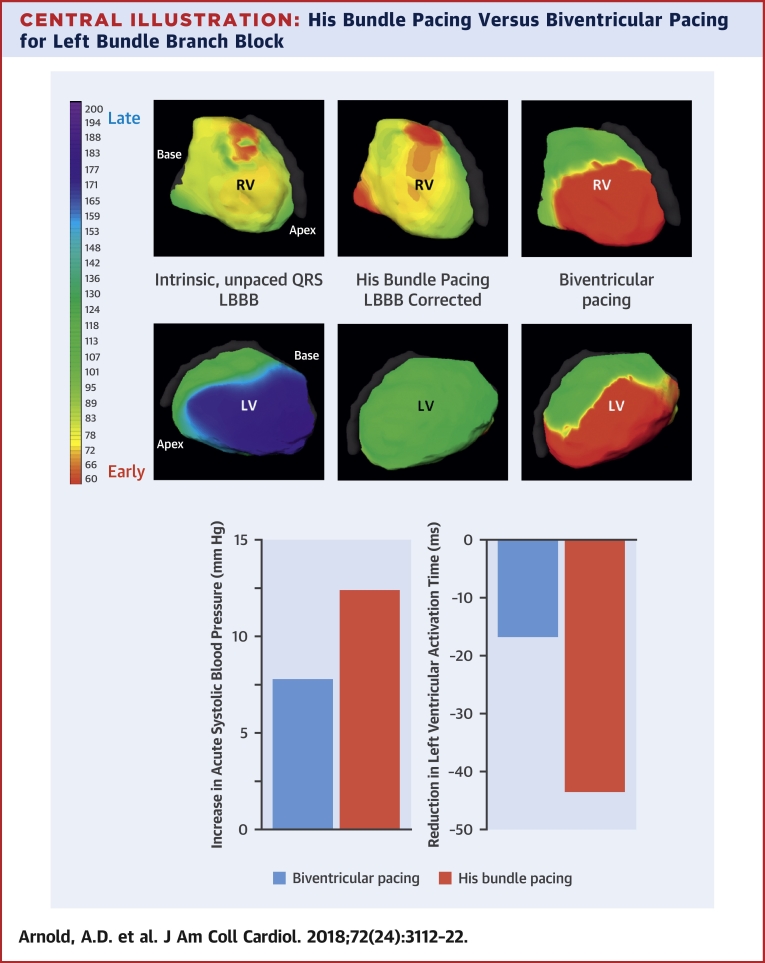
Results: In 18 of 23 patients, left ventricular activation time was significantly shortened by His bundle pacing. Seventeen patients had a complete electromechanical dataset. In them, His bundle pacing was more effective at delivering ventricular resynchronization than biventricular pacing: greater reduction in QRS duration (-18.6 ms; 95% confidence interval [CI]: -31.6 to -5.7 ms; p = 0.007), left ventricular activation time (-26 ms; 95% CI: -41 to -21 ms; p = 0.002), and left ventricular dyssynchrony index (-11.2 ms; 95% CI: -16.8 to -5.6 ms; p < 0.001). His bundle pacing also produced a greater acute hemodynamic response (4.6 mm Hg; 95% CI: 0.2 to 9.1 mm Hg; p = 0.04). The incremental activation time reduction with His bundle pacing over biventricular pacing correlated with the incremental hemodynamic improvement with His bundle pacing over biventricular pacing (R = 0.70; p = 0.04).
Conclusions: His resynchronization delivers better ventricular resynchronization, and greater improvement in hemodynamic parameters, than biventricular pacing.
Keywords: ECGI; His bundle pacing; His resynchronization therapy; biventricular pacing; cardiac resynchronization therapy; noninvasive epicardial mapping.
Copyright © 2018 The Authors. Published by Elsevier Inc. All rights reserved.
Figures
Comment in
-
His Bundle-CRT: Elegant Old Science Finds its Modern Clinical Application.J Am Coll Cardiol. 2018 Dec 18;72(24):3123-3125. doi: 10.1016/j.jacc.2018.09.074. J Am Coll Cardiol. 2018. PMID: 30545451 No abstract available.
References
-
- Sohaib S., Chen Z., Whinnett Z.I. Meta-analysis of symptomatic response attributable to the pacing component of cardiac resynchronization therapy. Eur J Heart Fail. 2013;15:1419–1428. - PubMed
-
- Leclercq C., Cazeau S., Le Breton H. Acute hemodynamic effects of biventricular DDD pacing in patients with end-stage heart failure. J Am Coll Cardiol. 1998;32:1825–1831. - PubMed
-
- Cleland J.G., Daubert J.-C., Erdmann E. The effect of cardiac resynchronization on morbidity and mortality in heart failure. N Engl J Med. 2005;352:1539–1549. - PubMed
Publication types
MeSH terms
Grants and funding
LinkOut - more resources
Full Text Sources
Medical
Research Materials
