


Mind the gaps: overlooking inaccessible regions confounds statistical testing in genome analysis
- PMID: 30547739
- PMCID: PMC6293655
- DOI: 10.1186/s12859-018-2438-1
Mind the gaps: overlooking inaccessible regions confounds statistical testing in genome analysis
Abstract
Background: The current versions of reference genome assemblies still contain gaps represented by stretches of Ns. Since high throughput sequencing reads cannot be mapped to those gap regions, the regions are depleted of experimental data. Moreover, several technology platforms assay a targeted portion of the genomic sequence, meaning that regions from the unassayed portion of the genomic sequence cannot be detected in those experiments. We here refer to all such regions as inaccessible regions, and hypothesize that ignoring these regions in the null model may increase false findings in statistical testing of colocalization of genomic features.
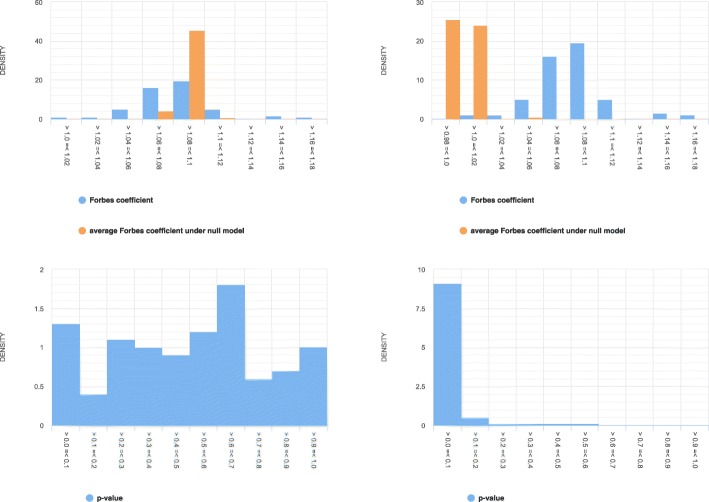
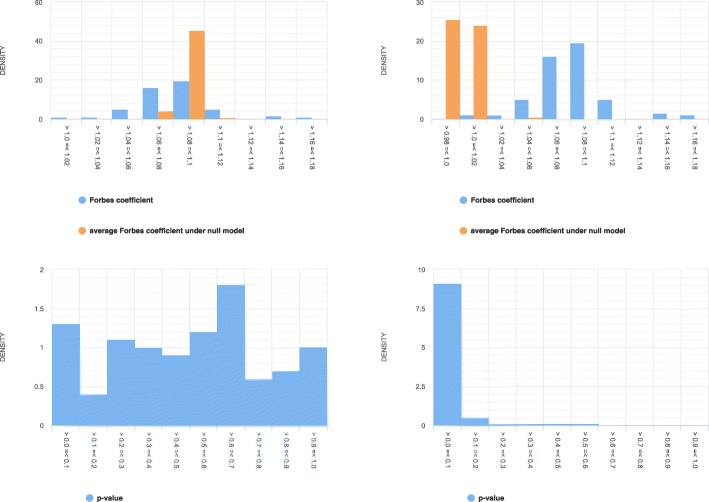
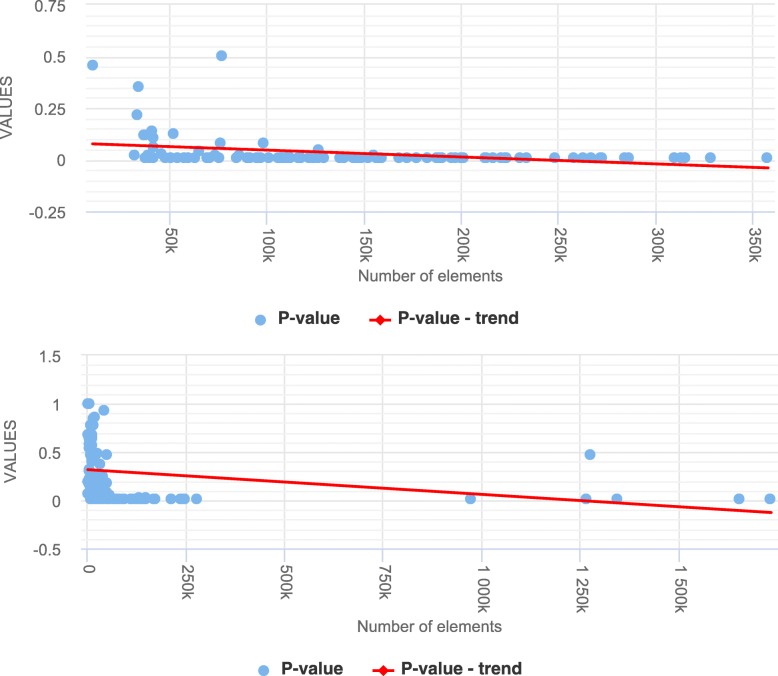
Results: Our explorative analyses confirm that the genomic regions in public genomic tracks intersect very little with assembly gaps of human reference genomes (hg19 and hg38). The little intersection was observed only at the beginning and end portions of the gap regions. Further, we simulated a set of synthetic tracks by matching the properties of real genomic tracks in a way that nullified any true association between them. This allowed us to test our hypothesis that not avoiding inaccessible regions (as represented by assembly gaps) in the null model would result in spurious inflation of statistical significance. We contrasted the distributions of test statistics and p-values of Monte Carlo-based permutation tests that either avoided or did not avoid assembly gaps in the null model when testing colocalization between a pair of tracks. We observed that the statistical tests that did not account for assembly gaps in the null model resulted in a distribution of the test statistic that is shifted to the right and a distribution of p-values that is shifted to the left (indicating inflated significance). We observed a similar level of inflated significance in hg19 and hg38, despite assembly gaps covering a smaller proportion of the latter reference genome.
Conclusion: We provide empirical evidence demonstrating that inaccessible regions, even when covering only a few percentages of the genome, can lead to a substantial amount of false findings if not accounted for in statistical colocalization analysis.
Keywords: Assembly gaps; BED format; Co-occurrence analysis; Colocalization analysis; Genomic overlap analysis; Reference genome; Region set enrichment analysis; Statistical genome analysis.
Conflict of interest statement
Ethics approval and consent to participate
Not applicable.
Consent for publication
Not applicable.
Competing interests
The authors declare that they have no competing interests.
Publisher’s Note
Springer Nature remains neutral with regard to jurisdictional claims in published maps and institutional affiliations.
Figures
References
MeSH terms
LinkOut - more resources
Full Text Sources
Medical
Miscellaneous
