


Individual and Sexual Network Predictors of HIV Incidence Among Men Who Have Sex With Men in Nigeria
- PMID: 30550487
- PMCID: PMC6519125
- DOI: 10.1097/QAI.0000000000001934
Individual and Sexual Network Predictors of HIV Incidence Among Men Who Have Sex With Men in Nigeria
Abstract
Background: To date, HIV incidence studies among men who have sex with men (MSM) across sub-Saharan Africa have focused on studying sexual risk practices with less focus on sexual networks.
Setting: TRUST/RV368 conducted in Abuja and Lagos, Nigeria, recruited MSM using respondent-driven sampling and followed HIV-negative men for incident infection over 4 years.
Methods: Four-hundred forty-one HIV-uninfected MSM underwent a parallel rapid HIV testing algorithm every 3 months for up to 18 months. HIV incidence per 100 person-years (PY) and 95% confidence intervals (CIs) were estimated using Poisson regression. Individual and network characteristics were examined using multivariable Cox-proportional hazards regression adjusted and unadjusted for respondent-driven sampling weights.
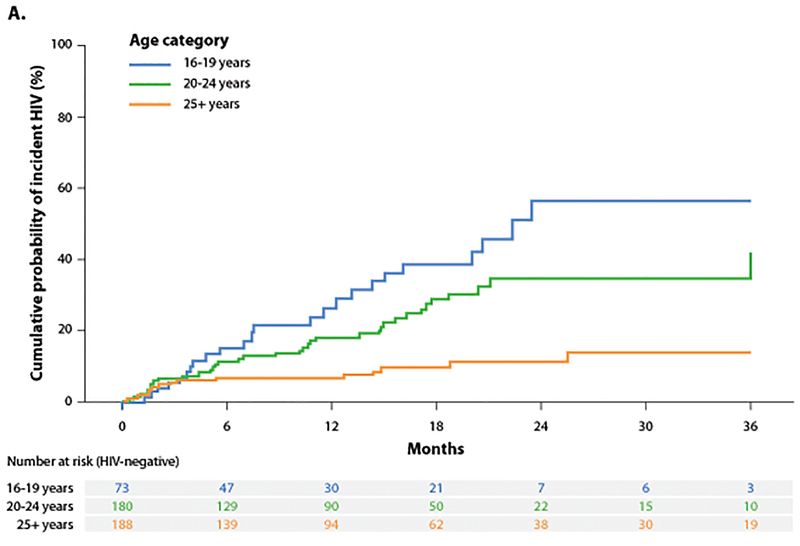
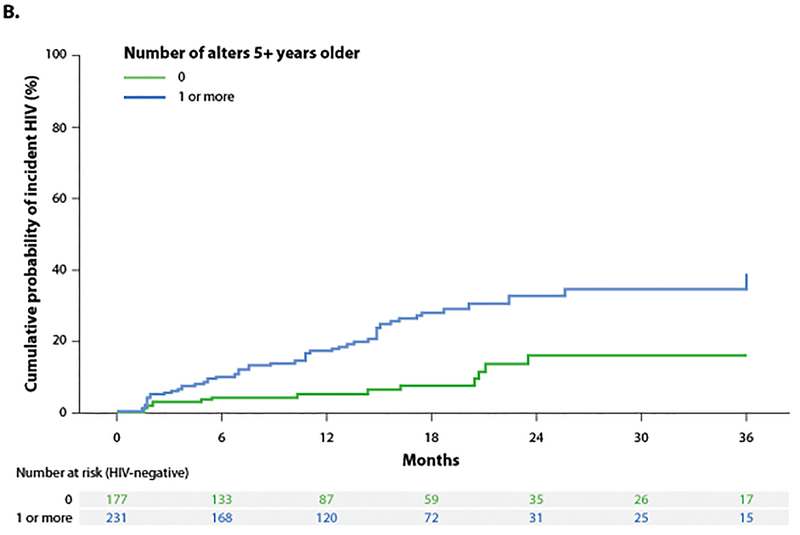
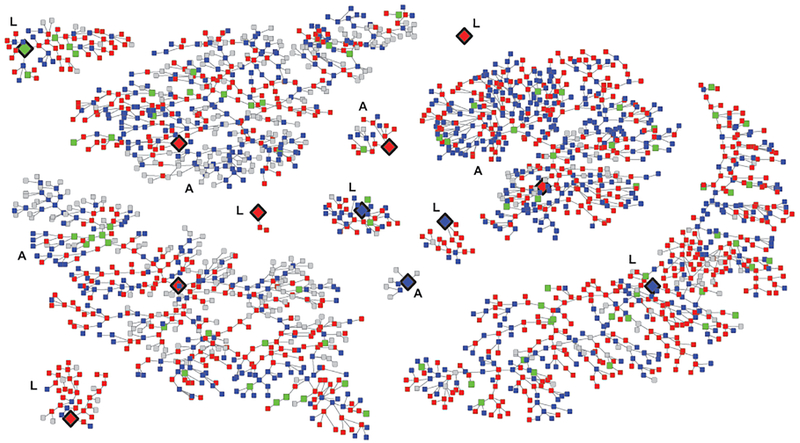
Results: Among cohort members with a median age of 23 years [interquartile range (IQR): 20-27], 81 HIV infections occurred over 527 PY (incidence 15.4/100 PY; 95% CI: 12.3 to 19.0). The incidence rate was highest among 16-19 year olds as compared to those 25 years or older (30.9/100 PY; 95% CI: 22.1 to 45.3 vs. 6.9/100 PY; 95% CI: 4.2 to 10.9, respectively). Individual determinants included receptive partnerships, condomless sex, no history of testing for HIV, and rectal gonorrhea. Sexual networks were larger and consisted of an older sexual partner, although there was no clustering by recruitment networks.
Conclusions: These HIV incidence data reinforce the unmet HIV prevention needs among young MSM in Nigeria. Even in the context of emerging HIV diagnostic and prevention strategies, structural challenges including stigma and criminalization of same-sex practices highlight the need for novel implementation approaches in the context of MSM-friendly services.
Figures
References
-
- Beyrer C, Baral SD, Collins C, et al. The global response to HIV in men who have sex with men. Lancet 2016;388:198–206. - PubMed
-
- Devi S Uganda takes “another step backward” with HIV bill. Lancet 2014;383:1960. - PubMed
-
- Arreola S, Santos GM, Beck J, et al. Sexual stigma, criminalization, investment, and access to HIV services among men who have sex with men worldwide. AIDS Behav 2015;19:227–34. - PubMed
-
- Sekoni AO, Jolly K, Gale NK, et al. Provision of Healthcare Services to Men Who Have Sex with Men in Nigeria: Students’ Attitudes Following the Passage of the Same-Sex Marriage Prohibition Law. LGBT Health 2016;3:300–7. - PubMed
-
- Schwartz SR, Nowak RG, Orazulike I, et al. The immediate eff ect of the Same-Sex Marriage Prohibition Act on stigma, discrimination, and engagement on HIV prevention and treatment services in men who have sex with men in Nigeria: analysis of prospective data from the TRUST cohort. Lancet HIV 2015;2:e299–306. - PMC - PubMed
Publication types
MeSH terms
Grants and funding
LinkOut - more resources
Full Text Sources
Medical
