


Internet-based cognitive and behavioural therapies for post-traumatic stress disorder (PTSD) in adults
- PMID: 30550643
- PMCID: PMC6516951
- DOI: 10.1002/14651858.CD011710.pub2
Internet-based cognitive and behavioural therapies for post-traumatic stress disorder (PTSD) in adults
Update in
-
Internet-based cognitive and behavioural therapies for post-traumatic stress disorder (PTSD) in adults.Cochrane Database Syst Rev. 2021 May 20;5(5):CD011710. doi: 10.1002/14651858.CD011710.pub3. Cochrane Database Syst Rev. 2021. PMID: 34015141 Free PMC article.
Abstract
Background: Therapist-delivered trauma-focused psychological therapies are an effective treatment for post-traumatic stress disorder (PTSD). These have become the accepted first-line treatments for the disorder. Despite the established evidence-base for these therapies, they are not always widely available or accessible. Many barriers limit treatment uptake, such as the limited number of qualified therapists to deliver the interventions, cost, and compliance issues, such as time off work, childcare, and transportation, associated with the need to attend weekly appointments. Delivering cognitive behavioural therapy (CBT) on the Internet is an effective and acceptable alternative to therapist-delivered treatments for anxiety and depression. However, fewer Internet-based therapies have been developed and evaluated for PTSD, and uncertainty surrounds the efficacy of Internet-based cognitive and behavioural therapy (I-C/BT) for PTSD.
Objectives: To assess the effects of I-C/BT for PTSD in adults.
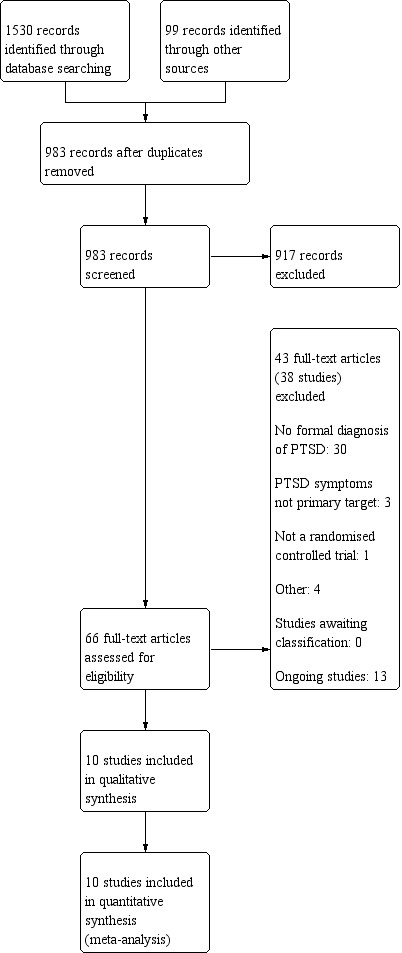
Search methods: We searched the Cochrane Common Mental Disorders Group's Specialised Register (CCMDCTR) to June 2016 and identified four studies meeting the inclusion criteria. The CCMDCTR includes relevant randomised controlled trials (RCT) from MEDLINE, Embase, and PsycINFO. We also searched online clinical trial registries and reference lists of included studies, and contacted researchers in the field to identify additional and ongoing studies. We ran an update search on 1 March 2018, and identified four additional completed studies, which we added to the analyses along with two that were previously awaiting classification.
Selection criteria: We searched for RCTs of I-C/BT compared to face-to-face or Internet-based psychological treatment, psychoeducation, wait list or care as usual. We included studies of adults (aged over 16 years or over), in which at least 70% of the participants met the diagnostic criteria for PTSD, according to the Diagnostic and Statistical Manual (DSM) or the International Classification of Diseases (ICD).
Data collection and analysis: We entered data into Review Manager 5 software. We analysed categorical outcomes as risk ratios (RRs), and continuous outcomes as mean differences (MD) or standardised mean differences (SMDs), with 95% confidence intervals (CI). We pooled data with a fixed-effect meta-analysis, except where heterogeneity was present, in which case we used a random-effects model. Two review authors independently assessed the included studies for risk of bias; any conflicts were discussed with a third author, with the aim of reaching a unanimous decision.
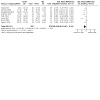
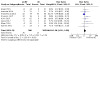
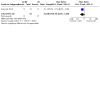
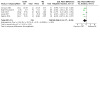
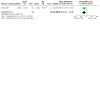
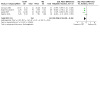
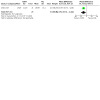
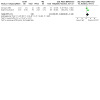
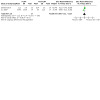
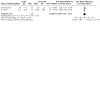
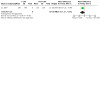
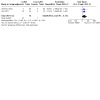
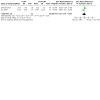
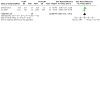
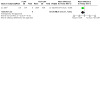
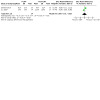
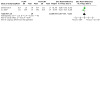
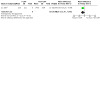
Main results: We included 10 studies with 720 participants in the review. Eight of the studies compared I-C/BT delivered with therapist guidance to a wait list control. Two studies compared guided I-C/BT with I-non-C/BT. There was considerable heterogeneity among the included studies.Very low-quality evidence showed that, compared with wait list, I-C/BT may be associated with a clinically important reduction in PTSD post-treatment (SMD -0.60, 95% CI -0.97 to -0.24; studies = 8, participants = 560). However, there was no evidence of a difference in PTSD symptoms when follow-up was less than six months (SMD -0.43, 95% CI -1.41 to 0.56; studies = 3, participants = 146). There may be little or no difference in dropout rates between the I-C/BT and wait list groups (RR 1.39, 95% CI 1.03 to 1.88; studies = 8, participants = 585; low-quality evidence). I-C/BT was no more effective than wait list at reducing the risk of a diagnosis of PTSD after treatment (RR 0.53, 95% CI 0.28 to 1.00; studies = 1, participants = 62; very low-quality evidence). I-C/BT may be associated with a clinically important reduction in symptoms of depression both post-treatment (SMD -0.61, 95% CI -1.17 to -0.05; studies = 5, participants = 425; very low-quality evidence). Very low-quality evidence also suggested that I-C/BT may be associated with a clinically important reduction in symptoms of anxiety post-treatment (SMD -0.67, 95% CI -0.98 to -0.36; studies = 4, participants = 305), and at follow-up less than six months (MD -12.59, 95% CI -20.74 to -4.44; studies = 1, participants = 42; very low-quality evidence). The effects of I-C/BT on quality of life were uncertain (SMD 0.60, 95% CI 0.08 to 1.12; studies = 2, participants = 221; very low-quality evidence).Two studies found no difference in PTSD symptoms between the I-C/BT and I-non-C/BT groups when measured post-treatment (SMD -0.08, 95% CI -0.52 to 0.35; studies = 2, participants = 82; very low-quality evidence), or when follow-up was less than six months (SMD 0.08, 95% CI -0.41 to 0.57; studies = 2, participants = 65; very low-quality evidence). However, those who received I-C/BT reported their PTSD symptoms were better at six- to 12-month follow-up (MD -8.83, 95% CI -17.32 to -0.34; studies = 1, participants = 18; very low-quality evidence). Two studies found no difference in depressive symptoms between the I-C/BT and I-non-C/BT groups when measured post-treatment (SMD -0.12, 95% CI -0.78 to 0.54; studies = 2, participants = 84; very low-quality evidence) or when follow-up was less than six months (SMD 0.20, 95% CI -0.31 to 0.71; studies = 2, participants = 61; very low-quality evidence). However, those who received I-C/BT reported their depressive symptoms were better at six- to 12-month follow-up (MD -8.34, 95% CI -15.83 to -0.85; studies = 1, participants = 18; very low-quality evidence). Two studies found no difference in symptoms of anxiety between the I-C/BT and I-non-C/BT groups when measured post-treatment (SMD 0.08, 95% CI -0.78 to 0.95; studies = 2, participants = 74; very low-quality evidence) or when follow-up was less than six months (SMD -0.16, 95% CI -0.67 to 0.35; studies = 2, participants = 60; very low-quality evidence). However, those who received I-C/BT reported their symptoms of anxiety were better at six- to 12-month follow-up (MD -8.05, 95% CI -15.20 to -0.90; studies = 1, participants = 18; very low-quality evidence).None of the included studies reported on cost-effectiveness or adverse events.
Authors' conclusions: While the review found some beneficial effects of I-C/BT for PTSD, the quality of the evidence was very low due to the small number of included trials. Further work is required to: establish non-inferiority to current first-line interventions, explore mechanisms of change, establish optimal levels of guidance, explore cost-effectiveness, measure adverse events, and determine predictors of efficacy and dropout.
Conflict of interest statement
CL: involved in the development and evaluation of an online, guided self‐help programme (Spring: a step‐by‐step treatment programme for PTSD) in conjunction with the software development company Healthcare Learning Smile‐on.
NR: involved in the development and evaluation of an online, guided self‐help programme (Spring: a step‐by‐step treatment programme for PTSD) in conjunction with the software development company Healthcare Learning Smile‐on.
AB: none.
LR: none.
JB: involved in the development and evaluation of an online, guided self‐help programme (Spring: a step‐by‐step treatment programme for PTSD) in conjunction with the software development company Healthcare Learning Smile‐on.
Figures

References
References to studies included in this review
Engel 2015 {published data only}
-
- Engel CC, Litz B, Magruder KM, Harper E, Gore K, Stein N, et al. Delivery of self training and education for stressful situations (DESTRESS-PC): a randomized trial of nurse assisted online self-management for PTSD in primary care. General Hospital Psychiatry 2015; 37(4):323-8. [NCT01474057] - PMC - PubMed
Ivarsson 2014 {published data only}
-
- Ivarsson D, Blom M, Hesser H, Carlbring P, Enderby P, Nordberg R, et al. Guided Internet-delivered cognitive behavior therapy for post-traumatic stress disorder: a randomized controlled trial. Internet Interventions 2014; 1:35-40.
Knaevelsrud 2015 {published data only}12611001019998
Krupnick 2017 {published data only}
-
- Krupnick JL, Green BL, Amdur R, Alaoui A, Belouali A, Roberge E, et al. An Internet-based writing intervention for PTSD in veterans: a feasibility and pilot effectiveness trial. Psychological Trauma : Theory, Research, Practice and Policy 2017; 9(4):461-70. - PubMed
Kuhn 2017 {published data only}
-
- Kuhn E, Kanuri N, Hoffman JE, Garvet DW, Ruzek JI. A randomized controlled trial of a smartphone app for posttraumatic stress disorder symptoms. Journal of Consulting and Clinical Psychology 2017; 85(3):267-73. - PubMed
-
- NCT02445196. PTSD coach app evaluation. ClinicalTrials.gov/show/NCT02445196 Date first received: 15 May 2015.
Lewis 2017 {published data only}
-
- Lewis C, Farewell D, Groves V, Kitchiner N, Roberts N, Vick T, et al. Internet-based guided self-help for post-traumatic stress disorder (PTSD): randomised controlled trial. Depression and Anxiety 2017; 34(6):555-65. - PubMed
Littleton 2016 {published data only}
-
- NCT02777294. Evaluation of web-based CBT for rape victims. ClinicalTrials.gov/show/NCT02777294 Date first received: 19 May 2016.
Litz 2007 {published data only}
-
- Litz B, Engel CC, Bryant R, Papa A. A randomized, controlled proof of concept trial of an Internet-based, therapist-assisted self-management treatment for posttraumatic stress disorder. American Journal of Psychiatry 2007; 164:1676-83. - PubMed
Miner 2016 {published data only}
-
- Miner A, Kuhn E, Hoffman JE, Owens JE, Ruzik JI. Feasibility, acceptability, and potential efficacy of the PTSD Coach App: a pilot randomized controlled trial with community trauma survivors. Psychological Trauma : Theory, Research, Practice and Policy 2016; 8(3):384-92. - PubMed
Spence 2011 {published data only}12611000989943
-
- Spence J, Titov N, Dear BF, Johnston L, Solley K, Lorian C. Randomized controlled trial of Internet-delivered cognitive behavioral therapy for post-traumatic stress disorder. Depression and Anxiety 2011; 28(7):541-50. - PubMed
References to studies excluded from this review
Bahena 2016 {published data only}
-
- Bahena Sandra. Efficacy of a mobile application among a sample of veterans with symptoms of post-traumatic stress disorder. Dissertation Abstracts International 2016; 77:2.
Bishop 2012 {published data only}
-
- Bishop TM, Possemato K, Acosta M, Lantinga LJ, Maisto SA, Marsch L, et al. Moving forward: update on the development of a web-based cognitive behavioral treatment for OEF/OIF veterans with PTSD symptoms and substance misuse. Alcoholism, Clinical and Experimental Research 2012; 36:347A.
Blankenship 2013 {published data only}
-
- Blankenship AE. A prospective examination of mindfulness training on the mitigation of postraumatic stress symptoms thesis, 2013. scholarworks.wmich.edu/dissertations/161 (accessed prior to 12 November 2018).
Bottche 2016 {published data only}
-
- Bottche M, Kuwert P, Pietrzak RH, Knaevelsrud C. Predictors of outcome of an Internet-based cognitive-behavioural therapy for post-traumatic stress disorder in older adults. Psychology and Psychotherapy 2016; 89(1):82-96. - PubMed
Brief 2012 {published data only}
-
- Brief D, Rubin A, Enggasser J, Roy M, Lachowicz M, Helmuth E, et al. Web-based intervention for returning veterans with risky alcohol use abstract. Alcoholism, Clinical and Experimental Research 2012; 36:347A.
Brief 2013 {published data only}
Daggett 2014 {published data only}
-
- Daggett V, Bakas T, Murray L, Woodward-Hagg H, Williams JG, Maddox K, et al. Feasibility and satisfaction with the VETeranS Compensate, Adapt, REintegrate (VETS-CARE) intervention. Brain Injury 2014; 28(5-6):554-5.
Elbers 2013 {published data only}
Gawlytta 2017 {published data only}
-
- Gawlytta R, Niemeyer H, Bottche M, Scherag A, Knaevelsrud C, Rosendahl J. Internet-based cognitive-behavioural writing therapy for reducing post-traumatic stress after intensive care for sepsis in patients and their spouses (REPAIR): results of two pilot cases. Infection 2017; 45:S59. - PMC - PubMed
Hirai 2005 {published data only}
-
- Hirai M, Clum GA. An Internet-based self-change programme for traumatic event related fear, distress and maladaptive coping. Journal of Traumatic Stress 2005; 18:631-6. - PubMed
Hirai 2012 {published data only}
-
- Hirai M, Skidmore ST, Clum GA, Dolma S. An investigation of the efficacy of online expressive writing for trauma-related psychological distress in Hispanic individuals. Behavior Therapy 2012; 43:812-24. - PubMed
Kersting 2011 {published data only}
-
- Kersting A, Kroker K, Schlicht S, Baust K, Wagner B. Efficacy of cognitive behavioral Internet-based therapy in parents after the loss of a child during pregnancy: pilot data from a randomized controlled trial. Archives of Women's Mental Health 2011; 14:465-77. - PubMed
Kersting 2013 {published data only}
-
- Kersting A, Dolemeyer R, Steinig J, Walter F, Kroker K, Baust K, et al. Brief Internet-based intervention reduces posttraumatic stress and prolonged grief in parents after the loss of a child during pregnancy: a randomized controlled trial. Psychotherapy and Psychosomatics 2013; 82:372-81. - PubMed
Knaevelsrud 2006 {published data only}
-
- Knaevelsrud C, Wagner B, Maercker A. Internet-based treatment of posttraumatic stress: does the working alliance predict long-term therapy outcome. In: Joint Meeting of the European & UK Chapters of the Society for Psychotherapy Research; 2005 March 2-5; Lausanne. Society for Psychotherapy Research UK & European Chapters, 2005:14-5.
Knaevelsrud 2010a {published data only}
-
- Knaevelsrud C, Liedl A, Maercker A. Posttraumatic growth, optimism and openness as outcomes of a cognitive-behavioural intervention for posttraumatic stress reactions. Journal of Health Psychology 2010; 15:1030-8. - PubMed
Knaevelsrud 2010b {published data only}
-
- Knaevelsrud C, Maercker A. Long-term effects of an Internet-based treatment for posttraumatic stress. Cognitive Behaviour Therapy 2010; 39:72-7. - PubMed
-
- NCT01508377. Effects of an Internet-based intervention for posttraumatic stress disorder. clinicaltrials.gov/ct2/show/NCT01508377 Date first received: 22 December 2011.
Knaevelsrud 2017 {published data only}12608000259347
-
- Knaevelsrud C, Bottche M, Pietrzak RH, Freyberger HJ, Kuwert P. Efficacy and feasibility of a therapist-guided Internet-based intervention for older persons with childhood traumatization: a randomized controlled trial. American Journal of Geriatric Psychiatry 2017; 25(8):878-88. - PubMed
Lange 2001 {published data only}
-
- Lange A, de Ven JP, Schrieken B, Emmelkamp PM. Interapy. Treatment of posttraumatic stress through the Internet: a controlled trial. Journal of Behavior Therapy and Experimental Psychiatry 2001; 32(2):73-90. - PubMed
Lange 2003 {published data only}
-
- Lange A, Rietdijk D, Hudcovicova M, de Ven JP, Schrieken B, Emmelkamp PM. Interapy: a controlled randomized trial of the standardized treatment of posttraumatic stress through the Internet. Journal of Consulting and Clinical Psychology 2003; 71(5):901-9. - PubMed
-
- Lange A, de Ven JP, Schrieken B. Interapy: treatment of post-traumatic stress via the Internet. Cognitive Behaviour Therapy 2003; 32(3):110-24. - PubMed
Maercker 2004 {published data only}
-
- Maercker A, Knaevelsrud C, Wagner B, Lange A. Intherapy: an Internet-based treatment trial of CBT of traumatic stress. In: Twentieth Annual Meeting, International Society for Traumatic Stress Studies; 2004 November 14-18; New Orleans (LA). 2004.
McGlinchey 2014 {published data only}
-
- McGlinchey R, Rosenblatt A, Mercado R, Esterman M, DeGutis J. Internet-based cognitive training enhances attention and functional outcomes in OEF/OIF/OND veterans abstract. In: 10th World Congress on Brain Injury of the International Brain Injury Association; 2014 March 19-22; San Francisco (CA). 2014:624-5.
NCT01508377 {published data only}
-
- NCT01508377. Effects of an Internet-based intervention for posttraumatic stress disorder. clinicaltrials.gov/ct2/show/NCT01508377 Date first received: 22 December 2011.
NCT01552278 {published data only}
-
- NCT01552278. Enhancing cognitive function and reintegration in Iraq and Afghanistan veterans with PTSD using computer-based cognitive training. clinicaltrials.gov/show/NCT01552278 Date first received: 15 March 2010.
NCT01678196 {published data only}
-
- NCT01678196. Helping families help veterans with PTSD and alcohol abuse: an RCT of VA-CRAFT. clinicaltrials.gov/ct2/show/NCT01678196 Date first received: 3 September 2012.
NCT01710943 {published data only}
-
- NCT01710943. Web-based CBT for recent veterans experiencing problems with trauma symptoms or alcohol/drug use. ClinicalTrials.gov/show/NCT01710943 Date first received: 19 October 2012.
NCT01760213 {published data only}
-
- NCT01760213. Brief Internet based treatment for PTSD. ClinicalTrials.gov/show/NCT01760213 Date first received: 4 January 2013.
NCT01891734 {published data only}
-
- NCT01891734. Enhancing delivery of problem solving therapy using SmartPhone technology. Available from clinicaltrials.gov/show/NCT01891734 Date first received: 25 June 2013.
Nieminen 2016 {published data only}
-
- Nieminen K, Berg I, Frankenstein K, Vilta L, Larsson K, Persson U, et al. Internet-provided cognitive behaviour therapy of posttraumatic stress symptoms following childbirth – a randomized controlled trial. Cognitive Behaviour Therapy 2016; 45(4):287-306. - PubMed
Possemato 2010 {published data only}
-
- Possemato KA, Ouimette PC, Geller PA. Internet-based expressive writing for kidney transplant recipients: effects on posttraumatic stress and quality of life. Traumatology 2010; 16:49-54.
Possemato 2011 {published data only}
-
- Possemato K, Ouimette P, Knowlton P. A brief self-guided telehealth intervention for post-traumatic stress disorder in combat veterans: a pilot study. Journal of Telemedicine and Telecare 2011; 17:245-50. - PubMed
Sayer 2009 {published data only}
-
- NCT00640445. Military to civilian: RCT of an intervention to promote postdeployment reintegration. clinicaltrials.gov/show/NCT00640445 Date first received: 18 March 2008.
-
- Sayer NA, Orazem R, Frazier P, Noorbaloochi S, Schnurr P, Litz B, et al. Military to Civilian: RCT of a web-based expressive writing intervention. In: Military Health Research Forum; 2009 August 31-September 3; Kansas City (MO). 2009.
Solzbacher 2012 {published data only}
-
- Solzbacher S, Rueddel H. Effectiveness of E-therapy skill training in inpatients with anorexia nervosa, PTSD or personality disorders. Psychosomatic Medicine 2012; 74(3):A28-9.
Steinmetz 2012 {published data only}
Stockton 2014 {published data only}
-
- Stockton H, Joseph S, Hunt N. Expressive writing and posttraumatic growth: an Internet-based study. Traumatology 2014; 20:75-83.
Wagner 2007 {published data only}
-
- Wagner B, Knaevelsrud C, Maercker A. Post-traumatic growth and optimism as outcomes of an Internet-based intervention for complicated grief. Cognitive Behaviour Therapy 2007; 36:156-61. - PubMed
Wagner 2012 {published data only}
-
- Wagner B, Brand J, Schulz W, Knaevelsrud C. Online working alliance predicts treatment outcome for posttraumatic stress symptoms in Arab war-traumatized patients. Depression and Anxiety 2012; 29:646-51. - PubMed
Wang 2013 {published data only}
Zernicke 2014 {published data only}
-
- Zernicke KA, Campbell TS, Speca M, McCabe-Ruff K, Flowers S, Carlson LE. A randomized wait-list controlled trial of feasibility and efficacy of an online mindfulness-based cancer recovery program: the eTherapy for cancer applying mindfulness trial. Psychosomatic Medicine 2014; 76(4):257-67. - PubMed
References to ongoing studies
ACTRN12611000989943 {published data only}
-
- ACTRN12611000989943. A comparison of Internet-based cognitive behavioural therapy for posttraumatic stress disorder with and without exposure: a randomized controlled trial. www.anzctr.org.au/ACTRN12611000989943.aspx Date first received: 16 September 2011.
ACTRN12614001213639 {published data only}
-
- ACTRN12614001213639. Internet treatment for posttraumatic stress disorder (PTSD). www.anzctr.org.au/ACTRN12614001213639.aspx Date first received: 18 November 2014.
ACTRN12616000956404 {published data only}
-
- ACTRN12616000956404. Internet-based intervention for posttraumatic stress disorder (PTSD) in soldiers: exploring mechanisms of treatment outcome. www.anzctr.org.au/ACTRN12616000956404.aspx Date first received: 20 July 2016.
DRKS00010245 {published data only}
-
- DRKS00010245. Evaluation of web-based cognitive and behavioural therapeutic components and its change mechanisms for Arab people with posttraumatic stress disorder. www.drks.de/DRKS00010245 Date first received: 30 March 2016.
ISRCTN13697710 {published data only}
-
- ISRCTN13697710. A study of trauma-focused online guided self help versus trauma-focused cognitive behavioural therapy for post-traumatic stress disorder. isrctn.com/ISRCTN13697710 Date first received: 21 December 2016.
ISRCTN16806208 {published data only}
-
- ISRCTN16806208. A randomised controlled trial of therapist-assisted online psychological therapies for post-traumatic stress disorder. isrctn.com/ISRCTN16806208 Date first received: 5 January 2018.
Lehavot 2017 {published data only}
-
- Lehavot K, Litz B, Millard SP, Hamilton AB, Sadler A, Simpson T. Study adaptation, design, and methods of a web-based PTSD intervention for women Veterans. Contemporary Clinical Trials 2017; 53:68-79. - PubMed
McLean 2017 {published data only}
-
- McLean CP, Rauch SA, Foa EB, Sripada RK, Tannahill HS, Mintz J, et al. Design of a randomized controlled trial examining the efficacy and biological mechanisms of web-prolonged exposure and present-centered therapy for PTSD among active-duty military personnel and veterans. Contemporary Clinical Trials 2017; 64:41-8. - PubMed
NCT02556645 {published data only}
-
- NCT02556645. A comparison of web-prolonged exposure (Web-PE) and present-centered therapy (PCT) for PTSD among active-duty military personnel. ClinicalTrials.gov/show/NCT02556645 Date first received: 22 September 2015.
NCT02611843 {published data only}
-
- NCT02611843. Peer supported web-based CBT for OEF/OIF veterans with PTSD and substance misuse. ClinicalTrials.gov/show/NCT02611843 Date first received: 23 November 2015.
NCT02929979 {published data only}
-
- NCT02929979. Cognitive remediation for alcohol use disorder and posttraumatic stress disorder. ClinicalTrials.gov/show/NCT02929979 Date first received: 11 October 2016.
NCT03208738 {published data only}
-
- NCT03208738. Pilot evaluation of the VetChange mobile app for veterans with PTSD who engage in problem drinking. ClinicalTrials.gov/show/NCT03208738 Date first registered: 5 July 2017.
NTR6912 {published data only}
-
- NTR6912. Addition of the SUPPORT Coach in PTSD treatment. www.trialregister.nl/trialreg/admin/rctview.asp?TC=6912 Date first received: 22 December 2017.
Additional references
ACPMH 2007
-
- Phoenix Australia – Centre for Posttraumatic Mental Health. Australian Guidelines for the treatment of adults with acute stress disorder and posttraumatic stress disorder, 2007. phoenixaustralia.org/resources/ptsd-guidelines/ (accessed 6 June 2017).
Alonso 2014
-
- Alonso J, Angermeyer MC, Lépine JP. The European Study of the Epidemiology of Mental Disorders (ESEMeD) project: an epidemiological basis for informing mental health policies in Europe.. Acta Psychiatrica Scandinavica 2014; 109(s420):5-7. - PubMed
Andersson 2005
-
- Andersson G, Bergstrom J, Carlbring P, Lindefors N. The use of the Internet in the treatment of anxiety disorders. Current Opinion in Psychiatry 2005; 18:73-7. - PubMed
Andersson 2009
-
- Andersson G. Using the Internet to provide cognitive behaviour therapy. Behaviour Research and Therapy 2009; 47(3):175-80. - PubMed
APA 1980
-
- American Psychiatric Association. Diagnostic and Statistical Manual of Mental Disorders (DSM-III). Washington (DC): American Psychiatric Association, 1980.
APA 1987
-
- American Psychiatric Association. Diagnostic and Statistical Manual of Mental Disorders (DSM-IIIR). 3rd edition. Washington (DC): American Psychiatric Association, 1987.
APA 2000
-
- American Psychiatric Association. Diagnostic and Statistical Manual of Mental Disorders (DSM IV). 4th edition. Washington (DC): American Psychiatric Association, 2000.
APA 2004
-
- Ursano RJ, Bell C, Eth S, Friedman M, Norwood A, Pfefferbaum B, et al, Work Group on ASD and PTSD , Steering Committee on Practice Guidelines. Practice guidelines for the treatment of patients with acute stress disorder and posttraumatic stress disorder. American Journal of Psychiatry 2004; 161(11 Suppl):3-31. - PubMed
APA 2013
-
- American Psychiatric Association. Diagnostic and Statistical Manual of Mental Disorders (DSM-5). 5th edition. Washington (DC): APA, 2013.
Beck 1961
-
- Beck AT, Ward CH. An inventory for measuring depression. Archives of General Psychiatry 1961; 4:561-71. - PubMed
Beck 1993
-
- Beck AT, Steer RA. Beck Anxiety Inventory Manual. San Antonio (TX): The Psychological Corporation, 1993.
Bisson 2013
Blake 1995
-
- Blake DD, Weathers FW, Nagy LM, Kaloupek DG, Gusman FD, Charney DS. The development of a clinician-administered PTSD scale. Journal of Traumatic Stress 1995; 8:75-90. - PubMed
Bradley 2005
-
- Bradley R, Green J, Russ E, Dutra L, Westen D. A multidimensional meta-analysis of psychotherapy for PTSD. American Journal of Psychiatry 2005; 162(2):214-27. - PubMed
Brewin 2000
-
- Brewin CR, Andrews B, Valentine JD. Meta-analysis of risk factors for posttraumatic stress disorder in trauma-exposed adults. Journal of Consulting and Clinical Psychology 2000; 68(5):748-66. - PubMed
Bryant 2003
-
- Bryant RA, Moulds ML, Guthrie RM, Dang ST, Nixon RDV. Imaginal exposure alone and imaginal exposure with cognitive restructuring in treatment of posttraumatic stress disorder. Journal of Consulting & Clinical Psychology 2003; 71(4):706-12. - PubMed
Creamer 2001
-
- Creamer M, Burgess P, McFarlane AC. Post-traumatic stress disorder: findings from the Australian national survey of mental health and well-being. Psychological Medicine 2001; 31:1237-47. - PubMed
Creamer 2004
-
- Creamer M, Forbes D, Phelps A, Humphreys L. Treating traumatic stress: conducting imaginal exposure. Phoenix Australia - Centre for Posttraumatic Mental Health 2004.
Cuijpers 2008
Cuijpers 2010
-
- Cuijpers P, Donker T, Straten A, Li J. Is guided self-help as effective as face-to-face psychotherapy for depression and anxiety disorders? A systematic review and meta-analysis of comparative outcome studies. Psychological Medicine 2010; 40(12):1943-57. - PubMed
Ferry 2010
-
- Ferry F, Bolton D, Bunting B, O’Neill S, Murphy S, Devine B. Economic impact of post traumatic stress in Northern Ireland. Northern Ireland Centre for Trauma and Transformation and University of Ulster Psychology Research Institute :2010.
Foa 2007
-
- Foa E, Hembree E, Rothbaum BO. Prolonged Exposure Therapy for PTSD: Emotional Processing of Traumatic Experiences Therapist Guide. Oxford, UK: Oxford University Press, 2007.
Foa 2008
-
- Foa E, Keane TM, Friedman MJ, Cohen JA. Effective Treatments for PTSD: Practice Guidelines From the International Society for Traumatic Stress Studies. New York (NY): Guilford Press, 2008.
Gega 2004
-
- Gega L, Marks I, Mataix-Cols D. Computer-aided CBT self-help for anxiety and depressive disorders: experience of a London clinic and future directions. Journal of Clinical Psychology 2004; 60(2):147-57. - PubMed
Gillies 2012
GRADEpro GDT [Computer program]
-
- GRADE Working Group, McMaster University GRADEpro GDT. Version (accessed 15 May 2017). Hamilton (ON): GRADE Working Group, McMaster University, 2015.
Hetrick 2010
Higgins 2011
-
- Higgins JP, Green S, editor(s). Cochrane Handbook for Systematic Reviews of Interventions Version 5.1 (updated March 2011). The Cochrane Collaboration, 2011. Available from www.handbook.cochrane.org.
IAPT 2010
-
- Baguley C, Farrand P, Hope R, Leibowitz J, Lovell K, Lucock M, et al, IAPT Self-help Conference authors and presenters. Good practice guidance on the use of self-help materials within IAPT services, 2010. www.iapt.nhs.uk/silo/files/good-practice-guidance-on-the-use-of-selfhelp...) (accessed 6 June 2017).
Lewis 2010
-
- Lewis C, Bisson JI. Health economics of web based mental health interventions to mitigate the effects of trauma. In: Brunet A, Ashbaugh A, Herbert C, editors(s). The Internet in the Aftermath of Trauma. Amsterdam: IOS Press, 2010.
Lewis 2012
-
- Lewis C, Pearce J, Bisson JI. Systematic review of the efficacy, cost effectiveness and acceptability of self-help interventions for individuals diagnosed with an anxiety disorder. British Journal of Psychiatry 2012; 200(1):15-21. - PubMed
Lewis 2013
-
- Lewis C, Roberts NR, Vick T, Bisson JI. Development of a guided self-help (GSH) program for the treatment of mild to moderate post-traumatic stress disorder (PTSD). Depression and Anxiety 2013; 30(11):1121-8. - PubMed
Mayo‐Wilson 2013
NCCMH 2005
-
- National Collaborating Centre for Mental Health (NCCMH). Post-traumatic stress disorder (PTSD): the management of PTSD in adults and children in primary and secondary care (CG26). Gaskell and the British Psychological Society, London 2005.
Newman 2003
-
- Newman MG, Erickson T, Przeworski A, Dzus E. Self-help and minimal contact therapies for anxiety disorders: is human contact necessary for therapeutic efficacy? Journal of Clinical Psychology 2003; 59(3):251-74. - PubMed
NICTT 2008
-
- Northern Ireland Centre for Trauma and Transformation and the Psychology Research Institute. A study of the epidemiology of trauma-related disorders and qualitative investigation of the impact of trauma on the individual. Trauma, Health and Conflict in Northern Ireland. Ulster, Ireland 2008.
Norris 2003
-
- Norris FH, Murphy AD, Baker CK, Perilla JL, Rodriguez FG, Rodriguez JDJG. Epidemiology of trauma and posttraumatic stress disorder in Mexico. Journal of Abnormal Psychology 2003; 112(4):646. - PubMed
Olthuis 2015
Ozer 2003
-
- Ozer EJ, Lipsey TL, Weiss DS. Predictors of posttraumatic stress disorder and symptoms in adults: a meta-analysis. Psychological Bulletin 2003; 129(1):52-73. - PubMed
Review Manager 2014 [Computer program]
-
- The Nordic Cochrane Centre, The Cochrane Collaboration Review Manager 5 (RevMan 5). Version 5.3. Copenhagen: The Nordic Cochrane Centre, The Cochrane Collaboration, 2014.
Roberts 2009
Roberts 2010
Rose 2002
Spek 2007
-
- Spek V, Cuijpers P, Nyklícek I, Riper H, Keyzer J, Pop V. Internet-based cognitive behaviour therapy for symptoms of depression and anxiety: a meta-analysis. Psychological Medicine 2007; 37(3):319-28. - PubMed
Stein 2006
Weathers 2013
-
- Weathers FW, Litz BT, Keane TM, Palmieri PA, Marx BP, Schnurr PP. The PTSD Checklist for DSM-5 (PCL-5), 2013. www.ptsd.va.gov/professional/assessment/adult-sr/ptsd-checklist.asp (accessed prior to 24 November 2018).
WHO 1979
-
- World Health Organization. International Statistical Classification of Diseases and Related Health Problems (ICD-9) Mental Disorders. Geneva: World Health Organization, 1979.
WHO 1992
-
- World Health Organization. International Statistical Classification of Diseases and Related Health Problems (ICD-10) Classification of Mental and Behavioural Disorders. Geneva: World Health Organization, 1992.
Wilson 2012
-
- Wilson JP, Friedman MJ, Lindy JD, editors. Treating Psychological Trauma and PTSD. New York (NY): Guilford Press, 2012.
References to other published versions of this review
Publication types
MeSH terms
LinkOut - more resources
Full Text Sources
Medical
Miscellaneous
