


Design and methodology of a cluster-randomized trial in early care and education centers to meet physical activity guidelines: Sustainability via Active Garden Education (SAGE)
- PMID: 30550775
- PMCID: PMC6464371
- DOI: 10.1016/j.cct.2018.12.003
Design and methodology of a cluster-randomized trial in early care and education centers to meet physical activity guidelines: Sustainability via Active Garden Education (SAGE)
Abstract
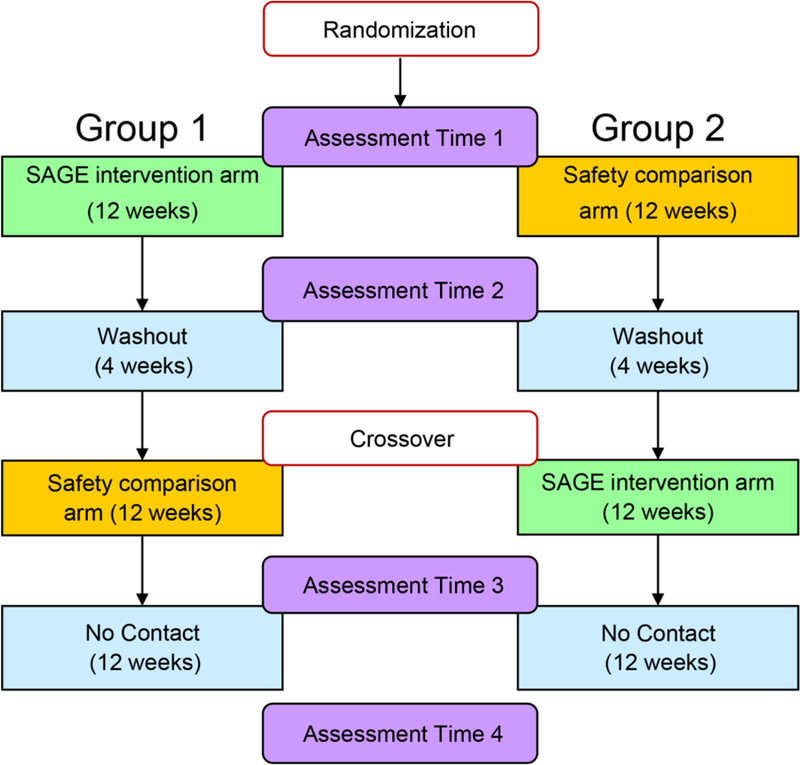
Strategies are needed to help early care and education centers (ECEC) comply with policies to meet daily physical activity and fruit and vegetable guidelines for young children. This manuscript describes the design and methodology of Sustainability via Active Garden Education (SAGE), a 12-session cluster-randomized controlled crossover design trial using community-based participatory research (CBPR) to test a garden-based ECEC physical activity and fruit and vegetables promotion intervention for young children aged 3-5 years in 20 sites. The SAGE curriculum uses the plant lifecycle as a metaphor for human development. Children learn how to plant, water, weed, harvest, and do simple food preparation involving washing, cleaning, and sampling fruit and vegetables along with active learning songs, games, science experiments, mindful eating exercises, and interactive discussions to reinforce various healthy lifestyle topics. Parents will receive newsletters and text messages linked to the curriculum, describing local resources and events, and to remind them about activities and assessments. Children will be measured on physical activity, height, and weight and observed during meal and snack times to document dietary habits. Parents will complete measures about dietary habits outside of the ECEC, parenting practices, home physical activity resources, and home fruit and vegetable availability. SAGE fills an important void in the policy literature by employing a participatory strategy to produce a carefully crafted and engaging curriculum with the goal of meeting health policy guidelines and educational accreditation standards. If successful, SAGE may inform and inspire widespread dissemination and implementation to reduce health disparities and improve health equity.
Keywords: Child; Diet; Exercise; Health; Policy; Preschool.
Copyright © 2018 Elsevier Inc. All rights reserved.
Figures


References
-
- Ogden CL, Carroll MD, Flegal KM. High body mass index for age among US children and adolescents, 2003–2006. JAMA 2008;299(20):2401–2405. - PubMed
Publication types
MeSH terms
Grants and funding
LinkOut - more resources
Full Text Sources
Medical
