


Updated Sniffin' Sticks normative data based on an extended sample of 9139 subjects
- PMID: 30554358
- PMCID: PMC6411676
- DOI: 10.1007/s00405-018-5248-1
Updated Sniffin' Sticks normative data based on an extended sample of 9139 subjects
Abstract
Purpose: To provide up-to-date and detailed normative data based on a large-scale sample, increasing diagnostic validity by reference to narrow age groups as previous normative values were based upon smaller sample sizes-especially in the group of older subjects.
Method: Data were obtained from 9139 healthy subjects (4928 females aged 5-96 years and 4211 males aged 5-91 years). The standard "Sniffin' Sticks" test was applied, comprising threshold (T), discrimination (D) and identification (I) subtests, and yielding a TDI sum score.
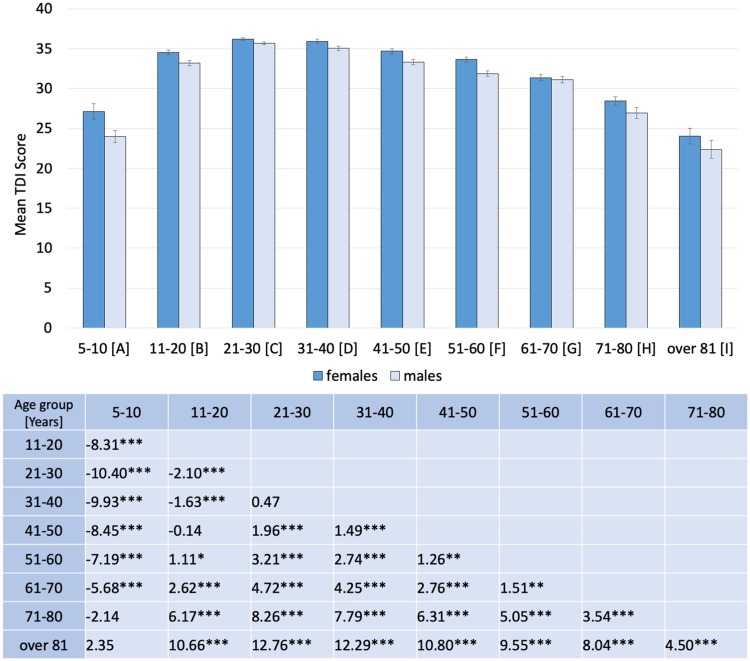
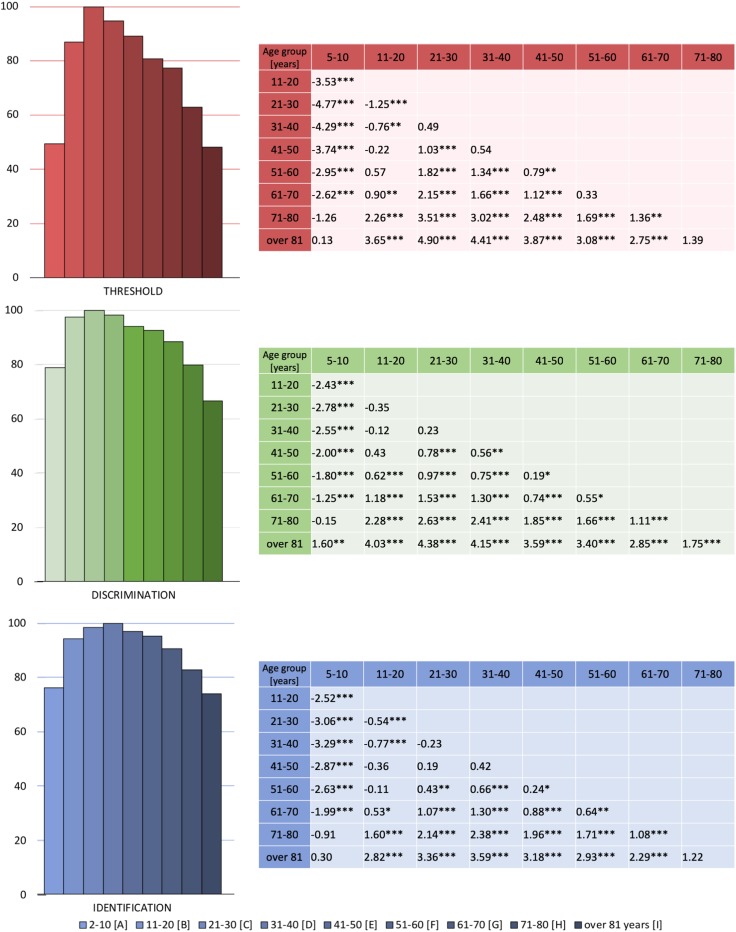
Results: Hyposmia was established at a TDI score of less than 30.75. Age-related changes were found in each domain, most pronounced for thresholds. Individuals aged 20-30 years performed best, whereas children below the age of 10 and adults above the age of 71 scored only half as well. Sex-related differences were in favor of women.
Conclusions: Data provide guidance for assessing individual olfactory performance in relation to specific age groups. Significant gender and age effects were observed, with a most pronounced increase of olfactory test scores between age 5 through 20 years and a dramatic decrease at the age of 60 through 71 years.
Keywords: Discrimination; Identification; Normative data; Olfaction; Sniffin’ Sticks; Threshold.
Conflict of interest statement
Conflict of interest
Authors have no conflict of interest to disclose.
Ethical approval
The study was performed in accordance with the Declaration of Helsinki on Biomedical Studies Involving Human Subjects.
Informed consent
Informed written consent was obtained from all adult participants and children gave their assent to participate in a study. The data included were gathered from studies in healthy controls performed over the last 20 years, all of which have been approved individually by the local Ethics Review Board.
Figures

References
-
- Kobal G, Hummel T, Sekinger B, et al. “Sniffin Sticks”: screening of olfactory performance. Rhinology. 1996;34:222–226. - PubMed
-
- Catana I, Negoiaș S, Maniu A, et al. A modified version of “Sniffin’ Sticks” odor identification test: the romanian cultural adaptation. Clujul Med. 2014;85:218–223.
-
- Oleszkiewicz A, Taut M, Sorokowska A, et al. Development of the Arabic version of the “Sniffin’ Sticks” odor identification test. Eur Arch Oto Rhino Laryngol. 2016 - PubMed
MeSH terms
Grants and funding
LinkOut - more resources
Full Text Sources
Medical
