


Value and Limitations of Broad Brush Surveys Used in Community-Randomized Trials in Southern Africa
- PMID: 30556470
- PMCID: PMC6533803
- DOI: 10.1177/1049732318809940
Value and Limitations of Broad Brush Surveys Used in Community-Randomized Trials in Southern Africa
Abstract
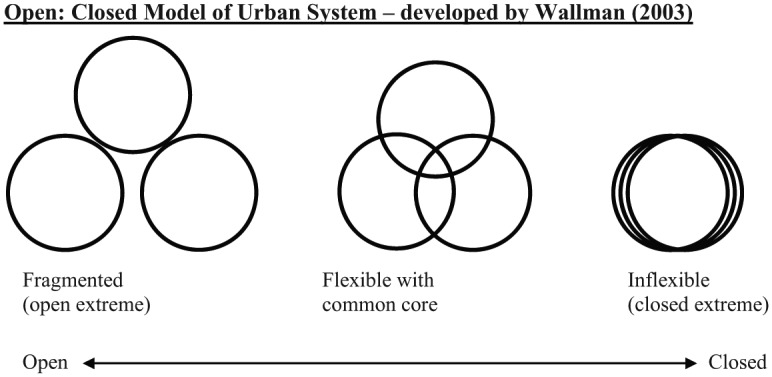
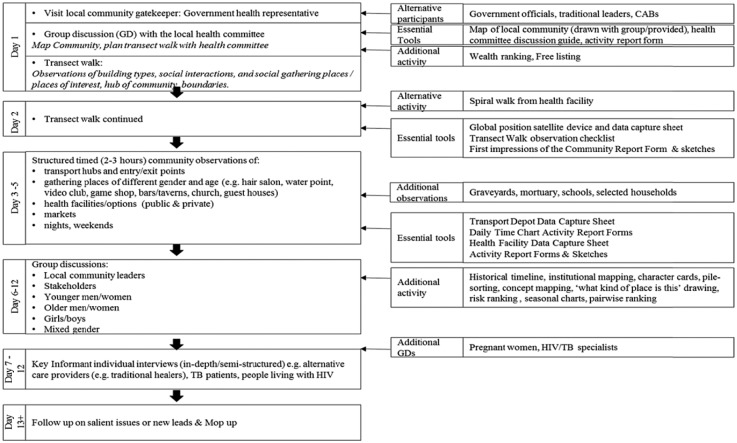
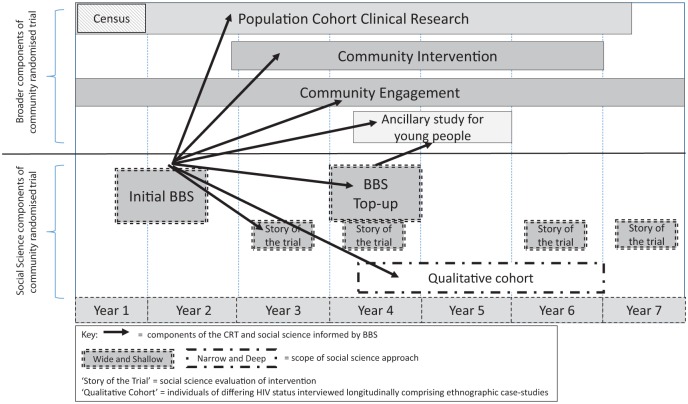
We describe and reflect on a rapid qualitative survey approach called "Broad Brush Survey" (BBS) used in six community-randomized trials (CRTs)/studies in Zambia and South Africa (2004-2018) to document, compare, classify, and communicate community features systematically for public health and multidisciplinary research ends. BBS is based on a set sequence of participatory qualitative methods and fieldwork carried out prior to a CRT intervention and/or research by social scientists to generate rapid community profiles using four key indicators: physical features, social organization, networks, and community narratives. Profiling makes apparent similarities and differences, enabling comparison across communities and can be facilitated by an ideal model of open-closed systems. Findings have provided practical outputs (e.g., community profiles) and academic opportunities (e.g., community typologies). The BBS approach enables complex social landscapes to be incorporated in CRTs. This method has proven to be useful, adaptable and to have multidisciplinary appeal.
Keywords: BBS; Broad Brush Survey; South Africa; Zambia; community-randomized trials; qualitative.
Conflict of interest statement
Figures
References
-
- Abrahams K., Mantantana J., Hoddinott G., Viljoen L., Ayles H., Beyers N., Bond V. (2014, July 20–25). Intruders with questions and justified fears—Reflections on the experiences of research staff implementing rapid, qualitative research in 9 HPTN 071 (PopART) community sites in Western Cape Province, South Africa. Paper presented at the 20th International AIDS Conference, Melbourne, Australia.
-
- Ayles H., Muyoyeta M., Du Toit E., Schaap A., Floyd S., Simwinga M., . . . Dunbar R. (2013). Effect of household and community interventions on the burden of tuberculosis in southern Africa: The ZAMSTAR community-randomised trial. The Lancet, 382, 1183–1194. - PubMed
-
- Beebe J. (2014). Rapid qualitative inquiry: A field guide to team-based assessment. Lanham, Maryland: Rowman and Littlefield.
Publication types
MeSH terms
Grants and funding
LinkOut - more resources
Full Text Sources
Research Materials
