Comparing anxiety and depression to obesity and smoking as predictors of major medical illnesses and somatic symptoms
- PMID: 30556708
- PMCID: PMC6592048
- DOI: 10.1037/hea0000707
Comparing anxiety and depression to obesity and smoking as predictors of major medical illnesses and somatic symptoms
Abstract
Objective: Anxiety and depression predict poor physical health longitudinally, but are neglected in primary care settings compared to other risk factors such as obesity and smoking. Further, anxiety has been less commonly studied than depression, and whether anxiety has unique predictive effects for physical health is unknown. We compared anxiety and depression to obesity and smoking as predictors of physical health indices and examined unique predictive effects of anxiety and depression.
Method: Using data from the Health and Retirement study, a US population-based cohort study of older adults, we tested longitudinal associations of anxiety and depression symptoms with onset of self-reported physical health indices (N = 15,418; M age = 68). Medical illnesses (heart disease, stroke, arthritis, high blood pressure, diabetes, and cancer) and somatic symptoms (stomach problems, shortness of breath, dizziness, back pain, headache, pain, and eyesight difficulties) were assessed on two occasions over four years. Anxiety and depression were measured at the initial time point and tested as predictors of medical illness and somatic symptom onset.
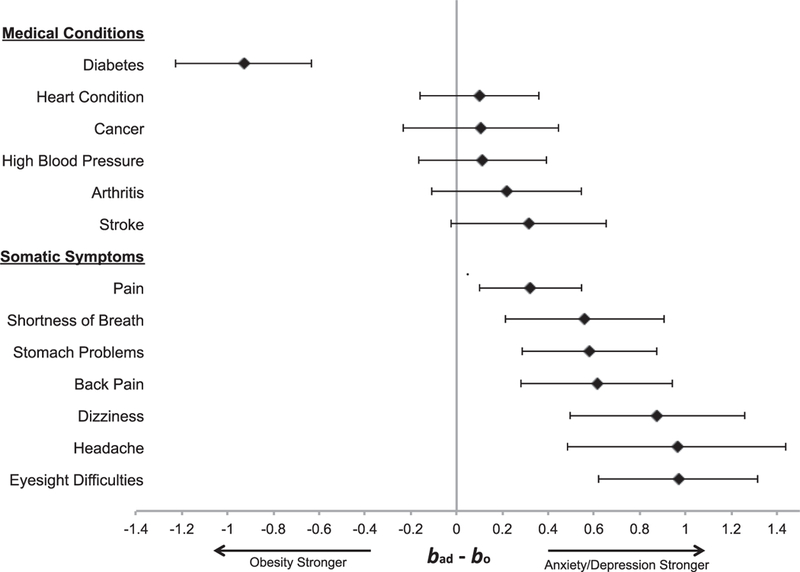
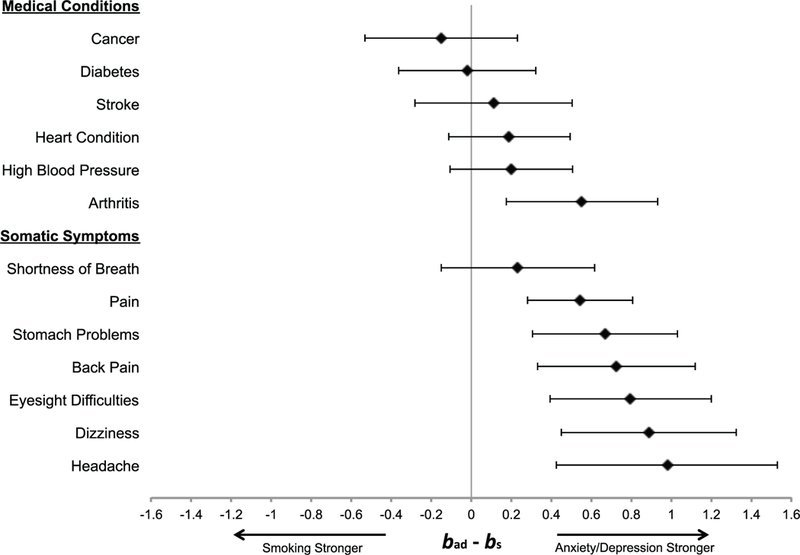
Results: Anxiety and depression symptoms predicted greater incidence of nearly all medical illnesses and somatic symptoms. Effects were as strong as or stronger than those of obesity and smoking, and anxiety and depression independently increased risk for most physical health indices assessed.
Conclusions: Findings suggest that anxiety and depression are as strongly predictive of poor future physical health as obesity and smoking and that anxiety is independently linked to poor physical health. Greater attention should be paid towards these conditions in primary care. (PsycINFO Database Record (c) 2019 APA, all rights reserved).
Figures
References
-
- Aguilar-Gaxiola S, Loera G, Geraghty EM, Ton H, Lim CC, de Jonge P, … Scott KM (2016). Associations between DSM-IV mental disorders and subsequent onset of arthritis. Journal of Psychosomatic Research, 82, 11–16. http://dx.doi.org/10.10167j.jpsychores.2016.01.006 - PMC - PubMed
-
- Allison P (2012). Handling missing data by maximum likelihood. SAS Global Forum Retrieved from https://statisticalhorizons.com/wp-content/uploads/MissingDataByML.pdf
-
- American Psychiatric Association. (2013). Diagnostic and statistical manual of mental disorders (5th ed). Washington, DC: American Psychiatric Publishing.