


Indomethacin blocks the increased conditioned rewarding effects of cocaine induced by repeated social defeat
- PMID: 30557308
- PMCID: PMC6296503
- DOI: 10.1371/journal.pone.0209291
Indomethacin blocks the increased conditioned rewarding effects of cocaine induced by repeated social defeat
Erratum in
-
Correction: Indomethacin blocks the increased conditioned rewarding effects of cocaine induced by repeated social defeat.PLoS One. 2019 Feb 11;14(2):e0212397. doi: 10.1371/journal.pone.0212397. eCollection 2019. PLoS One. 2019. PMID: 30742670 Free PMC article.
Abstract
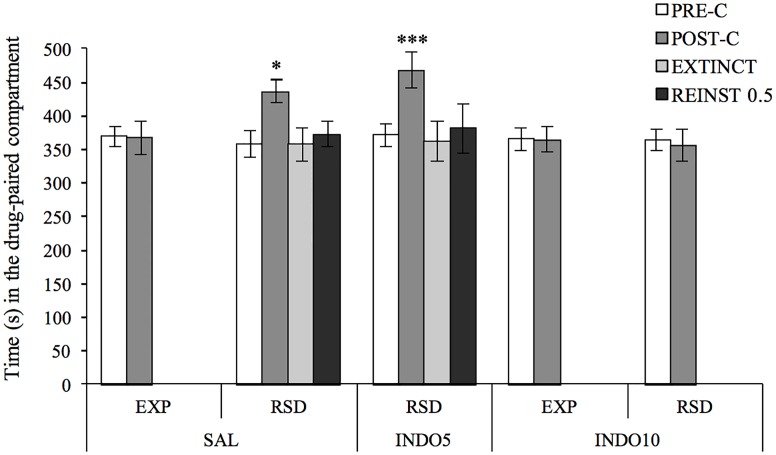
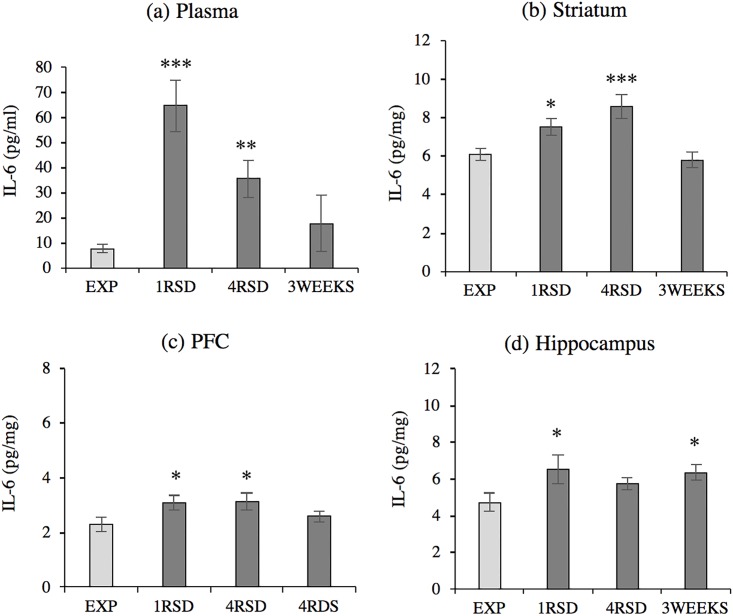
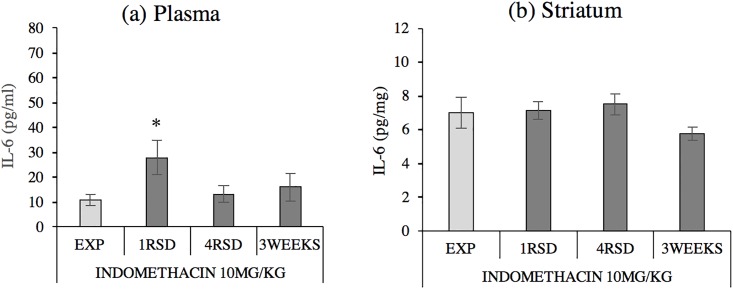
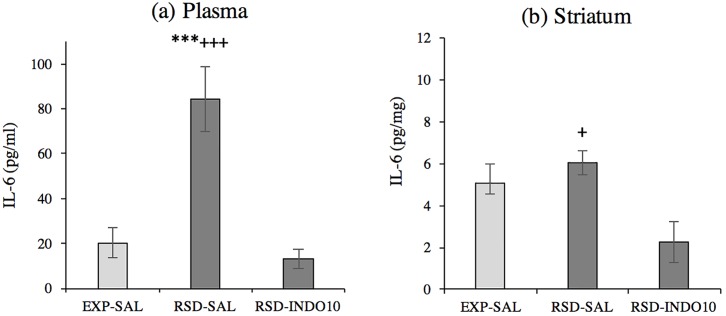
It is well established that repeated social defeat stress can induce negative long-term consequences such as increased anxiety-like behavior and enhances the reinforcing effect of psychostimulants in rodents. In the current study, we evaluated how the immune system may play a role in these long-term effects of stress. A total of 148 OF1 mice were divided into different experimental groups according to stress condition (exploration or social defeat) and pre-treatment (saline, 5 or 10 mg/kg of the anti-inflammatory indomethacin) before each social defeat or exploration episode. Three weeks after the last social defeat, anxiety was evaluated using an elevated plus maze paradigm. After this test, conditioned place preference (CPP) was induced by a subthreshold dose of cocaine (1 mg/kg). Biological samples were taken four hours after the first and the fourth social defeat, 3 weeks after the last defeat episode, and after the CPP procedure. Plasma and brain tissue (prefrontal cortex, striatum and hippocampus) were used to determine the levels of the pro-inflammatory cytokine interleukin 6 (IL-6). Results showed an increase of peripheral and brain IL-6 levels after the first and fourth social defeat that was reverted three weeks later. Intraperitoneal administration of the anti-inflammatory drug indomethacin before each episode of stress prevented this enhancement of IL-6 levels and also reversed the increase in the rewarding effects of cocaine in defeated mice. Conversely, this protective effect was not observed with respect to the anxiogenic consequences of social stress. Our results confirm the hypothesis of a modulatory proinflammatory contribution to stress-induced vulnerability to drug abuse disorders and highlight anti-inflammatory interventions as a potential therapeutic tool to treat stress-related addiction disorders.
Conflict of interest statement
The authors have declared that no competing interests exist.
Figures
References
-
- Reus G, Fries G, Stertz L, Badawy M, Passos I, Barichello T, et al. The role of inflammation and microglial activation in the pathophysiology of psychiatric disorders. Neuroscience 2015;300:141–154. 10.1016/j.neuroscience.2015.05.018 - DOI - PubMed
-
- Alavi M, Grebely J, Matthews GV, Petoumenos K, Yeung B, Day C, et al. Effect of pegylated interferon-α‐2a treatment on mental health during recent hepatitis C virus infection. J Gastroenterol Hepatol 2012;27(5):957–965. 10.1111/j.1440-1746.2011.07035.x - DOI - PMC - PubMed
-
- Birerdinc A, Afendy A, Stepanova M, Younossi I, Baranova A, Younossi ZM. Gene expression profiles associated with depression in patients with chronic hepatitis C (CH-C). Brain and behavior 2012;2(5):525–531. 10.1002/brb3.72 - DOI - PMC - PubMed
-
- Ménard C, Pfau ML, Hodes GE, Russo SJ. Immune and neuroendocrine mechanisms of stress vulnerability and resilience. Neuropsychopharmacology 2017;42(1):62 10.1038/npp.2016.90 - DOI - PMC - PubMed
-
- Fiedorowicz JG, Prossin AR, Johnson CP, Christensen GE, Magnotta VA, Wemmie JA. Peripheral inflammation during abnormal mood states in bipolar I disorder. J Affect Disord 2015. November 15;187:172–178. 10.1016/j.jad.2015.08.036 - DOI - PMC - PubMed
Publication types
MeSH terms
Substances
LinkOut - more resources
Full Text Sources
