


Whole genome sequencing of Moraxella bovoculi reveals high genetic diversity and evidence for interspecies recombination at multiple loci
- PMID: 30557405
- PMCID: PMC6296526
- DOI: 10.1371/journal.pone.0209113
Whole genome sequencing of Moraxella bovoculi reveals high genetic diversity and evidence for interspecies recombination at multiple loci
Abstract
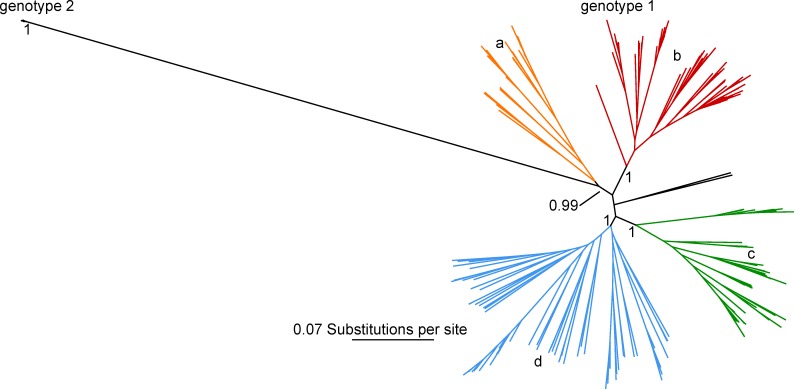
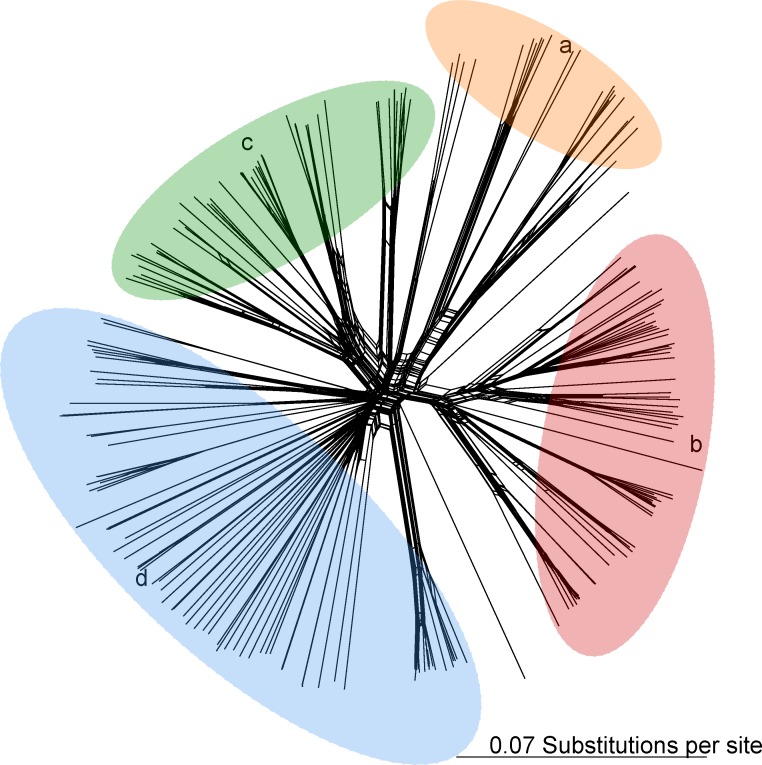
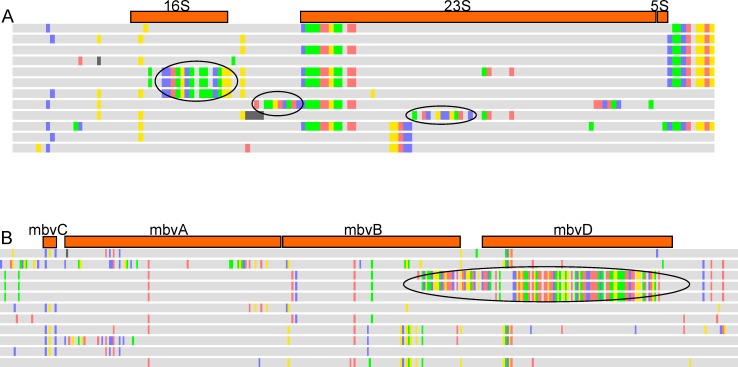
Moraxella bovoculi is frequently cultured from the ocular secretions and conjunctiva of cattle with Infectious Bovine Keratoconjunctivitis (IBK). Previous work has shown that single nucleotide polymorphism (SNP) diversity in this species is quite high with 81,284 SNPs identified in eight genomes representing two distinct genotypes isolated from IBK affected eyes (genotype 1) and the nasopharynx of cattle without clinical IBK signs (genotype 2), respectively. The goals of this study were to identify SNPs from a collection of geographically diverse and epidemiologically unlinked M. bovoculi strains from the eyes of IBK positive cattle (n = 183) and another from the eyes of cattle (most from a single population at a single time-point) without signs of IBK (n = 63) and to characterize the genetic diversity. Strains of both genotypes were identified from the eyes of cattle without IBK signs. Only genotype 1 strains were identified from IBK affected eyes, however, these strains were isolated before the discovery of genotype 2, and the protocol for their isolation would have preferentially selected genotype 1 M. bovoculi. The core genome comprised ~74% of the whole and contained >127,000 filtered SNPs. More than 80% of these characterize diversity within genotype 1 while 23,611 SNPs (~18%) delimit the two major genotypes. Genotype 2 strains lacked a repeats-in-toxin (RTX) putative pathogenesis factor and any of ten putative antibiotic resistance genes carried within a genomic island. Within genotype 1, prevalence of these elements was 0.85 and 0.12 respectively in strains from eyes that were IBK positive. Recombination appears to be an important source of genetic diversity for genotype 1 and undermines the utility of ribosomal-locus-based species identification. The extremely high genetic diversity in genotype 1 presents a challenge to the development of an efficacious vaccine directed against them, however, several low-diversity pilin-like genes were identified. Finally, the genotype-defining SNPs described in this study are a resource that can facilitate the development of more accurate M. bovoculi diagnostic tests.
Conflict of interest statement
The authors have declared that no competing interests exist.
Figures
References
-
- Webber JJ, Selby LA (1981) Risk factors related to the prevalence of infectious bovine keratoconjunctivitis. J Am Vet Med Assoc 179:823–826. - PubMed
-
- Brown MH, Brightman AH, Fenwick BW, Rider MA (1998) Infectious Bovine Keratoconjunctivitis: A Review. J Vet Intern Med 12:259–266. - PubMed
-
- Gould S, Dewell R, Tofflemire K, Whitley RD, Millman ST, Opriessnig T, Rosenbusch R, Trujillo J, O’Connor AM (2013) Randomized blinded challenge study to assess association between Moraxella bovoculi and infectious bovine keratoconjunctivitis in dairy calves. Vet Microbiol 164:108–115. 10.1016/j.vetmic.2013.01.038 - DOI - PubMed
-
- Angelos JA, Spinks PQ, Ball LM, George LW (2007) Moraxella bovoculi sp. nov., isolated from calves with infectious bovine keratoconjunctivitis. Int J Syst Evol Microbiol 57:789–795. 10.1099/ijs.0.64333-0 - DOI - PubMed
-
- Dewell RD, Millman ST, Gould SA, Tofflemire KL, Whitley RD, Parsons RL, Rowe EW, Liu F, Wang C, O’Connor AM (2014) Evaluating approaches to measuring ocular pain in bovine calves with corneal scarification and infectious bovine keratoconjunctivitis-associated corneal ulcerations. J Anim Sci 94:1161–1172. - PubMed
Publication types
MeSH terms
LinkOut - more resources
Full Text Sources
