


Immediate Hypersensitivity to Polyethylene Glycols and Polysorbates: More Common Than We Have Recognized
- PMID: 30557713
- PMCID: PMC6706272
- DOI: 10.1016/j.jaip.2018.12.003
Immediate Hypersensitivity to Polyethylene Glycols and Polysorbates: More Common Than We Have Recognized
Abstract
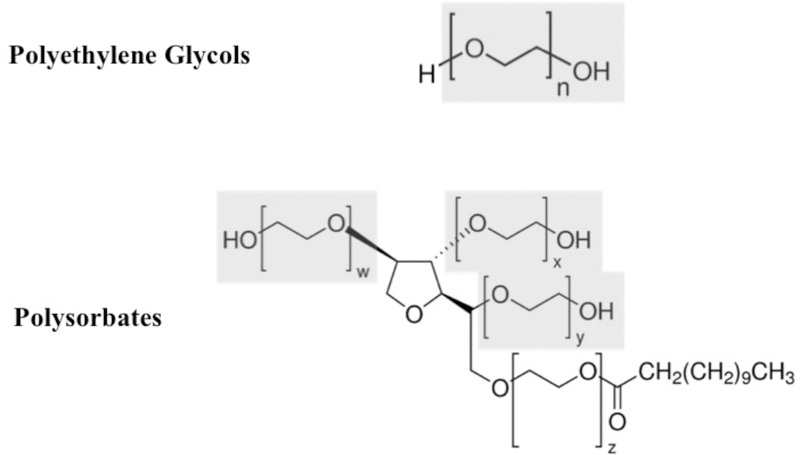
Background: The most common immediate hypersensitivity to macrogols is associated with polyethylene glycol (PEG) 3350; however, the epidemiology, mechanisms, and cross-reactivity are poorly understood. Thousands of medications contain either PEGs or structurally similar polysorbates.
Objective: Our objective was to better understand the mechanism, cross-reactivity, and scope of PEG hypersensitivity.
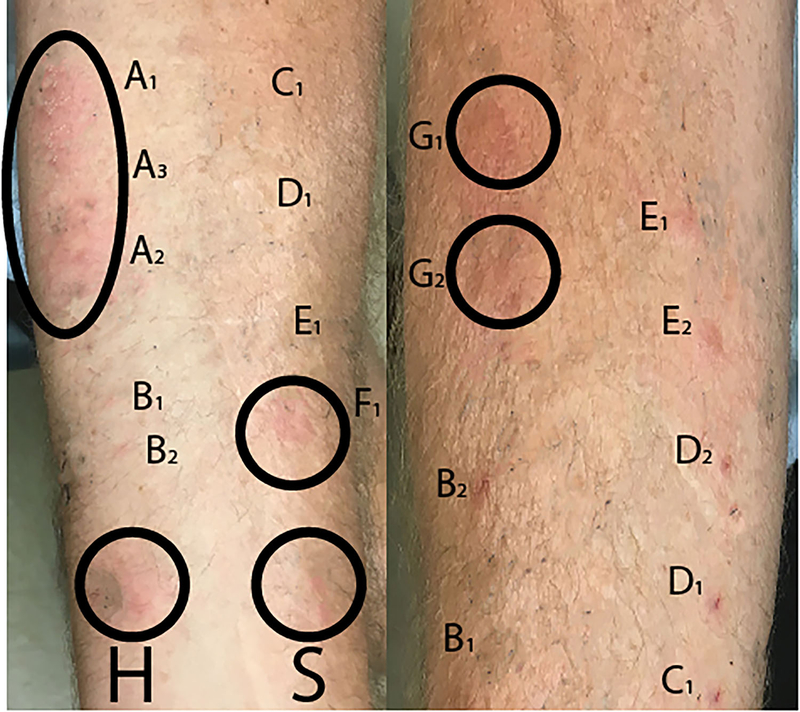
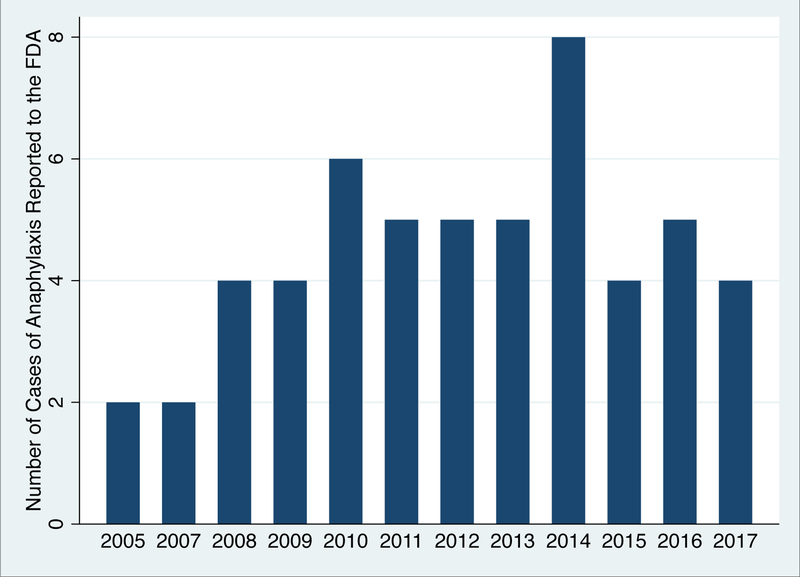
Methods: Two cases with a past history of immediate hypersensitivity to PEG-containing medications were used to study potential mechanisms and cross-reactivity of immediate reactions to PEG 3350. Skin testing and oral challenges with PEG and polysorbate-containing agents were employed to determine clinical reactivity and cross-reactivity between the 2 allergens. Enzyme-linked immunosorbent assay and electrochemiluminescent immunoassay were used to detect anti-PEG specific IgG and IgE, respectively, using PEGylated protein or PEG alone as antigens in 2 cases and 6 PEG 3350 tolerant controls. We searched US Food and Drug Administration (FDA) adverse event reports for immediate reactions to PEG 3350 to determine the potential scope of this problem in the United States.
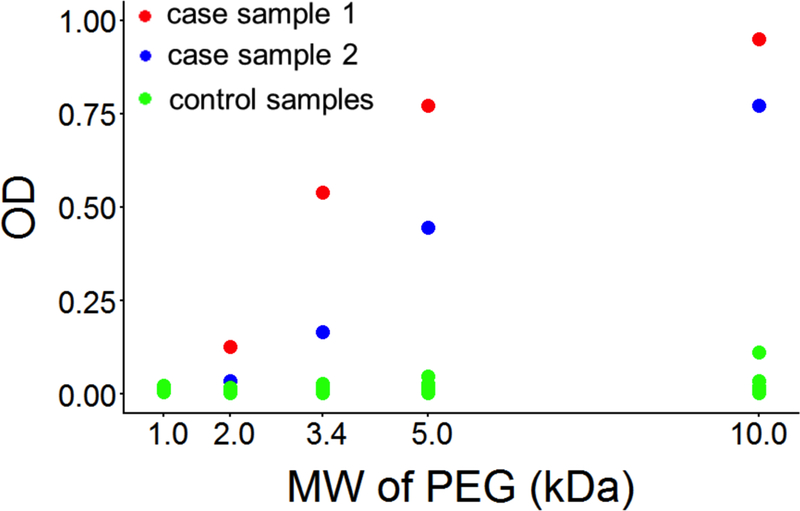
Results: Skin and provocation testing demonstrated symptomatic reactivity in both cases to PEG 3350 and polysorbate 80. Plasma samples were positive for anti-PEG specific IgE and IgG antibodies only in cases and binding increased directly proportional to the molecular weight of PEG tested. FDA adverse event reports revealed 53 additional cases of possible PEG 3350 anaphylaxis.
Conclusions: Immediate hypersensitivity to PEG 3350 with cross-reactive polysorbate 80 hypersensitivity may be underrecognized in clinical practice and can be detected with clinical skin testing. Our studies raise the possibility of an IgE-mediated type I hypersensitivity mechanism in some cases.
Keywords: Allergy; Immediate hypersensitivity; PEG; Polyethylene glycol; Polysorbate.
Copyright © 2018 American Academy of Allergy, Asthma & Immunology. Published by Elsevier Inc. All rights reserved.
Conflict of interest statement
Figures
Comment in
-
Polyethylene Glycol Is a Cause of IgE-Mediated Anaphylaxis.J Allergy Clin Immunol Pract. 2019 Jul-Aug;7(6):1874-1875. doi: 10.1016/j.jaip.2019.05.001. J Allergy Clin Immunol Pract. 2019. PMID: 31279466 No abstract available.
-
Polyethylene glycols and polysorbates: Two still neglected ingredients causing true IgE-mediated reactions.J Allergy Clin Immunol Pract. 2019 Sep-Oct;7(7):2509-2510. doi: 10.1016/j.jaip.2019.05.058. J Allergy Clin Immunol Pract. 2019. PMID: 31495440 No abstract available.
References
-
- CarbowaxTM Polyethylene Glycols: Industrial Brochure http://www.dow.com/polyglycols/polyethylene/products/carbowaxp.htm: Dow Chemical; 2016.].
-
- Hyry H, Vuorio A, Varjonen E, Skyttä J, Mäkinen-Kiljunen S. Two cases of anaphylaxis to macrogol 6000 after ingestion of drug tablets. Allergy 2006; 61:1021. - PubMed
-
- NIH Daily Med https://dailymed.nlm.nih.gov/dailymed/: National Library of Medicine; 2018.].
-
- Pizzimenti S, Heffler E, Gentilcore E, Raie A, Bussolino C, Nebiolo F, et al. Macrogol hypersensitivity reactions during cleansing preparation for colon endoscopy. J Allergy Clin Immunol Pract 2014; 2:353–4. - PubMed
Publication types
MeSH terms
Substances
Grants and funding
LinkOut - more resources
Full Text Sources
Miscellaneous
