


Clinical effects of extracorporeal shock-wave therapy and ultrasound-guided local corticosteroid injections for plantar fasciitis in adults: A meta-analysis of randomized controlled trials
- PMID: 30558080
- PMCID: PMC6320028
- DOI: 10.1097/MD.0000000000013687
Clinical effects of extracorporeal shock-wave therapy and ultrasound-guided local corticosteroid injections for plantar fasciitis in adults: A meta-analysis of randomized controlled trials
Abstract
Background: The argument on whether extracorporeal shock-wave therapy (ESWT) and corticosteroid injections (CSIs) exert an equivalent pain control or which is the better treatment for plantar fasciitis (PF) in adults remains to be resolved. It is important and necessary to conduct a meta-analysis to make a relatively more credible and overall assessment about which treatment method performs better pain control in treatment of PF in adults.
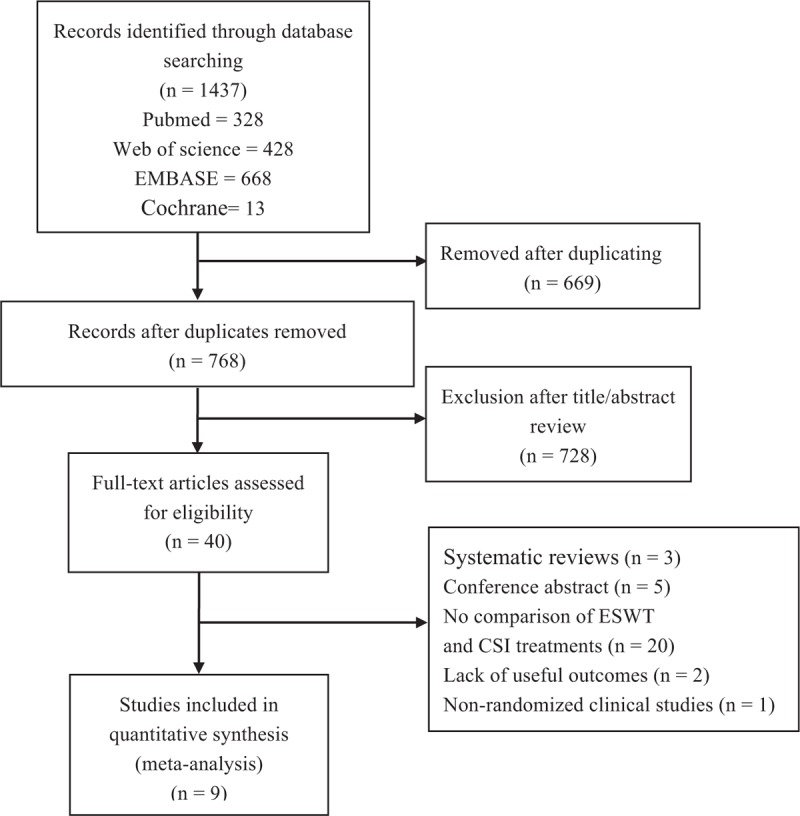
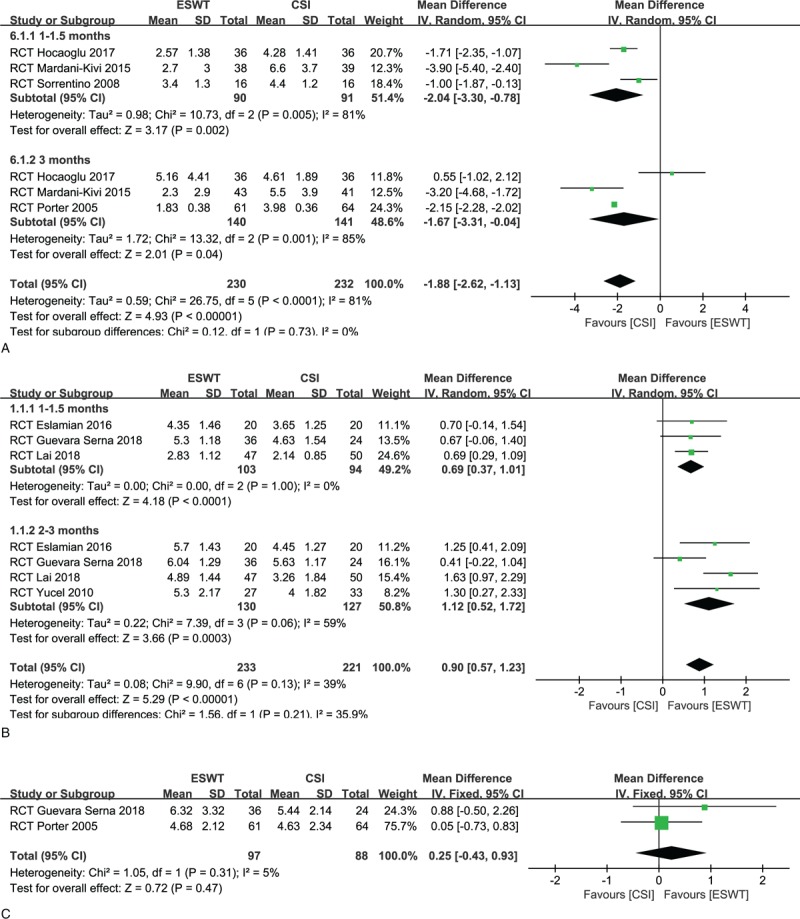
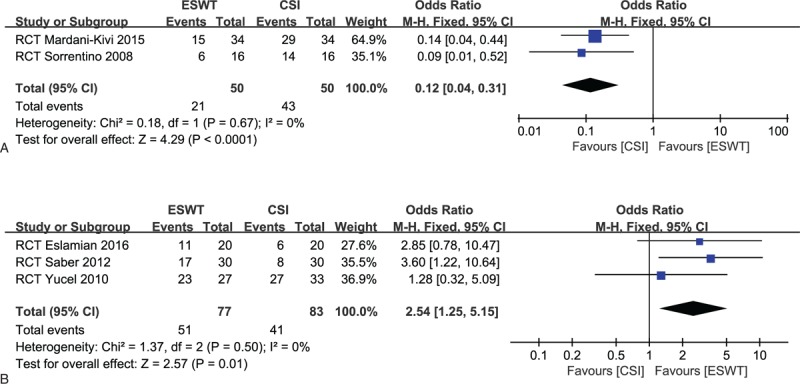
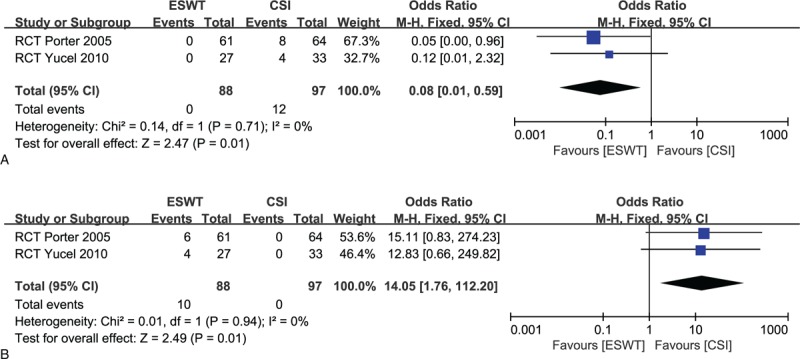
Methods: From the inception to July 2018, the Embase, PubMed, Web of Science, and Cochrane Library electronic databases were searched for all relevant studies. Only randomized controlled trials (RCTs) focusing on comparing ESWT and CSI therapies in PF cases in adults were included. The primary outcome measure was visual analog scale (VAS) reduction, whereas the secondary outcomes included treatment success rate, recurrence rate, function scores, and adverse events.
Results: Nine RCTs involving 658 cases were included in this meta-analysis. In the present study, meta-analysis showed that high-intensity ESWT had superior pain relief and success rates relative to the CSI group within 3 months, but the ESWT with low intensity was slightly inferior to CSI for efficacy within 3 months. In addition, patients with CSI may tend to increase the need for the analgesic and more adverse events may be associated with the ESWT. However, the ESWT and CSI present similar recurrent rate and functional outcomes.
Conclusion: Our analysis showed that the pain relief and success rates were related to energy intensity levels, with the high-intensity ESWT had the highest probability of being the best treatment within 3 months, followed by CSI, and low-intensity ESWT. More high-quality RCTs with long-term follow-up time are needed to further compare the differences of CSI and ESWT for adults with PF.
Conflict of interest statement
The authors report no conflicts of interest.
Figures

References
-
- Gerdesmeyer L, Frey C, Vester J, et al. Radial extracorporeal shock wave therapy is safe and effective in the treatment of chronic recalcitrant plantar fasciitis: results of a confirmatory randomized placebo-controlled multicenter study. Am J Sports Med 2008;36:2100–9. - PubMed
-
- Ibrahim MI, Donatelli RA, Schmitz C, et al. Chronic plantar fasciitis treated with two sessions of radial extracorporeal shock wave therapy. Foot Ankle Int 2010;31:391–7. - PubMed
-
- Rompe JD, Furia J, Weil L, et al. Shock wave therapy for chronic plantar fasciopathy. Br Med Bull 2007;81-82:183–208. - PubMed
-
- Dizon JN, Gonzalez-Suarez C, Zamora MT, et al. Effectiveness of extracorporeal shock wave therapy in chronic plantar fasciitis: a meta-analysis. Am J Phys Med Rehabil 2013;92:606–20. - PubMed
-
- Tu P, Bytomski JR. Diagnosis of heel pain. Am Fam Physician 2011;84:909–16. - PubMed
Publication types
MeSH terms
Substances
LinkOut - more resources
Full Text Sources
Medical
