


Prebiotics and synbiotics - in ovo delivery for improved lifespan condition in chicken
- PMID: 30558599
- PMCID: PMC6296066
- DOI: 10.1186/s12917-018-1738-z
Prebiotics and synbiotics - in ovo delivery for improved lifespan condition in chicken
Abstract
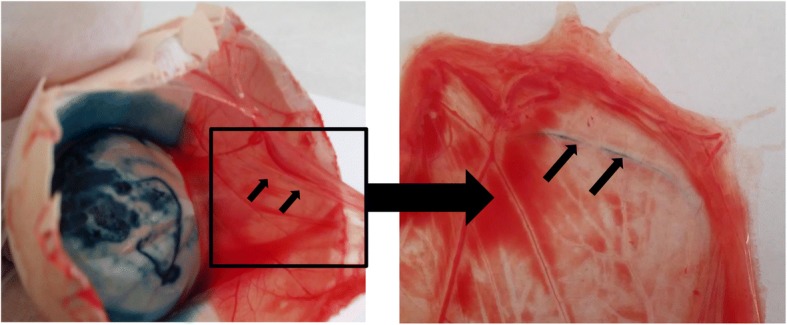
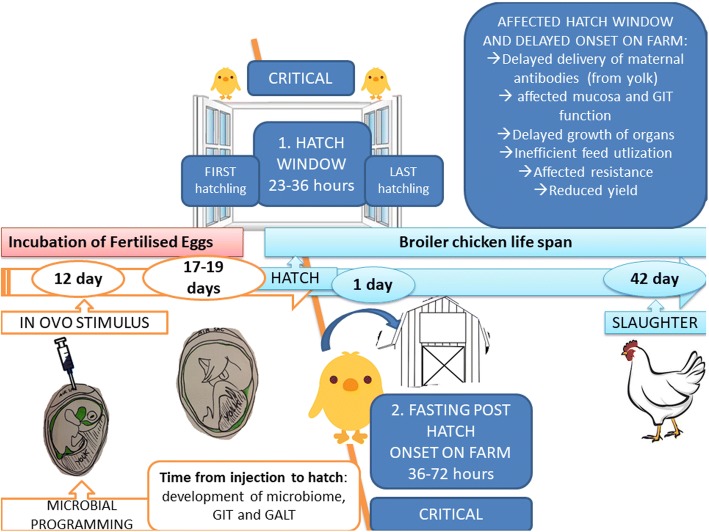
Commercially produced chickens have become key food-producing animals in the global food system. The scale of production in industrial settings has changed management systems to a point now very far from traditional methods. During the perinatal period, newly hatched chicks undergo processing, vaccination and transportation, which introduces a gap in access to feed and water. This gap, referred to as the hatching window, dampens the potential for microflora inoculation and as such, prevents proper microbiome, gastrointestinal system and innate immunity development. As a consequence, the industrial production of chickens with a poor microbial profile leads to enteric microbial infestation and infectious disease outbreaks, which became even more prevalent after the withdrawal of antibiotic growth promoters on many world markets (e.g., the EU).This review presents the rationale, methodology and life-long effects of in ovo stimulation of chicken microflora. In ovo stimulation provides efficient embryonic microbiome colonization with commensal microflora during the perinatal period. A carefully selected bioactive formulation (prebiotics, probiotics alone or combined into synbiotics) is delivered into the air cell of the egg on day 12 of egg incubation. The prebiotic penetrates the outer and inner egg membranes and stimulates development on the innate microflora in the embryonic guts. Probiotics are available after the mechanical breakage of the shell membranes by the chick's beak at the beginning of hatching (day 19). The intestinal microflora after in ovo stimulation is potent enough for competitive exclusion and programs the lifespan condition. We present the effects of different combinations of prebiotic and probiotic delivered in ovo on day 12 of egg incubation on microflora, growth traits, feed efficiency, intestinal morphology, meat microstructure and quality, immune system development, physiological characteristics and the transcriptome of the broiler chickens.We discuss the differences between in ovo stimulation (day 12 of egg incubation) and in ovo feeding (days 17-18 of egg incubation) and speculate about possible future developments in this field. In summary, decades of research on in ovo stimulation and the lifelong effects support this method as efficient programming of lifespan conditions in commercially raised chickens.
Keywords: Broilers; Day 12 of egg incubation; Embryonic development; Gene expression; Hatching window; Intestinal morphology; Microflora; Performance; Synbiotics.
Conflict of interest statement
Ethics approval and consent to participate
Not applicable.
Consent for publication
Not applicable.
Competing interests
The authors declare that they have no competing interests.
Publisher’s Note
Springer Nature remains neutral with regard to jurisdictional claims in published maps and institutional affiliations.
Figures
References
-
- Hunter MC, Smith RG, Schipanski ME, Atwood LW, Mortensen DA. Agriculture in 2050: recalibrating targets for sustainable intensification. Bioscience. 2017;67:386–391. doi: 10.1093/biosci/bix010. - DOI
-
- Aleksandratos, Bruinsma. World Agriculture towards 2030/2050: The 2012 Revision. ESA Working Paper No. 12–03. Rome: FAO; 2012.
-
- Xin H, Liu K. Precision livestock farming in egg production. Anim Front. 2017;7:24. doi: 10.2527/af.2017.0105. - DOI
-
- Mollo V. Okano. Precision livestock tools to improve products and processes in broiler production: a review. Braz J. Poult Sci. 2009;11:211–218.
Publication types
MeSH terms
Substances
Grants and funding
LinkOut - more resources
Full Text Sources
Other Literature Sources
Research Materials
Miscellaneous
