


Petroleum Hydrocarbon-Degrading Bacteria for the Remediation of Oil Pollution Under Aerobic Conditions: A Perspective Analysis
- PMID: 30559725
- PMCID: PMC6287552
- DOI: 10.3389/fmicb.2018.02885
Petroleum Hydrocarbon-Degrading Bacteria for the Remediation of Oil Pollution Under Aerobic Conditions: A Perspective Analysis
Abstract
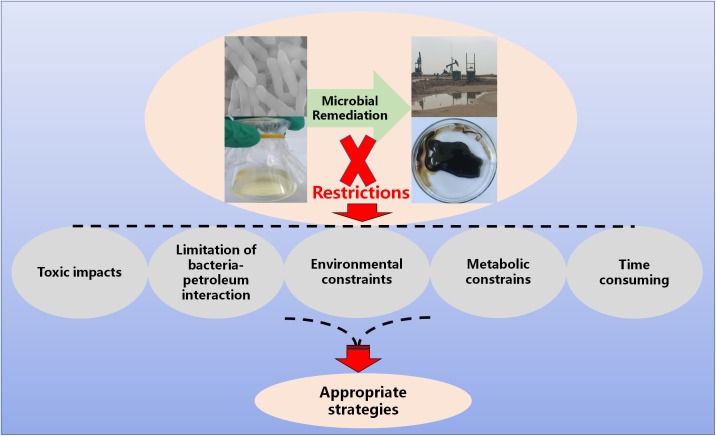
With the sharp increase in population and modernization of society, environmental pollution resulting from petroleum hydrocarbons has increased, resulting in an urgent need for remediation. Petroleum hydrocarbon-degrading bacteria are ubiquitous in nature and can utilize these compounds as sources of carbon and energy. Bacteria displaying such capabilities are often exploited for the bioremediation of petroleum oil-contaminated environments. Recently, microbial remediation technology has developed rapidly and achieved major gains. However, this technology is not omnipotent. It is affected by many environmental factors that hinder its practical application, limiting the large-scale application of the technology. This paper provides an overview of the recent literature referring to the usage of bacteria as biodegraders, discusses barriers regarding the implementation of this microbial technology, and provides suggestions for further developments.
Keywords: bacterial consortia; bioremediation; environmental factors; enzymes; petroleum hydrocarbon-degrading bacteria; petroleum oil.
Figures
References
-
- Abed R. M. M., Al-Kharusi S., Al-Hinai M. (2015). Effect of biostimulation, temperature and salinity on respiration activities and bacterial community composition in an oil polluted desert soil. Int. Biodeterior. Biodegrad. 98 43–52. 10.1016/j.ibiod.2014.11.018 - DOI
-
- Abuhamed T., Bayraktar E., Mehmetoğlu T., Mehmetoğlu Ü. (2004). Kinetics model for growth of Pseudomonas putida F1 during benzene, toluene and phenol biodegradation. Process Biochem. 39 983–988. 10.1016/S0032-9592(03)00210-3 - DOI
Publication types
LinkOut - more resources
Full Text Sources
Other Literature Sources
