


Reforming Medical Education in Pakistan through strengthening Departments of Medical Education
- PMID: 30559800
- PMCID: PMC6290219
- DOI: 10.12669/pjms.346.15942
Reforming Medical Education in Pakistan through strengthening Departments of Medical Education
Abstract
Objective: To review the current status of departments of medical education in all public and private medical colleges located in the city of Lahore, Pakistan.
Methods: This was a quantitative, cross sectional descriptive study; conducted from March to October 2015 in Pakistan Medical & Dental Council (PM&DC) recognized medical colleges located in Lahore, Pakistan. Respondents were the heads of departments of medical education or any other well-informed faculty member. A questionnaire was prepared to obtain information about the current status of the departments of medical education (DMEs). The investigator personally visited all medical colleges for data collection. Both verbal and written consents were obtained and the questionnaire was administered to the resource persons. The data was organized and entered in SPSS for descriptive analysis.
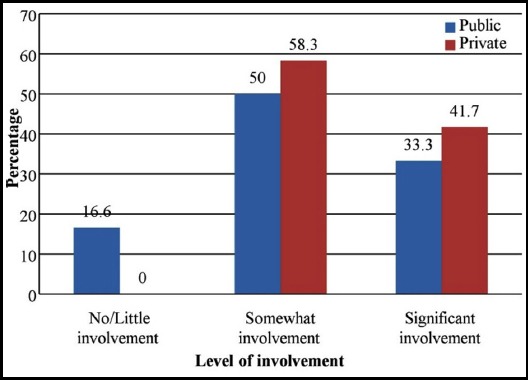
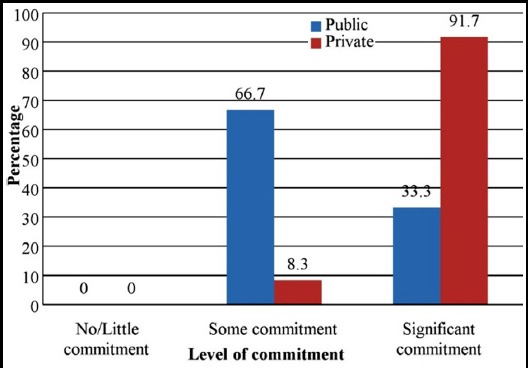
Results: Out of the 18 medical colleges in Lahore, six (33.3%) belonged to public sector and 12 (66.7%) were from private sector. All medical colleges reported to have a functional DME. However, eight had established DMEs during the past five years. Only one (5.6%) head of DME was working on full-time basis. Eleven (61.1%) heads of DMEs did not have any formal qualification in medical education. Eight (44.4%) colleges claimed to have adequate human resources for DME. Thirteen (72.2%) colleges mentioned that adequate financial resources were available for running DMEs. It is encouraging to see that DMEs in private sector medical colleges are playing increasingly significant role in managing educational activities. Similarly, the senior management of private sector seems to be relatively more eager to promote educational activities.
Conclusion: There is an increasing recognition towards establishing DMEs in the medical colleges, but their infrastructure, proper functioning and availability of human and financial resources are serious impediments requiring immediate attention.
Keywords: Department of Medical Education; Faculty Development; Medical Colleges; Medical Education.
Figures
References
-
- Dent J, Harden RM. A practical guide for medical teachers. Elsevier Health Sciences. 2017
-
- McKimm J. Current trends in undergraduate medical education:program and curriculum design. Samoa Med J. 2010;1(2):40–48.
-
- Bleakley A, Brice J, Bligh J. Thinking the post-colonial in medical education. Med Educ. 2008;42(3):266–270. - PubMed
-
- Maniate JM. Trends and Opportunities in Medical Education:Aligning to Societal Needs and Expectations. Arch Med Heal Sci. 2017;5(2):154–156. doi:10.4103/amhs.amhs_98_17.
LinkOut - more resources
Full Text Sources
Miscellaneous