


Postoperative Complications Associated With Spine Surgery in Patients Older Than 90 Years: A Multicenter Retrospective Study
- PMID: 30560042
- PMCID: PMC6293421
- DOI: 10.1177/2192568218767430
Postoperative Complications Associated With Spine Surgery in Patients Older Than 90 Years: A Multicenter Retrospective Study
Abstract
Study design: A review of a prospective database.
Objectives: Surgery for elderly patients is increasing yearly due to aging of society and the desire for higher quality of life. The goal of the study was to examine perioperative complications in spine surgery in such patients.
Methods: A multicenter study of surgical details and perioperative complications was performed in 35 patients aged older than 90 years who underwent spinal surgery, based on a review of a prospective database. The frequency and severity of complications were assessed, and the effects of patient-specific and surgical factors were examined. Major complications were defined as those that were life threatening, required reoperation in the perioperative period or left a permanent injury. Ambulatory function before and after surgery was also analyzed.
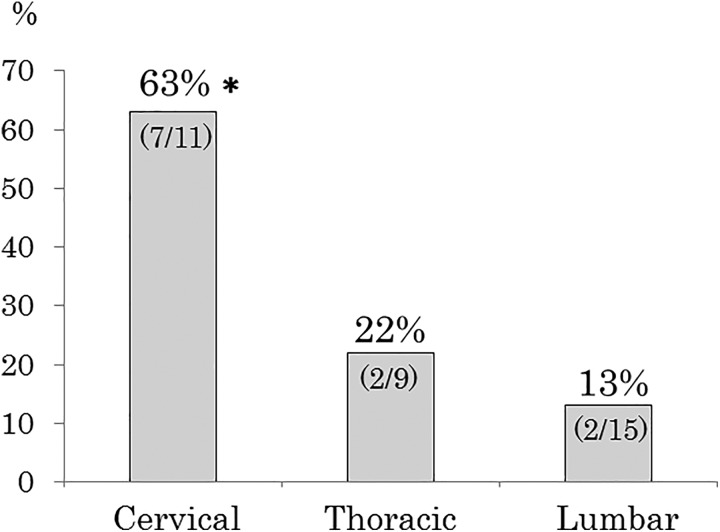
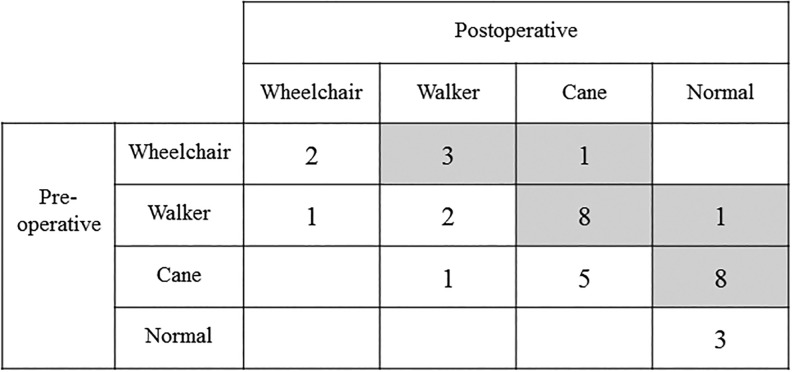
Results: Perioperative complications occurred in 19 of the 35 cases (54%), and included 11 cases of postoperative delirium, most of which occurred after cervical spine surgery. There were 8 major complications (23%), including cerebral infarction (n = 3), coronary heart disease (n = 3), pulmonary embolism (n = 1), and angina (n = 1). Preoperative motor deficit, operative time, estimated blood loss, and instrumented fusion were significantly associated with major complications. An improved postoperative ambulatory status occurred in 61% of cases, with no change in 33%, and worsening in 2 cases (6%).
Conclusions: Timing of surgery before paralysis progression and reduced surgical invasiveness are important considerations in treatment of the very elderly. Improved outcomes can be obtained with better management of spine surgery for patients aged 90 years or older.
Keywords: complications; elderly patients; multicenter study; older than 90 years; spine surgery.
Conflict of interest statement
Declaration of Conflicting Interests: The author(s) declared no potential conflicts of interest with respect to the research, authorship, and/or publication of this article.
Figures
References
-
- Statistics Bureau. The 64th Japan statistical yearbook 2015. http://www.stat.go.jp/english/data/nenkan/back64/index.htm. Accessed March 8, 2018.
-
- Gorman M. Development and the rights of older people In: Randel EJ, German T, Ewing D, eds. The Ageing and Development Report: Poverty, Independence and the World’s Older People. London, England: Earthscan; 1999:3–21.
-
- Roebuck J. When does “old age begin?”: the evolution of the English definition. J Soc Hist. 1979;12:416–428.
-
- Thane P. History and the sociology of ageing. Soc Hist Med. 1989;2:93–96.
-
- Bydon M, Abt NB, De la Garza-Ramos R, et al. Impact of age on short-term outcomes after lumbar fusion: an analysis of 1395 patients stratified by decade cohorts. Neurosurgery. 2015;77:347–353. - PubMed
Publication types
LinkOut - more resources
Full Text Sources
