


Protease-activated receptor 4 activity promotes platelet granule release and platelet-leukocyte interactions
- PMID: 30560697
- PMCID: PMC6397092
- DOI: 10.1080/09537104.2017.1406076
Protease-activated receptor 4 activity promotes platelet granule release and platelet-leukocyte interactions
Abstract
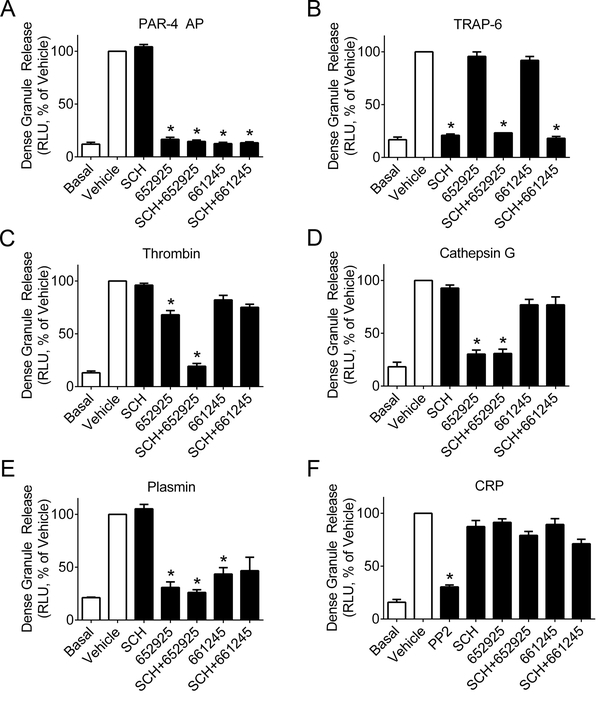
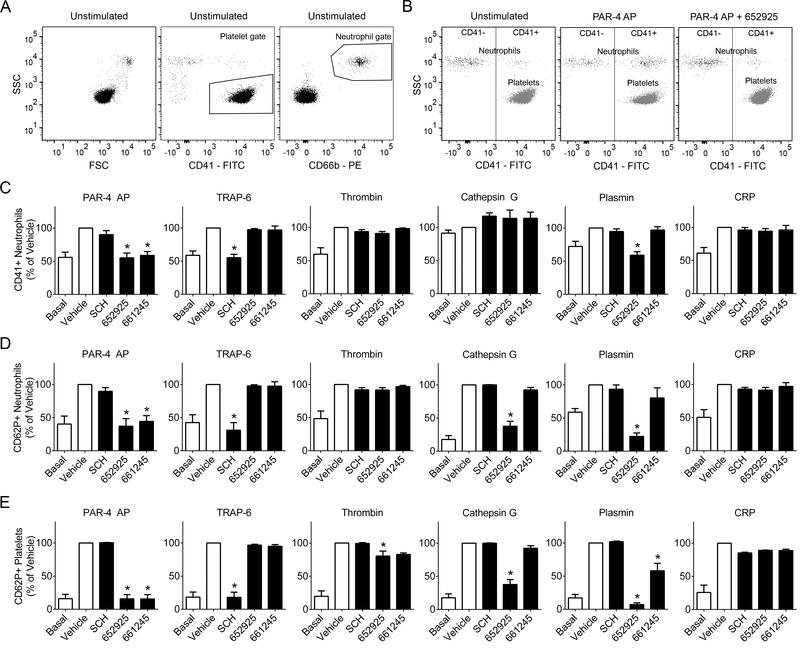
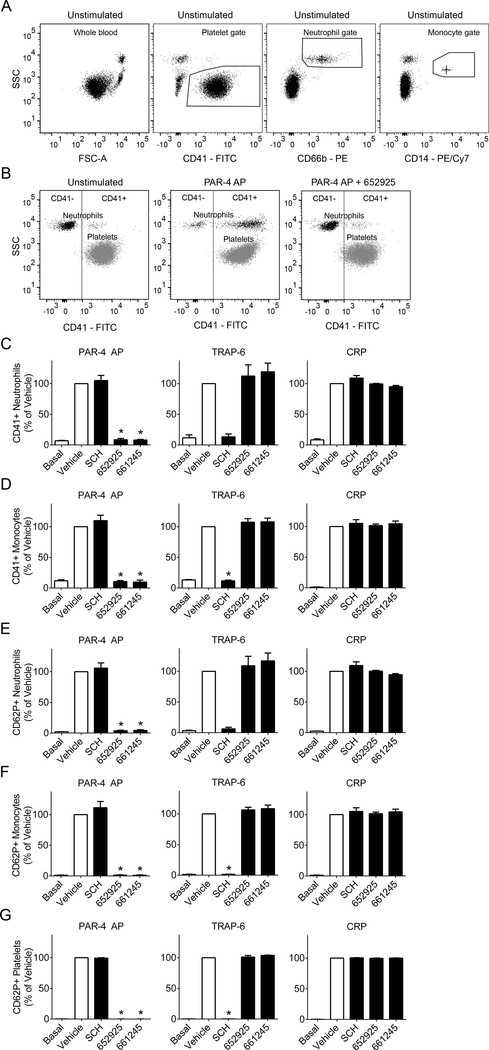
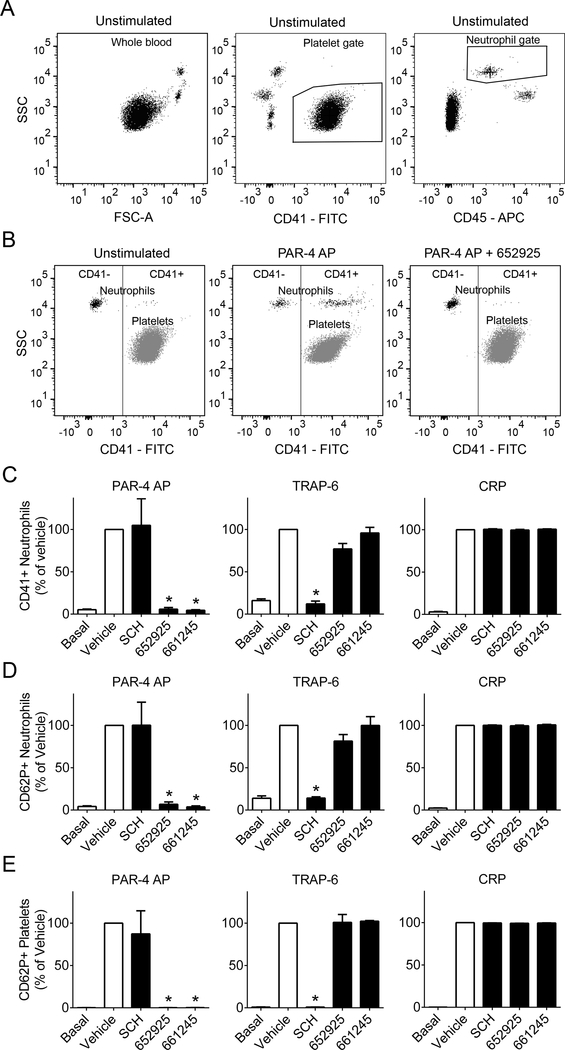
Human platelets express two protease-activated receptors (PARs), PAR1 (F2R) and PAR4 (F2RL3), which are activated by a number of serine proteases that are generated during pathological events and cause platelet activation. Recent interest has focused on PAR4 as a therapeutic target, given PAR4 seems to promote experimental thrombosis and procoagulant microparticle formation, without a broadly apparent role in hemostasis. However, it is not yet known whether PAR4 activity plays a role in platelet-leukocyte interactions, which are thought to contribute to both thrombosis and acute or chronic thrombo-inflammatory processes. We sought to determine whether PAR4 activity contributes to granule secretion from activated platelets and platelet-leukocyte interactions. We performed in vitro and ex vivo studies of platelet granule release and platelet-leukocyte interactions in the presence of PAR4 agonists including PAR4 activating peptide, thrombin, cathepsin G, and plasmin in combination with small-molecule PAR4 antagonists. Activation of human platelets with thrombin, cathepsin G, or plasmin potentiated platelet dense granule secretion that was specifically impaired by PAR4 inhibitors. Platelet-leukocyte interactions and platelet P-selectin exposure the following stimulation with PAR4 agonists were also impaired by activated PAR4 inhibition in either a purified system or in whole blood. These results indicate PAR4-specific promotion of platelet granule release and platelet-leukocyte aggregate formation and suggest that pharmacological control of PAR4 activity could potentially attenuate platelet granule release or platelet-leukocyte interaction-mediated pathological processes.
Keywords: PAR4; granulocytes; platelet activation; platelet dense granule release; platelet-leukocyte interactions; protease-activated receptor 4.
Conflict of interest statement
Disclosures
A. Gruber and OHSU have financial interest in Aronora, Inc., a company that may have a commercial interest in the result of this research. This potential conflict of interest has been reviewed and managed by the OHSU Conflict of Interest in Research Committee.
Figures
References
MeSH terms
Substances
Grants and funding
LinkOut - more resources
Full Text Sources
Other Literature Sources
Miscellaneous
