


A Systematic Review of Behavioral Intervention Technologies for Youth With Chronic Health Conditions and Physical and Intellectual Disabilities: Implications for Adolescents and Young Adults With Spina Bifida
- PMID: 30561676
- PMCID: PMC6415660
- DOI: 10.1093/jpepsy/jsy097
A Systematic Review of Behavioral Intervention Technologies for Youth With Chronic Health Conditions and Physical and Intellectual Disabilities: Implications for Adolescents and Young Adults With Spina Bifida
Abstract
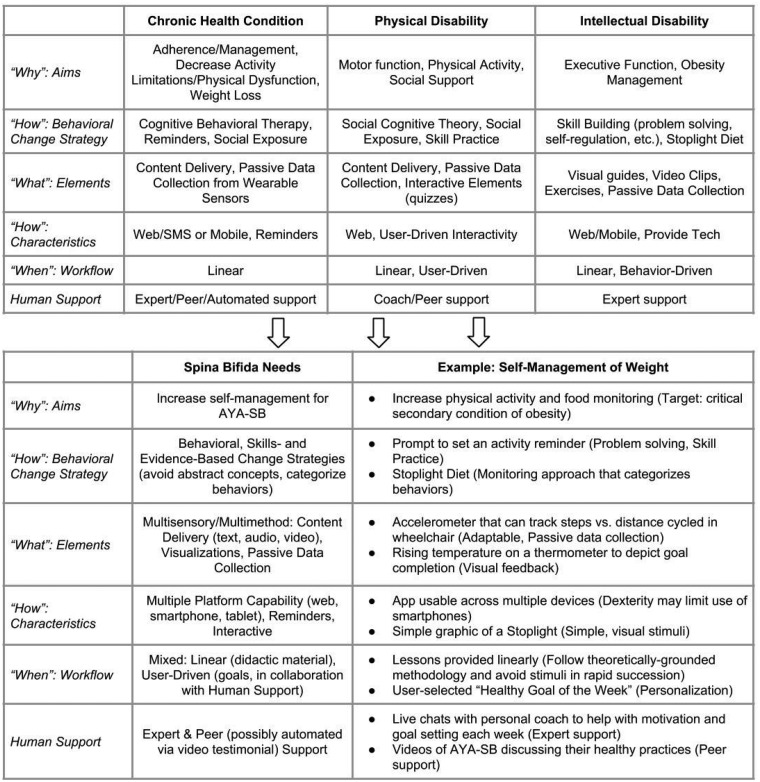
Objective: Behavioral intervention technologies (BITs) stand as a promising delivery mechanism that overcomes multiple condition-specific and access barriers for self-management interventions for adolescents and young adults with spina bifida (AYA-SB). The purpose of the current review was to synthesize the behavioral and self-management intervention literature in conditions that have overlapping symptoms with youth with SB and to develop a model of likely user needs for AYA-SB that promotes self-management.
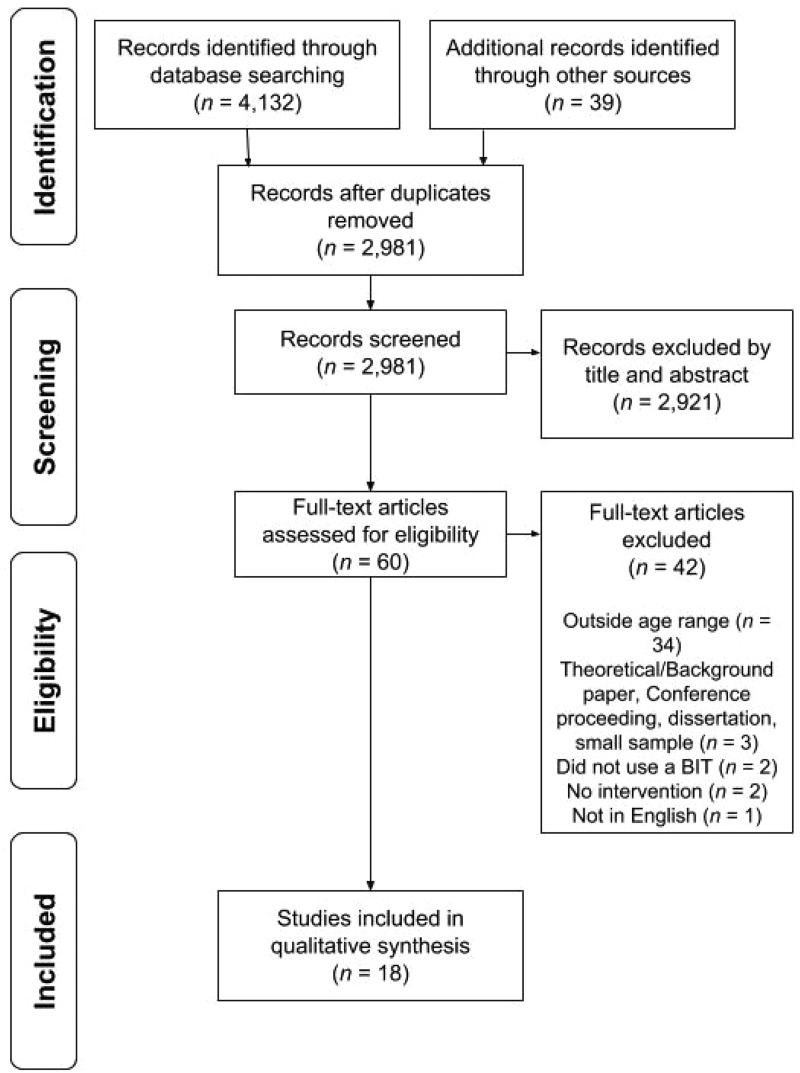
Method: The search strategy was conducted by a medical research librarian in the following databases: MEDLINE (Ovid), EMBASE (Elsevier), PsycINFO (EbscoHost), the Cochrane Library (Wiley), and Web of Science (Thomson Reuters) databases. The review was based on a systematic narrative synthesis framework and adhered to the Preferred Reporting Items for Systematic Reviews and Meta-Analyses guidelines (registration number CRD42018092342).
Results: In total, 18 articles were included in the current BIT review. The majority of included studies (1) targeted the management of chronic health conditions, (2) were informed by evidence-based approaches, (3) relied on content delivery, (4) were Web-based, (5) used linear or user-driven workflows, (6) included professional human support, and (7) included a control condition.
Conclusions: Many of the evaluated BITs resulted in acceptable usage and maintained or improved targeted symptoms. A user needs model for AYA-SB is proposed with the intention that future research will promote further refinement and ultimate deployment of a BIT for AYA-SB to promote self-management.
Keywords: AYA; behavioral intervention technologies; chronic health; intellectual disability; physical disability; self-management; spina bifida.
© The Author(s) 2018. Published by Oxford University Press on behalf of the Society of Pediatric Psychology. All rights reserved. For permissions, please e-mail: journals.permissions@oup.com.
Figures
References
-
- Betz C. L., Smith K. A., Macias K., Bui K. (2014). Exploration of internet use: profile and preferences of transition-aged adolescents with spina bifida. Pediatric Nursing, 40, 173–178. - PubMed
-
- Boudos R. M., Mukherjee S. (2008). Barriers to community participation: Teens and young adults with spina bifida. Journal of Pediatric Rehabilitation and Medicine, 1, 303–310. - PubMed
-
- Brooke J. (1996). SUS: A “quick and dirty” usability scale In Jordan P. W., Thomas B., Weerdmeester B. A. (Eds.), Usability evaluation in industry (pp. 189–194). London, UK: Taylor & Francis.
Publication types
MeSH terms
Grants and funding
LinkOut - more resources
Full Text Sources
Medical
