


Testing a biobehavioral model of fatigue before adjuvant therapy in women with breast cancer
- PMID: 30561795
- PMCID: PMC6373488
- DOI: 10.1002/cncr.31827
Testing a biobehavioral model of fatigue before adjuvant therapy in women with breast cancer
Abstract
Background: Fatigue is one of the most common and disabling side effects of cancer and its treatment. Although research typically has focused on fatigue that occurs during and after treatment, patients may experience fatigue even before treatment onset. The current study was designed to identify biobehavioral risk factors associated with fatigue before adjuvant therapy in women with early-stage breast cancer.
Methods: Patients with stage 0 to stage IIIA breast cancer (270 women) were recruited before the onset of adjuvant or neoadjuvant therapy with radiotherapy, chemotherapy, and/or endocrine therapy. Host factors that may influence fatigue were identified from an empirically based, biobehavioral model and assessed using self-report questionnaires, medical record review, and blood collection (for genetic data). Fatigue was assessed by questionnaire. Linear regression analyses were used to evaluate the association between host factors and dimensions of fatigue, with general fatigue as the primary dimension of interest.
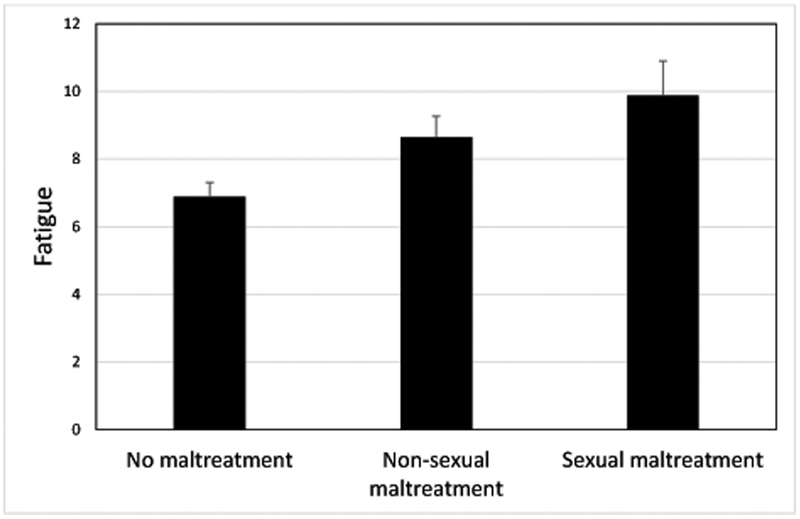
Results: Fatigue was elevated at the pretreatment assessment compared with published controls. Bivariate analyses identified demographic, cancer-related, and biobehavioral correlates of fatigue. In the multivariable model, predictors of general fatigue included younger age, lower educational level, lower cancer stage, and history of childhood maltreatment (all P values <.05), with the full model accounting for approximately 18.4% of the variance in fatigue. Secondary analyses identified common and specific predictors of emotional, mental, and physical dimensions of fatigue.
Conclusions: Among women who have not yet initiated treatment of breast cancer, demographic and psychosocial factors are associated with elevated fatigue and could be used to identify at-risk patients for early intervention.
Keywords: breast cancer; childhood adversity; depression; fatigue; genetic; host factors.
© 2018 American Cancer Society.
Figures
References
-
- Mitchell SA. Cancer-related fatigue: state of the science. PMR 2010; 2(5): 364–83. - PubMed
-
- Curt GA, Breitbart W, Cella D, et al. Impact of cancer-related fatigue on the lives of patients: new findings from the Fatigue Coalition. Oncologist 2000; 5(5): 353–60. - PubMed
-
- Groenvold M, Petersen MA, Idler E, Bjorner JB, Fayers PM, Mouridsen HT. Psychological distress and fatigue predicted recurrence and survival in primary breast cancer patients. Breast Cancer Res Treat 2007; 105: 209–19. - PubMed
-
- Servaes P, Verhagen C, Bleijenberg G. Fatigue in cancer patients during and after treatment: prevalence, correlates and interventions. EurJ Cancer 2002; 38(1): 27–43. - PubMed
