


Management of Chronic Hepatitis B: Knowledge and Practices of Physicians in Pakistan
- PMID: 30563995
- PMCID: PMC6286432
- DOI: 10.1016/j.jceh.2017.12.009
Management of Chronic Hepatitis B: Knowledge and Practices of Physicians in Pakistan
Abstract
Background: In Pakistan, approximately 4.5 million people are afflicted with chronic hepatitis B (CHB). The compliance with hepatitis B virus (HBV) management guidelines is still unknown. This was the first study from Pakistan in which the knowledge and practices of treating physicians were compared with three standardized guidelines (Asia Pacific Association for the Study of the Liver (APASL) 2012/European Association for the Study of the Liver (EASL) 2012/American Association for the Study of Liver Diseases (AASLD) 2009).
Methods: A cross-sectional study was conducted during 2014-2015 at four tertiary care teaching hospitals of Karachi, Pakistan. The study participants were internists, gastroenterologist, senior residents who were involved in the management of CHB patients. All participants were offered to fill the study questionnaire.
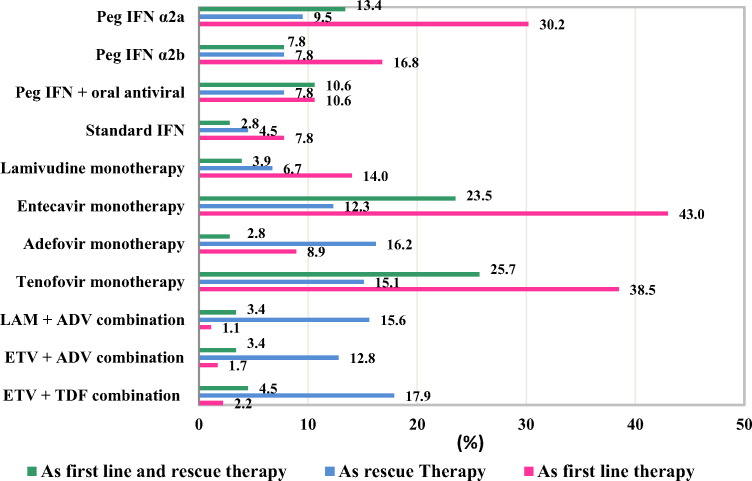
Results: A total of 179 physicians (103 residents, 76 consultants) participated. Mean age of participant was 35 ± 9.3 years. Approximately one-third of them followed AASLD (27.3%) and EASL (24.0%) guidelines. Entecavir, tenofovir or Peg IFN ∞ 2a were considered as first line therapy by 43%, 38.5% and 30.2% respectively. However, 17.9% preferred entecavir with tenofovir for rescue therapy, 25.7% and 23.5% preferred tenofovir or entecavir as both first line and rescue therapy respectively. Serum HBV DNA, alanine transaminase levels were used to monitor during oral antivirals therapy by 45.3%. hepatocellular carcinoma screening was considered for all HBV cases by 51.4% using ultrasound (55.3%) and alfa fetoprotein (52.5%) every 6 months.Overall 40.2% participants had poor knowledge about indication of liver biopsy, treatment initiation and antiviral prophylaxis. Significant association was found between grades of knowledge and gender, age group, designation and specialty (P < 0.05). Younger physicians, consultants (age 25-40 years) and those who were practicing gastroenterology/hepatology were more likely to have higher knowledge scores in compliance with the guidelines as compared to others.
Conclusion: Our study highlighted the gaps in knowledge and practices in managing CHB patients according to guidelines. Efforts to improve knowledge, refresher courses and appropriate coordination between gastroenterologists and internal medicine physicians could enable management and follow-up of patients with CHB effectively.
Keywords: AASLD, American Association for the Study of Liver Diseases; ADV, adefovir; APASL, Asia Pacific Association for the Study of the Liver; CHB, chronic hepatitis B; EASL, European Association for the Study of the Liver; ESLD, end stage liver disease; ETV, entecavir; HBIg, hepatitis B immunoglobulin; HCC, hepatocellular carcinoma; LAM, lamivudine; NAs, nucleoside/nucleotide analogs; PMDC, Pakistan Medical and Dental Council; Peg IFN, pegylated interferon; TDF, tenofovir; chronic hepatitis B; compliance; guidelines; knowledge; practices.
Figures


References
-
- WHO . vol 2016. WHO; Geneva: 2015. (Hepatitis B Fact Sheet No. 204).
-
- WHO . vol 2016. WHO; Geneva: 2015. (Hepatitis C Fact Sheet No. 164).
-
- WHO . vol 2016. WHO; Geneva: 2015. (HIV/AIDS Fact Sheet No. 360).
-
- Averhoff F. vol 2017. Centre for Disease Control and Prevention; 2016. (Infectious Diseases Related to Travel. Hepatitis B).
-
- Schweitzer A., Horn J., Mikolajczyk R.T., Krause G., Ott J.J. Estimations of worldwide prevalence of chronic hepatitis B virus infection: a systematic review of data published between 1965 and 2013. Lancet. 2015;386:1546–1555. - PubMed
LinkOut - more resources
Full Text Sources
