. 2018 Dec 18;19(12):4117.
doi: 10.3390/ijms19124117.

Tissue-Engineered Grafts from Human Decellularized Extracellular Matrices: A Systematic Review and Future Perspectives

Affiliations

Tissue-Engineered Grafts from Human Decellularized Extracellular Matrices: A Systematic Review and Future Perspectives

Andrea Porzionato et al. Int J Mol Sci. .

Abstract

Tissue engineering and regenerative medicine involve many different artificial and biologic materials, frequently integrated in composite scaffolds, which can be repopulated with various cell types. One of the most promising scaffolds is decellularized allogeneic extracellular matrix (ECM) then recellularized by autologous or stem cells, in order to develop fully personalized clinical approaches. Decellularization protocols have to efficiently remove immunogenic cellular materials, maintaining the nonimmunogenic ECM, which is endowed with specific inductive/differentiating actions due to its architecture and bioactive factors. In the present paper, we review the available literature about the development of grafts from decellularized human tissues/organs. Human tissues may be obtained not only from surgery but also from cadavers, suggesting possible development of Human Tissue BioBanks from body donation programs. Many human tissues/organs have been decellularized for tissue engineering purposes, such as cartilage, bone, skeletal muscle, tendons, adipose tissue, heart, vessels, lung, dental pulp, intestine, liver, pancreas, kidney, gonads, uterus, childbirth products, cornea, and peripheral nerves. In vitro recellularizations have been reported with various cell types and procedures (seeding, injection, and perfusion). Conversely, studies about in vivo behaviour are poorly represented. Actually, the future challenge will be the development of human grafts to be implanted fully restored in all their structural/functional aspects.

Keywords: biomechanics; body donation; cell colonization; decellularization; extracellular matrix; human; mesenchymal stem cells; regenerative medicine; scaffolds; transplantation.


Conflict of interest statement

The authors declare no conflicts of interest.

Figures
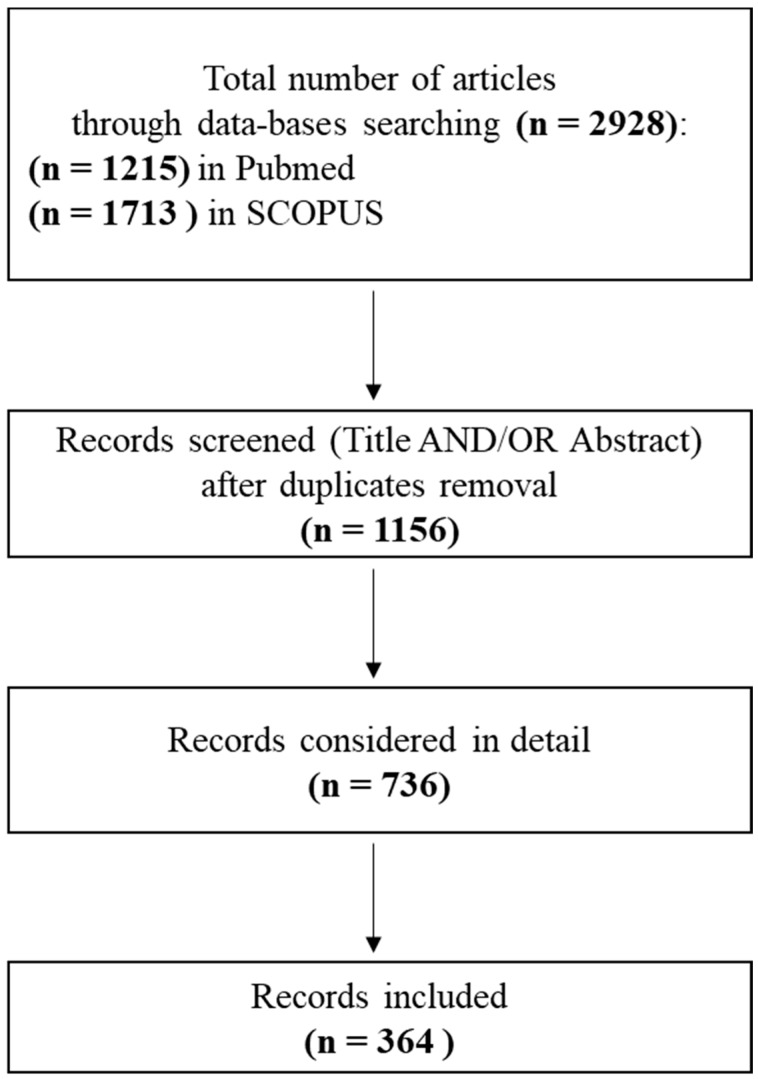
Figure 1
Figure 1
Flow diagram showing the literature search criteria adopted.
Figure 2
Figure 2
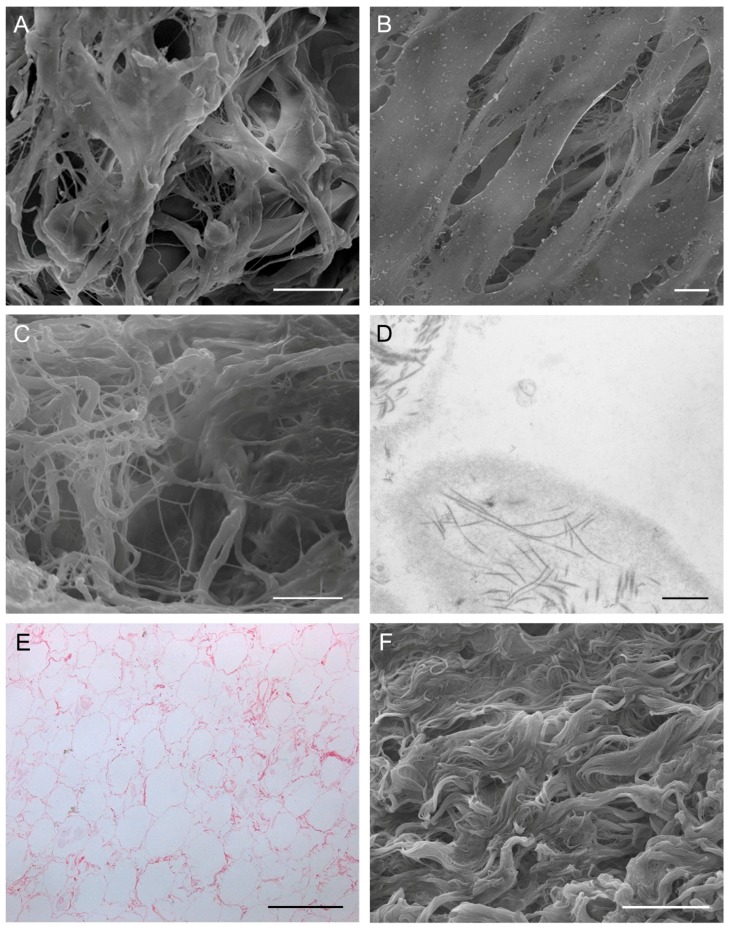
Decellularized human extracellular matrices. Ultrastuctural appearance: scanning electron microscope image of an articular cartilage scaffold before (A) and 14 days after primary human chondrocytes seeding (B). Human cartilage was decellularized, homogenated, and lyophilized according to the experience of our group. Scanning (C) and transmission (D) electron microscope micrographs of decellularized skeletal muscle. Hematoxylin/eosin staining (E) and scanning electron microscope ultrastructural analysis (F) of decellularized omentum. Scale bars: (A,F), 50 µm; (B,C), 10 µm; (D), 1 µm; (E), 100 µm.
Figure 3
Figure 3
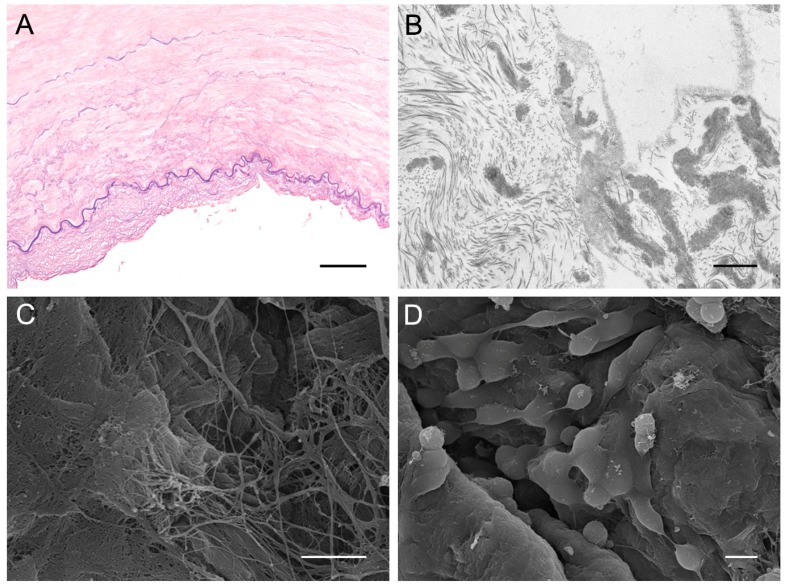
Scaffolds from human radial artery and umbilical cord Wharton’s jelly. Hematoxylin/eosin staining (A) and transmission electron microscope micrograph (B) of decellularized radial artery. Ultrastructural appearance at electron scanning microscope of Wharton’s jelly scaffold before (C) and 24 h after SHSY-5Y cells seeding (D) (unpublished data). Wharton’s jelly was decellularized, homogenated, and lyophilized according the experience of our group. Scale bars: (A), 100 µm; (B), 1 µm; (C), 5 µm; and (D), 10 µm.

References

    1. Gao L.P., Du M.J., Lv J.J., Schmull S., Huang R.T., Li J. Use of human aortic extracellular matrix as a scaffold for construction of a patient-specific tissue engineered vascular patch. Biomed. Mater. 2017;12:065006. doi: 10.1088/1748-605X/aa801b. - DOI - PubMed
    1. Kartus J., Movin T., Karlsson J. Donor-site morbidity and anterior knee problems after anterior cruciate ligament reconstruction using autografts. Arthroscopy. 2001;17:971–980. doi: 10.1053/jars.2001.28979. - DOI - PubMed
    1. Konofaos P., Ver Halen J.P. Nerve repair by means of tubulization: Past, present, future. J. Reconstr. Microsurg. 2013;29:149–164. doi: 10.1055/s-0032-1333316. - DOI - PubMed
    1. Khan F., Tanaka M. Designing Smart Biomaterials for Tissue Engineering. Int. J. Mol. Sci. 2017;19:17. doi: 10.3390/ijms19010017. - DOI - PMC - PubMed
    1. Bryksin A.V., Brown A.C., Baksh M.M., Finn M.G., Barker T.H. Learning from nature—Novel synthetic biology approaches for biomaterial design. Acta Biomater. 2014;10:1761–1769. doi: 10.1016/j.actbio.2014.01.019. - DOI - PMC - PubMed

Publication types