


Living with autoinflammatory diseases: identifying unmet needs of children, adolescents and adults
- PMID: 30572912
- PMCID: PMC6302479
- DOI: 10.1186/s12969-018-0300-7
Living with autoinflammatory diseases: identifying unmet needs of children, adolescents and adults
Abstract
Background: Autoinflammatory diseases (AIDs) illnesses of the innate immunity resulting in clinical signs and symptoms of systemic inflammation and loss of organ functions. While pathophysiological mechanisms are heavily studied and increasingly well understood, psychosocial needs are much less explored. The disease impact on the everyday life of patients including school and work is poorly studied. The purpose of the study was to identify the spectrum of unmet needs of children, adolescents and adults living with autoinflammatory disease and their families, to define key unmet needs and strategies and to develop and evaluate a pilot intervention addressing the unmet need "school".
Methods: A single-center, mixed-method study of AID patients and their families was conducted. Consecutive patients ages ≥4 years and their families were included. Expert consulting, focus groups and questionnaires explored the patient perspective of "unmet needs in AID". Quantitative and qualitative content analyses were performed and informed the development of a framework of unmet needs. A targeted pilot multimodular intervention for the unmet need "school" was developed and tested. Health-related Quality of Life (HRQoL) was evaluated using DISABKIDS-questionnaires and psychosocial impact evaluations.
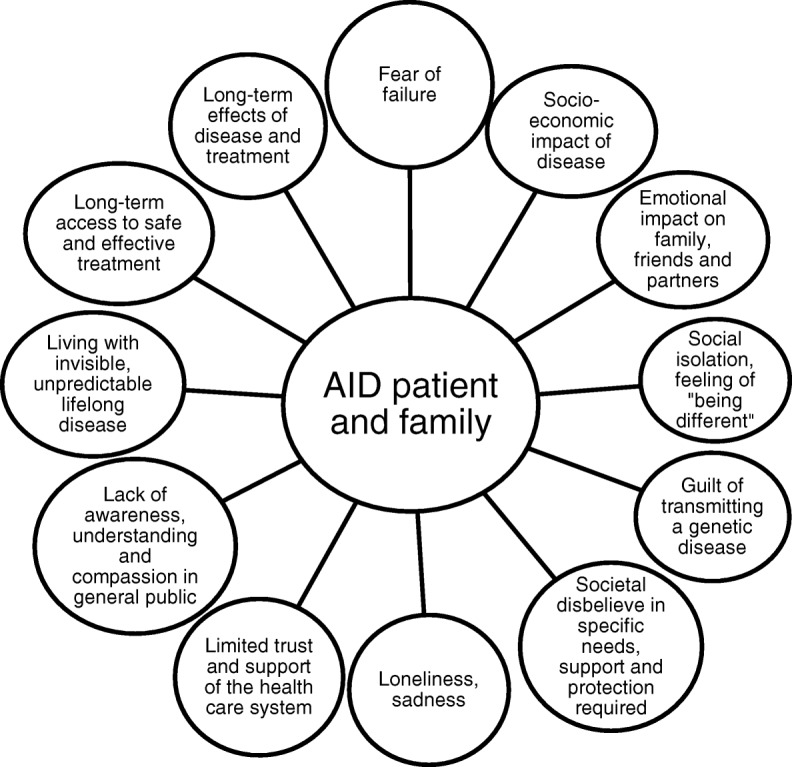
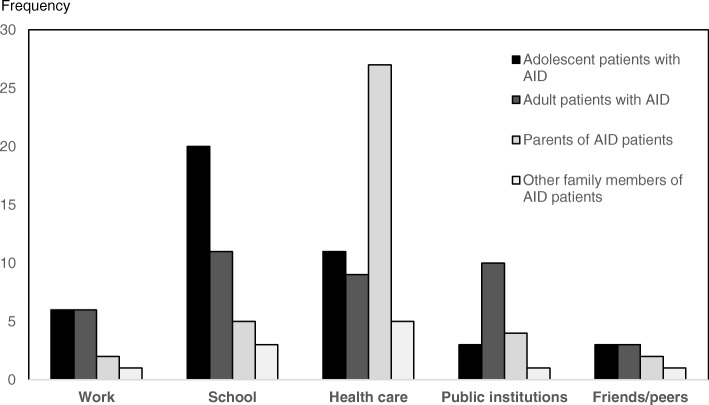
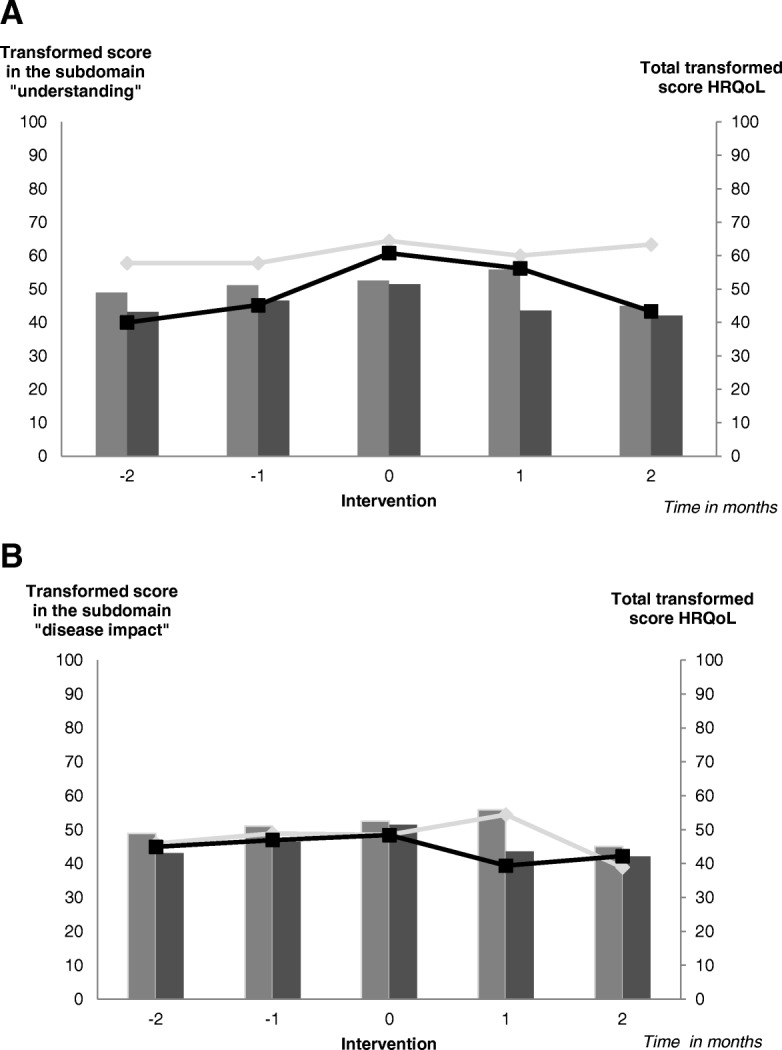
Results: The study included 83 patients and their families. These were 14 children, 9 adolescents and 25 adults with AID and 35 family members; patients' median age was 19 years (5-78). Expert consultations: 110 AID patients with 320 visits/year; 99 (90%) were children and adolescents. 78 patients and family members (94%) participated in 10 groups. Qualitative content analysis delineated 9 domains of unmet needs, the most relevant being school, health care system and public institutions. The pilot intervention"school" included 18 participants; median age was 9 years (7-16). HRQoL improved with the intervention including "understanding" by 53%, however improvement was not sustained over time.
Conclusion: Unmet needs of AID patients and families affect all areas of life. Accessible networks increasing knowledge and empowering patients, strategies supporting academic and workplace environments to ensure successful participation and integrated concepts addressing psychosocial needs are urgently needed.
Keywords: Autoinflammatory disease; Health communication; Health-related quality of life; Intervention; Participation; Psychosocial impact; Rare disease; School bullying; School performance; Unmet needs.
Conflict of interest statement
Ethics approval and consent to participate
The study was approved by the Institutional Research Ethics Board (No. 079-2015BO2). All participating study subjects gave written informed consent or assent as appropriate.
Consent for publication
Not applicable
Competing interests
G.E. and K.S. were partially funded through the Margarete-Mueller Bull Stiftung and a research grant of Novartis Pharma. G.E. also received speaker honoraria from Novartis Pharma. C.M. was partially funded through a center grant of Novartis Pharma. S.H. received honoraria from Novartis Pharma for Advisory Board attendance. S.B. received speaker honoraria from Novartis and SOBI. J.B.K.-D. performed clinical studies with and received educational, research and center grants and honoraria from Novartis and SOBI. T.S. did not receive any funding for this work. All authors declare no conflict of interest for the published work.
Publisher’s Note
Springer Nature remains neutral with regard to jurisdictional claims in published maps and institutional affiliations.
Figures
References
-
- Kuemmerle-Deschner JB, Lohse P, Koetter I, Dannecker GE, Reess F, Ummenhofer K, et al. NLRP3 E311K mutation in a large family with muckle-Wells syndrome--description of a heterogeneous phenotype and response to treatment. Arthritis Res Ther. 2011;13(6):R196. doi: 10.1186/ar3526. - DOI - PMC - PubMed
MeSH terms
Grants and funding
LinkOut - more resources
Full Text Sources
Medical
