. 2019 Jan 18;363(6424):270-275.
doi: 10.1126/science.aav3421. Epub 2018 Dec 20.

Concise total syntheses of (-)-jorunnamycin A and (-)-jorumycin enabled by asymmetric catalysis

Affiliations

Concise total syntheses of (-)-jorunnamycin A and (-)-jorumycin enabled by asymmetric catalysis

Eric R Welin et al. Science. .

Abstract

The bis-tetrahydroisoquinoline (bis-THIQ) natural products have been studied intensively over the past four decades for their exceptionally potent anticancer activity, in addition to strong Gram-positive and Gram-negative antibiotic character. Synthetic strategies toward these complex polycyclic compounds have relied heavily on electrophilic aromatic chemistry, such as the Pictet-Spengler reaction, that mimics their biosynthetic pathways. Herein, we report an approach to two bis-THIQ natural products, jorunnamycin A and jorumycin, that instead harnesses the power of modern transition-metal catalysis for the three major bond-forming events and proceeds with high efficiency (15 and 16 steps, respectively). By breaking from biomimicry, this strategy allows for the preparation of a more diverse set of nonnatural analogs.


Figures

Fig. 1.
Fig. 1.. bis-Tetrahydroisoquinoline natural products.
Jorumycin (1), ecteinascidin 743 (2), and jorunnamycin A (3). Me, methyl; Ac, acetyl; COAc, pyruvyl; X, oxygen or nitrogen substitution; G, oxygen or carbon substitution; R, generic alkyl substitution.
Fig. 2.
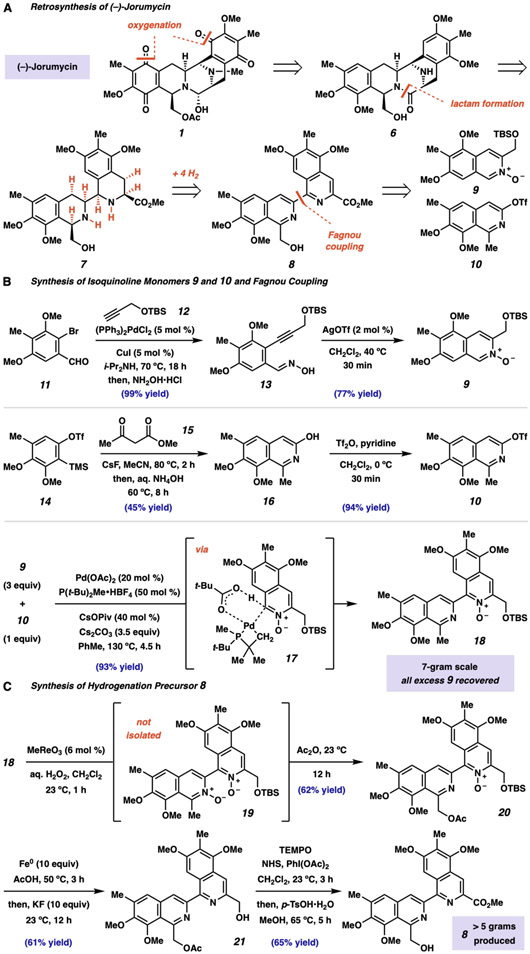
Fig. 2.. Considerations for an orthogonal synthesis of jorunnamycin A and jorumycin.
(A) Retrosynthetic analysis leading to a synthesis of jorumycin that deviates from previous synthetic strategies. (B) Isoquinoline 9 and 10 were synthesized in two steps each from aryl bromide 11 and ortho-silyl aryl triflate 14, respectively. (C) Boekelheide rearrangement provided an efficient and scalable route to bis-isoquinoline 8 under mild conditions. TBS, tert-butyldimethylsilyl; Ph, phenyl; i-Pr, isopropyl; aq., aqueous; Tf, trifluoromethanesulfonyl, TMS, trimethylsilyl; MeCN, acetonitrile; t-Bu, tert-butyl; Piv, trimethyl-acetyl; equiv, molar equivalent; TEMPO, 2,2,6,6-tetramethylpiperidine-N-oxyl; NHS, N-hydroxysuccinimide; p-TsOH•H2O, para-toluenesulfonic acid monohydrate.
Fig 3.
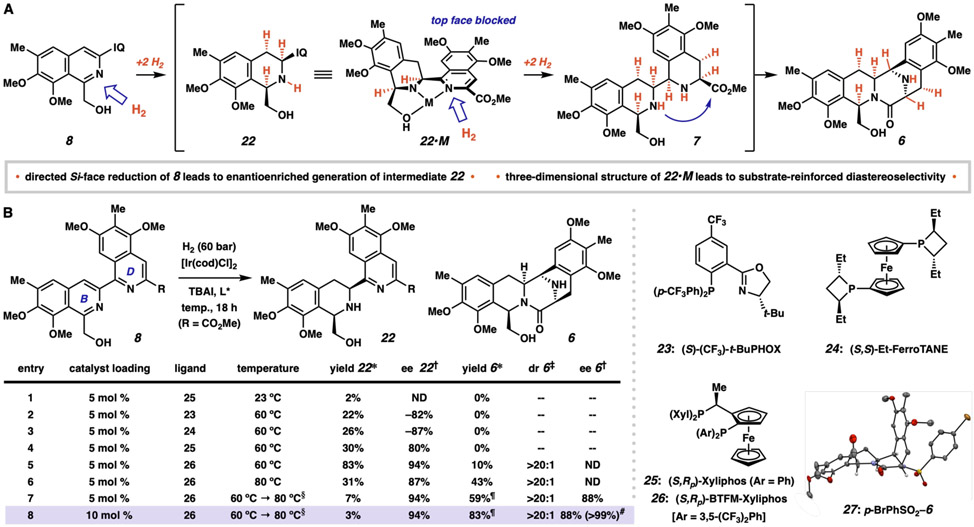
Fig 3.. Development of the enantioselective hydrogenation.
(A) Stereochemical rationale for the enantio- and diastereoselective hydrogenation of bis-isoquinoline 8. (B) Optimization of the hydrogenation reaction. Unless otherwise noted, all reactions were performed in 9:1 toluene:acetic acid (0.02 M) using a 1.2:1 ligand:metal ratio and a 3:1 iodide:metal ratio under a hydrogen atmosphere (60 bar) for 18 h. *Measured by UHPLC-MS UV absorption vs. 1,3,5-trimethoxybenzene internal standard unless otherwise noted. Measured by chiral HPLC analysis. Measured by 1H-NMR analysis of the crude reaction mixture. §Reaction performed at 60 °C for 18 h, then the temperature was raised to 80 °C and maintained at that temperature for 24 h. Yield of isolated product after column chromatography using 10.5 mol % 26 in entry 7 and 21 mol % 26 in entry 8. #After one recrystallization. IQ, 3-carbomethoxy-5,7-dimethoxy-6-methylisoquinolin-1-yl; dr, diastereomeric ratio (major isomer vs. all others); ee, enantiomeric excess; cod, 1,5-cyclooctadiene; TBAI, tetra-n-butylammonium iodide; ND, not determined; Et, ethyl; Xyl, 3,5-dimethylphenyl; Ar, aryl; BTFM, 3,5-bis-trifluoromethylphenyl.
Fig. 4.
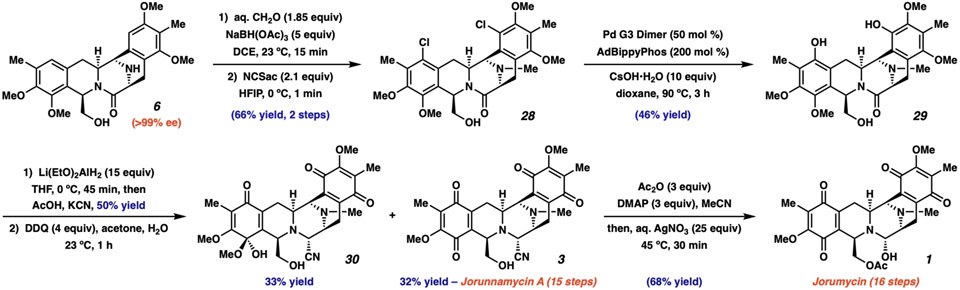
Fig. 4.. Completion of jorunnamycin A and jorumycin.
After the reductive cyclization, five and six steps, including a palladium-catalyzed hydroxylation event, were required for the complete synthesis of jorunnamycin A (3) and jorumycin (1), respectively. DCE, 1,2-dichloroethane; NCSac, N-chlorosaccharine; HFIP, 1,1,1,3,3,3-hexafluoroisopropanol; Ad, 1-adamantyl; Pd G3 Dimer, (2'-Amino-1,1'-biphenyl-2-yl)methanesulfonatopalladium(II) dimer; DDQ, 2,3-dichloro-5,6-dicyano-1,4-benzoquinone; DMAP, 4-dimethylaminopyridine.
Fig. 5.
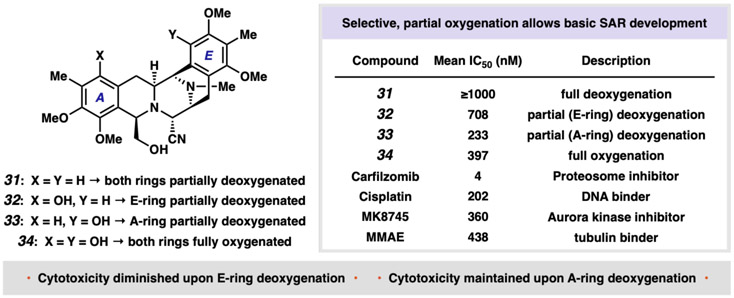
Fig. 5.. Biological evaluation of non-natural analogs.
Leveraging the non-biomimetic approach to A- and E-ring construction allows for the production of previously inaccessible bis-THIQ analogs. Data reported are IC50’s measured from whole cells treated for 6 days using a 1:5 dilution series to cover a range of concentrations from 0–1 μM from an initial 10 mM DMSO stock solution of the analog in question. The IC50 of each compound was calculated as a function of population doublings from baseline. MMAE, monomethyl auristatin E.

References

    1. Chrzanowska M, Grajewska A, Rozwadowska MD, Chem. Rev 116, 12369–12465 (2016). - PubMed
    1. Newman DJ, Cragg GM, J. Nat. Prod 79, 629–661 (2016). - PubMed
    1. Cuevas C, Francesch A, Nat. Prod. Rep 26, 322–337 (2009). - PubMed
    1. Cuevas C, et al. , Org. Lett 2, 2545–2548 (2000). - PubMed
    1. Lown JW, Joshua AV, Lee JS, Biochemistry 21, 419–428 (1982). - PubMed

Publication types