


Cancer communication research in the era of genomics and precision medicine: a scoping review
- PMID: 30573799
- PMCID: PMC7725534
- DOI: 10.1038/s41436-018-0402-0
Cancer communication research in the era of genomics and precision medicine: a scoping review
Abstract
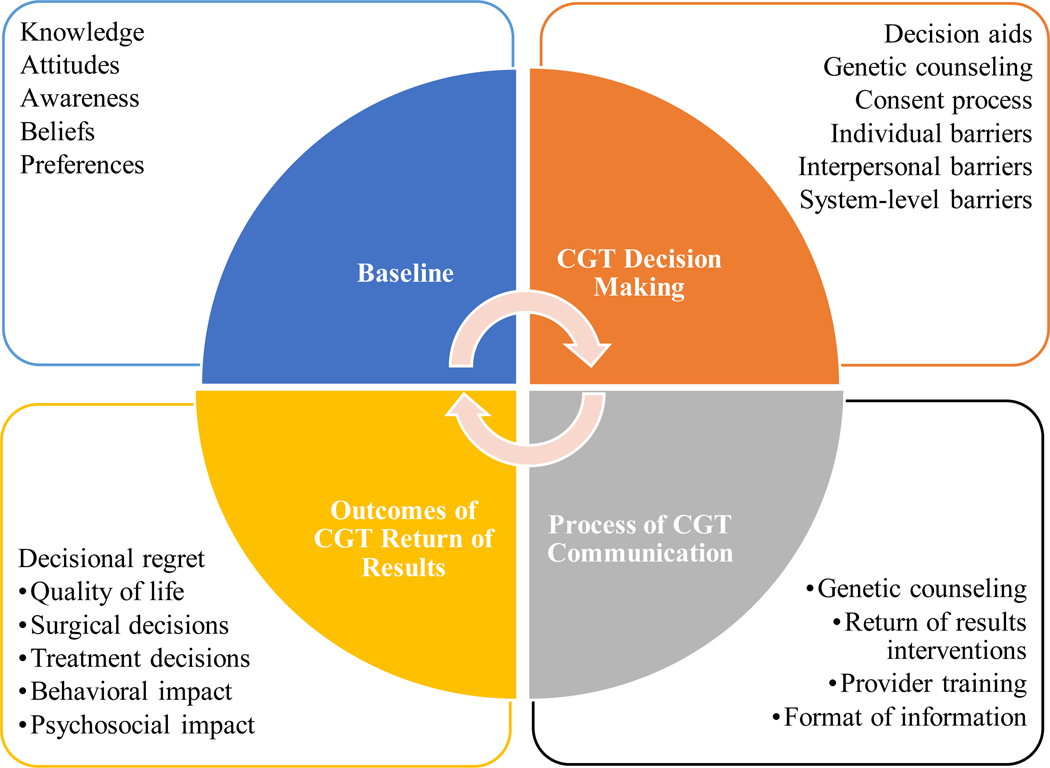
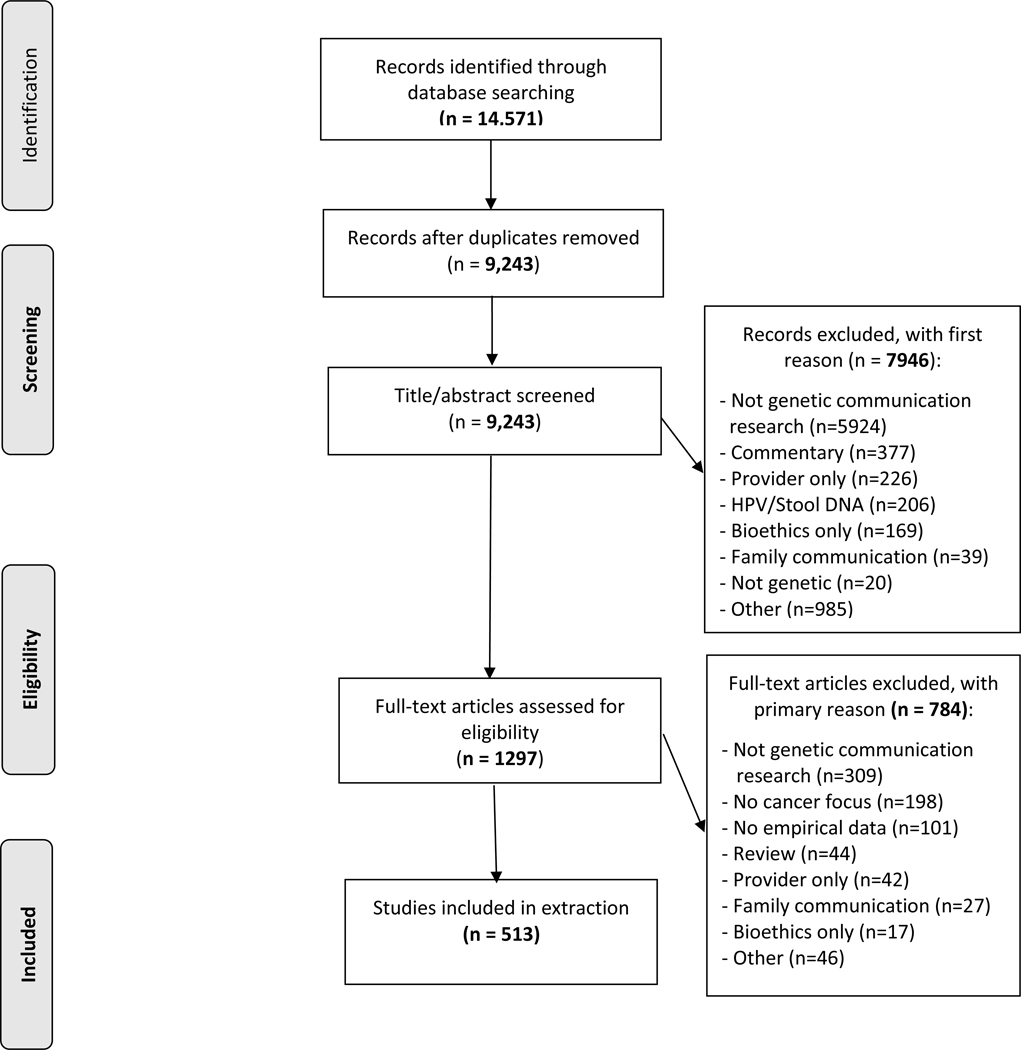
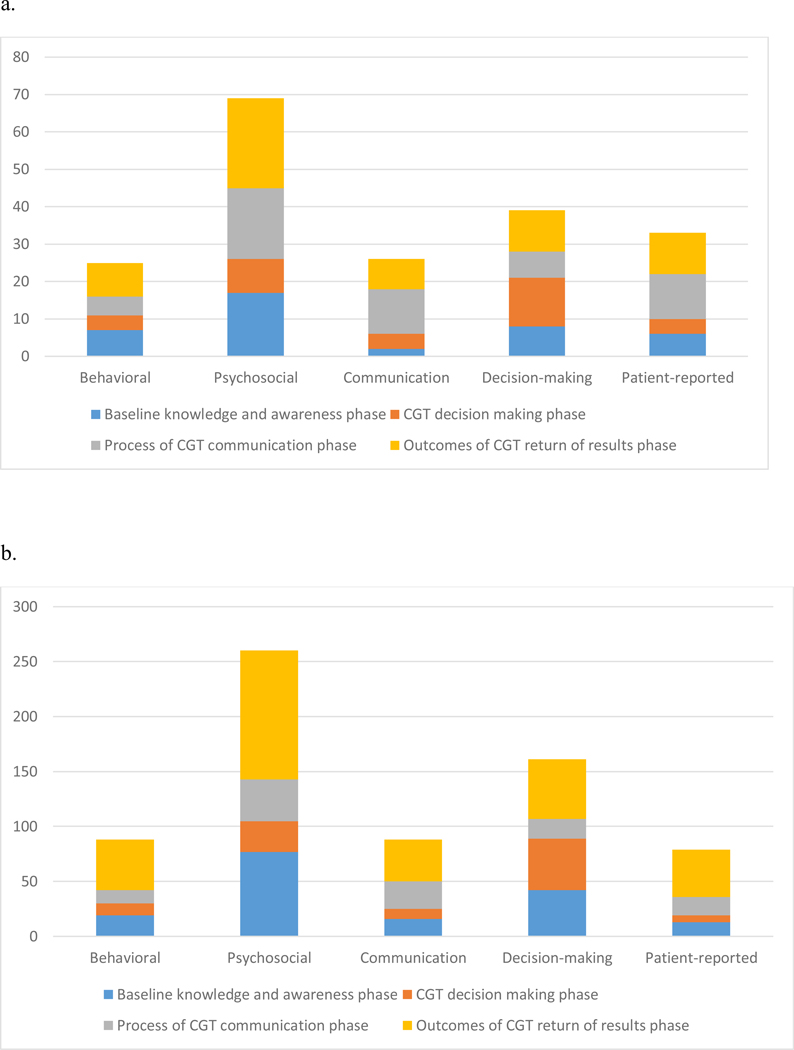
Effective use of genetic and genomic data in cancer prevention and treatment depends on adequate communication with patients and the public. Although relevant empirical work has emerged, the scope and outcomes of this communication research have not been characterized. We conducted a comprehensive scoping review of recent published research (2010-2017) on communication of cancer-related genetic and genomic testing (CGT) information. Searches in six databases revealed 9243 unique records; 513 papers were included. Most papers utilized an observational quantitative design; fewer utilized an experimental design. More attention has been paid to outcomes of CGT results disclosure than to decision making regarding CGT uptake or the process of results disclosure. Psychosocial outcomes were most common across studies. This literature has a strong focus on BRCA1/2, with few papers focused on Lynch syndrome or next-generation technologies. Women, Caucasians, older adults, and those of higher socioeconomic status were overrepresented. Research gaps identified include the need for studies on the process of CGT communication; examining behavioral, decision making, and communication outcomes; and inclusion of diverse populations. Addressing these gaps can help improve the use of genomics in cancer control and reduce disparities in access to and use of CGT.
Keywords: cancer; communication; decision making; genetic testing; return of results.
Figures

References
-
- Hall MJ, Forman AD, Pilarski R, Wiesner G, Giri VN. Gene panel testing for inherited cancer risk. J Natl Comp Cancer Network 2014;12(9):1339–1346. - PubMed
-
- Hiraki S, Rinella ES, Schnabel F, Oratz R, Ostrer H. Cancer risk assessment using genetic panel testing: considerations for clinical application. J Genet Couns 2014;23:604–617. - PubMed
-
- Beery TA, Williams JK. Risk reduction and health promotion behaviors following genetic testing for adult-onset disorders. Genet Test 2007;11(2):111–123. - PubMed
Publication types
MeSH terms
Grants and funding
LinkOut - more resources
Full Text Sources
Miscellaneous
