


Epidemiological Evidence and Health Risks Associated With Agricultural Reuse of Partially Treated and Untreated Wastewater: A Review
- PMID: 30574474
- PMCID: PMC6292135
- DOI: 10.3389/fpubh.2018.00337
Epidemiological Evidence and Health Risks Associated With Agricultural Reuse of Partially Treated and Untreated Wastewater: A Review
Abstract
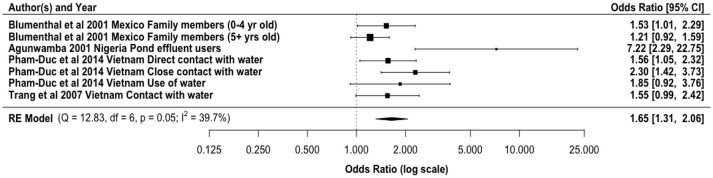
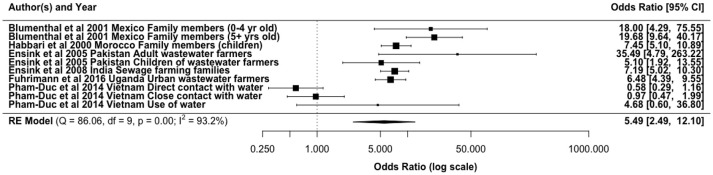
The use of partially treated and untreated wastewater for irrigation is beneficial in agriculture but may be associated with human health risks. Reports from different locations globally have linked microbial outbreaks with agricultural reuse of wastewater. This article reviews the epidemiological evidence and health risks associated with this practice, aiming toward evidence-based conclusions. Exposure pathways that were addressed in this review included those relevant to agricultural workers and their families, consumers of crops, and residents close to areas irrigated with wastewater (partially treated or untreated). A meta-analysis gave an overall odds ratio of 1.65 (95% CI: 1.31, 2.06) for diarrheal disease and 5.49 (95% CI: 2.49, 12.10) for helminth infections for exposed agricultural workers and family members. The risks were higher among children and immunocompromised individuals than in immunocompetent adults. Predominantly skin and intestinal infections were prevalent among individuals infected mainly via occupational exposure and ingestion. Food-borne outbreaks as a result of crops (fruits and vegetables) irrigated with partially or untreated wastewater have been widely reported. Contamination of crops with enteric viruses, fecal coliforms, and bacterial pathogens, parasites including soil-transmitted helminthes (STHs), as well as occurrence of antibiotic residues and antibiotic resistance genes (ARGs) have also been evidenced. The antibiotic residues and ARGs may get internalized in crops along with pathogens and may select for antibiotic resistance, exert ecotoxicity, and lead to bioaccumulation in aquatic organisms with high risk quotient (RQ). Appropriate mitigation lies in adhering to existing guidelines such as the World Health Organization wastewater reuse guidelines and to Sanitation Safety Plans (SSPs). Additionally, improvement in hygiene practices will also provide measures against adverse health impacts.
Keywords: antibiotics; epidemics; epidemiological evidence; exposure; health risk; pathogens; wastewater reuse.
Figures
References
Publication types
LinkOut - more resources
Full Text Sources
