


NMDA spikes mediate amplification of inputs in the rat piriform cortex
- PMID: 30575520
- PMCID: PMC6333441
- DOI: 10.7554/eLife.38446
NMDA spikes mediate amplification of inputs in the rat piriform cortex
Abstract
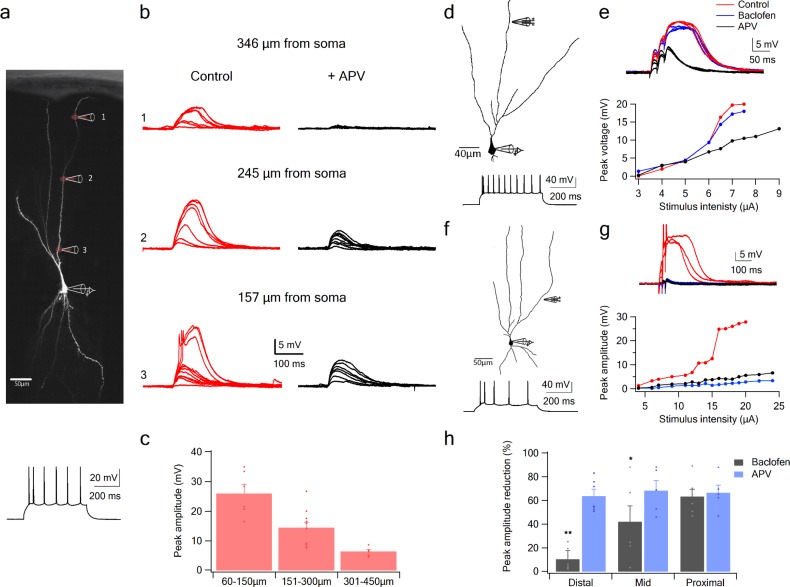
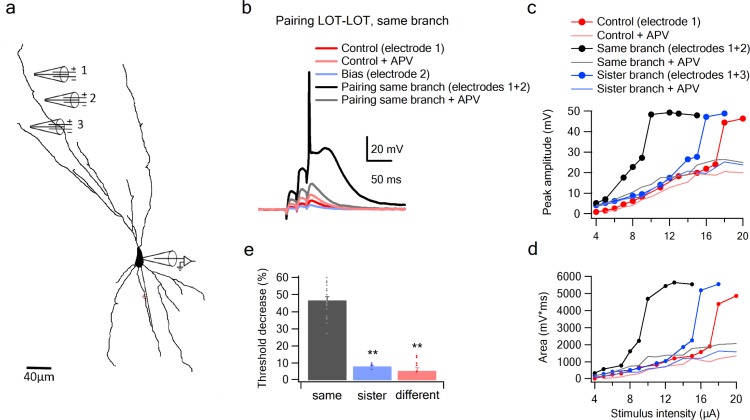
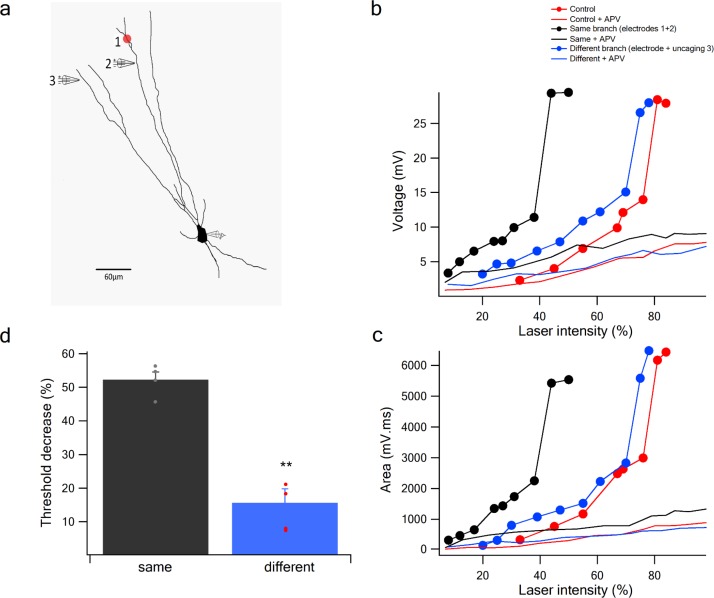
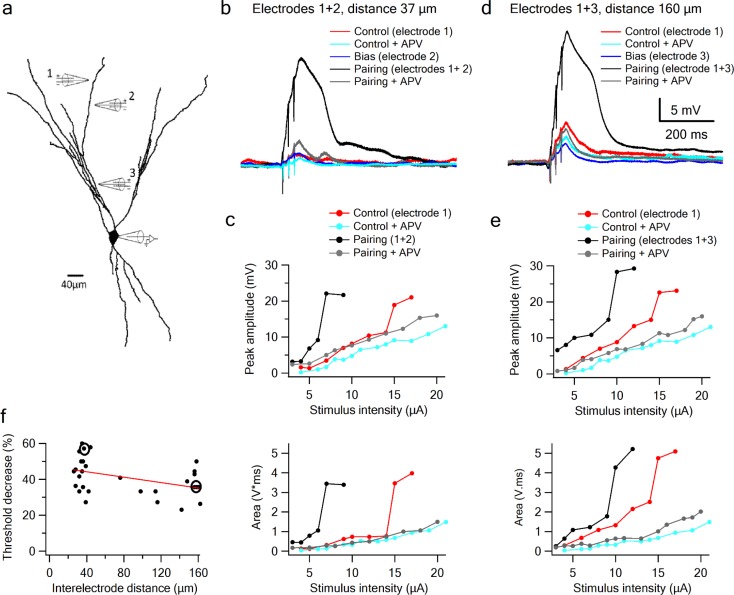
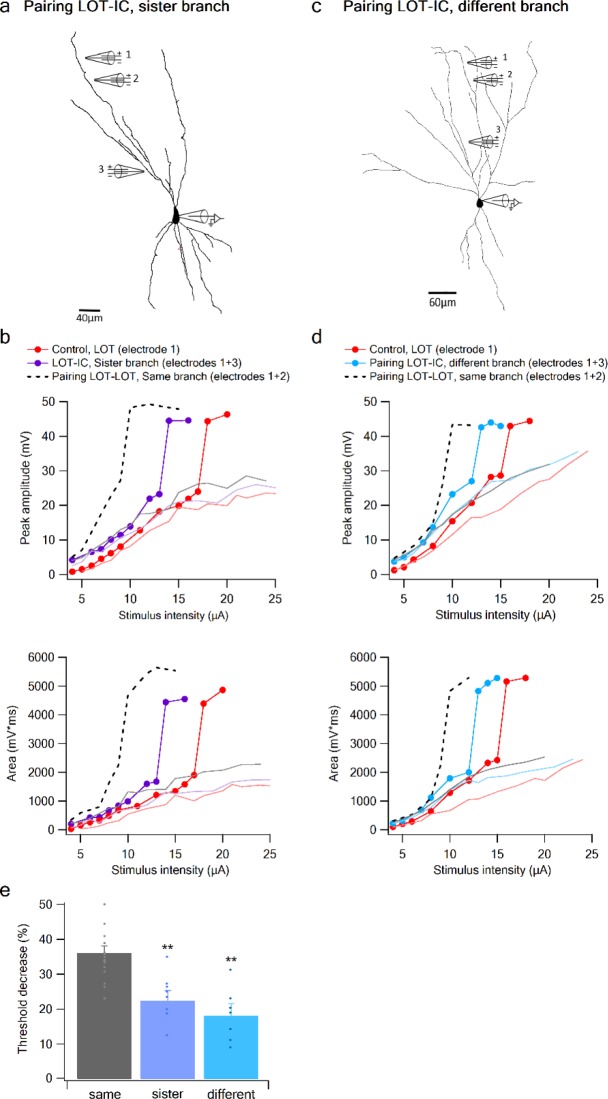
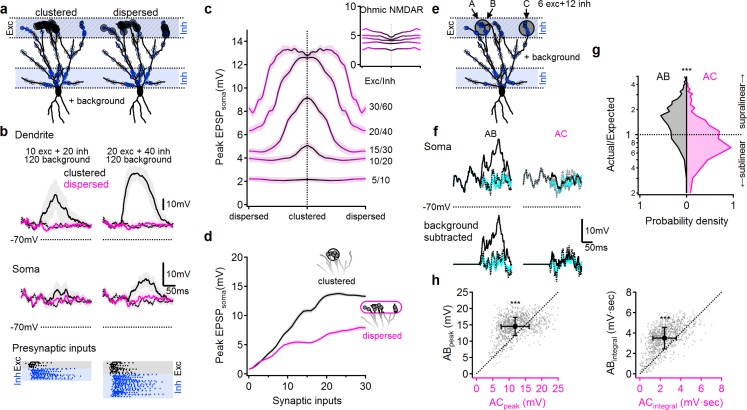
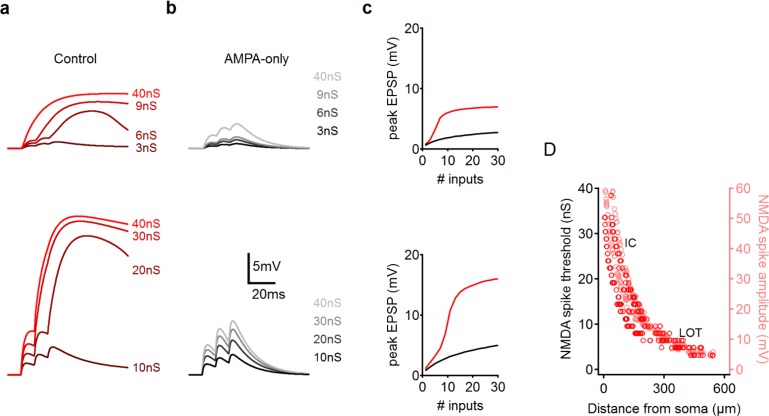
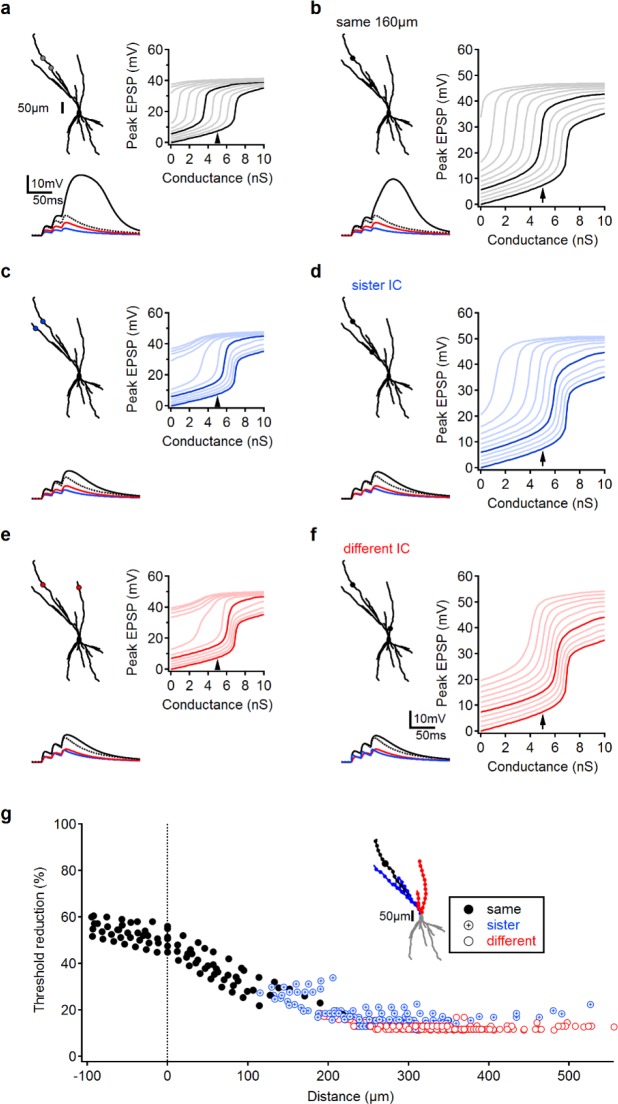
The piriform cortex (PCx) receives direct input from the olfactory bulb (OB) and is the brain's main station for odor recognition and memory. The transformation of the odor code from OB to PCx is profound: mitral and tufted cells in olfactory glomeruli respond to individual odorant molecules, whereas pyramidal neurons (PNs) in the PCx responds to multiple, apparently random combinations of activated glomeruli. How these 'discontinuous' receptive fields are formed from OB inputs remains unknown. Counter to the prevailing view that olfactory PNs sum their inputs passively, we show for the first time that NMDA spikes within individual dendrites can both amplify OB inputs and impose combination selectivity upon them, while their ability to compartmentalize voltage signals allows different dendrites to represent different odorant combinations. Thus, the 2-layer integrative behavior of olfactory PN dendrites provides a parsimonious account for the nonlinear remapping of the odor code from bulb to cortex.
Keywords: dendritic spikes; neuroscience; odor representation; piriform cortex; rat.
© 2018, Kumar et al.
Conflict of interest statement
AK, OS, EB, BM, AP, JS No competing interests declared
Figures
References
Publication types
MeSH terms
Substances
LinkOut - more resources
Full Text Sources
Miscellaneous
