


Cognitive-behavioural treatment for amphetamine-type stimulants (ATS)-use disorders
- PMID: 30577083
- PMCID: PMC6516990
- DOI: 10.1002/14651858.CD011315.pub2
Cognitive-behavioural treatment for amphetamine-type stimulants (ATS)-use disorders
Abstract
Background: Amphetamine-type stimulants (ATS) refer to a group of synthetic stimulants including amphetamine, methamphetamine, 3,4-methylenedioxy-methamphetamine (MDMA) and related substances. ATS are highly addictive and prolonged use may result in a series of mental and physical symptoms including anxiety, confusion, insomnia, mood disturbances, cognitive impairments, paranoia, hallucinations and delusion.Currently there is no widely accepted treatment for ATS-use disorder. However, cognitive-behavioural treatment (CBT) is the first-choice treatment. The effectiveness of CBT for other substance-use disorders (e.g. alcohol-, opioid- and cocaine-use disorders) has been well documented and as such this basic treatment approach has been applied to the ATS-use disorder.
Objectives: To investigate the efficacy of cognitive-behavioural treatment for people with ATS-use disorder for reducing ATS use compared to other types of psychotherapy, pharmacotherapy, 12-step facilitation, no intervention or treatment as usual.
Search methods: We identified randomised controlled trials (RCT) and quasi-RCTs comparing CBT for ATS-use disorders with other types of psychotherapy, pharmacotherapy, 12 step facilitation or no intervention. We searched the Cochrane Drugs and Alcohol Group Specialised Register, Cochrane Central Register of Controlled Trials, MEDLINE via PubMed, Embase and five other databases up to July 2018. In addition, we examined reference lists of eligible studies and other systematic reviews. We contacted experts in the field.
Selection criteria: Eligibility criteria consisted of RCTs and quasi-RCTs comparing CBT versus other types of interventions with adult ATS users (aged 18 years or older) diagnosed by any explicit diagnostic system. Primary outcomes included abstinence rate and other indicators of drug-using behaviours.
Data collection and analysis: We used standard methodological procedures expected by Cochrane.
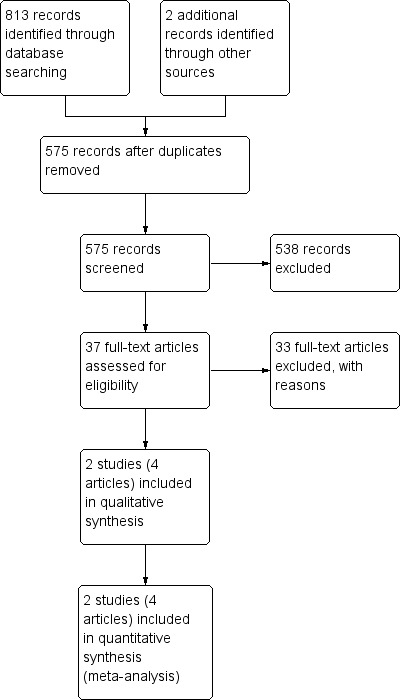
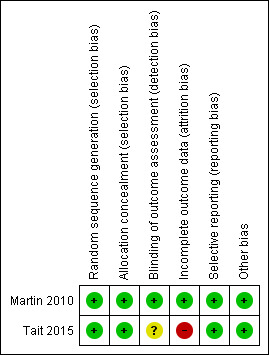
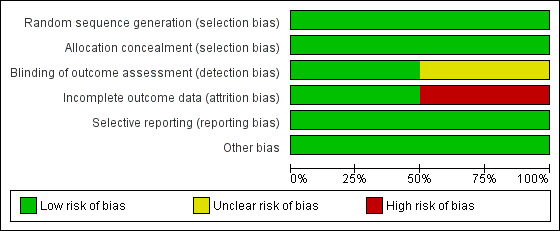
Main results: Only two studies met the eligibility criteria. Both studies were at low risk of selection bias and reporting bias. In one study, almost half of participants in the intervention group dropped out and this study was at high risk of attrition bias. The studies compared a single session of brief CBT or a web-based CBT to a waiting-list control (total sample size across studies of 129). Results were mixed across the studies. For the single-session brief CBT study, two out of five measures of drug use produced significant results, percentage of abstinent days in 90 days (odds ratio (OR) 0.22, 95% confidence interval (CI) 0.02 to 2.11) and dependence symptoms (standardised mean difference (SMD) -0.59, 95% CI -1.16 to -0.02). Little confidence could be placed in the results from this study give the small sample size (25 participants per group) and corresponding large CIs around the observed effects. For the web-based CBT, there was no significant difference across different outcomes. Neither study reported adverse effects. The meta-analytic mean across these two trials for drug use was not significant (SMD -0.28, 95% CI -0.69 to 0.14). In summary, overall quality of evidence was low and there was insufficient evidence to conclude that CBT is effective, or ineffective, at treating ATS use.
Authors' conclusions: Currently, there is not enough evidence to establish the efficacy of CBT for ATS-use disorders because of a paucity of high-quality research in this area.
Conflict of interest statement
TH: none known.
HT: none known.
RM: none known.
DW: none known.
Figures

Update of
References
References to studies included in this review
Martin 2010 {published data only}
-
- Martin G, Copeland J. Brief intervention for regular ecstasy (MDMA) users: pilot randomized trial of a check‐up model. Journal of Substance Use 2010;15(2):131‐42. [DOI: 10.3109/14659890903075074] - DOI
Tait 2015 {published data only}
-
- Tait RJ, McKetin R, Kay‐Lambkin F, Carron‐Arthur B, Bennett A, Christensen H, et al. A web‐based intervention for users of amphetamine‐type stimulants: 3‐month outcomes of a randomized controlled trial. Journal of Medical Internet Research Mental Health 2014;1(1):e1. [DOI: 10.2196/mental.3278] - DOI - PMC - PubMed
References to studies excluded from this review
Baker 2001 {published data only}
Baker 2005 {published data only}
Baker 2006 {published data only}
Barrowclough 2009 {published data only}
-
- Barrowclough C, Haddock G, Beardmore R, Conrod P, Craig T, Davies L, et al. Evaluating integrated MI and CBT for people with psychosis and substance misuse: recruitment, retention and sample characteristics of the MIDAS trial. Addictive Behaviors 2009;34(10):859‐66. [DOI: 10.1016/j.addbeh.2009.03.007] - DOI - PubMed
Beutler 2003 {published data only}
-
- Beutler LE, Moleiro C, Malik M, Harwood TM, Romanelli R, Gallagher‐Thompson D, et al. A comparison of the dodo, EST, and ATI factors among comorbid stimulant‐dependent, depressed patients. Clinical Psychology & Psychotherapy 2003;10(2):69‐85. [DOI: 10.1002/cpp.354] - DOI
Brooks 2003 {published data only}
-
- Brooks AJ, Penn PE. Comparing treatments for dual diagnosis: twelve‐step and self‐management and recovery training. American Journal of Drug and Alcohol Abuse 2003;29(2):359‐83. [PUBMED: 12765211] - PubMed
Glasner‐Edwards 2017 {published data only}
Herrell 2000 {published data only}
Jaffe 2007 {published data only}
-
- Jaffe A, Shoptaw S, Stein J, Reback CJ, Rotheram‐Fuller E. Depression ratings, reported sexual risk behaviors, and methamphetamine use: latent growth curve models of positive change among gay and bisexual men in an outpatient treatment program. Experimental and Clinical Psychopharmacology 2007;15(3):301‐7. [DOI: 10.1037/1064-1297.15.3.301] - DOI - PubMed
Kay‐Lambkin 2010 {published data only}
Kay‐Lambkin 2011 {published data only}
-
- Kay‐Lambkin FJ, Baker AL, Lee NM, Jenner L, Lewin TJ. The influence of depression on treatment for methamphetamine use. Medical Journal of Australia 2011;195(3):S38‐43. - PubMed
Keoleian 2013 {published data only}
Ling 2014 {published data only}
Marinelli‐Casey 2008 {published data only}
Mausbach 2007 {published data only}
-
- Mausbach BT, Semple SJ, Strathdee SA, Zians J, Patterson TL. Efficacy of a behavioral intervention for increasing safer sex behaviors in HIV‐negative, heterosexual methamphetamine users: results from the Fast‐Lane Study. Annals of Behavioral Medicine 2007;34(3):263‐74. [DOI: 10.1080/08836610701677279] - DOI - PubMed
McDonell 2013 {published data only}
-
- McDonell MG, Srebnik D, Angelo F, McPherson S, Lowe JM, Sugar A, et al. Randomized controlled trial of contingency management for stimulant use in community mental health patients with serious mental illness. American Journal of Psychiatry 2013;170(1):94‐101. [DOI: 10.1176/appi.ajp.2012.11121831] - DOI - PMC - PubMed
Nyamathi 2017 {published data only}
Peck 2005 {published data only}
Peirce 2006 {published data only}
-
- Peirce JM, Petry NM, Stitzer ML, Blaine J, Kellogg S, Satterfield F, et al. Effects of lower‐cost incentives on stimulant abstinence in methadone maintenance treatment: a National Drug Abuse Treatment Clinical Trials Network study. Archives of General Psychiatry 2006;63(2):201‐8. [DOI: 10.1001/archpsyc.63.2.201] - DOI - PubMed
Petry 2005 {published data only}
-
- Petry NM, Peirce JM, Stitzer ML, Blaine J, Roll JM, Cohen A, et al. Effect of prize‐based incentives on outcomes in stimulant abusers in outpatient psychosocial treatment programs: a national drug abuse treatment clinical trials network study. Archives of General Psychiatry 2005;62(10):1148‐56. [DOI: 10.1001/archpsyc.62.10.1148] - DOI - PubMed
Rawson 2004 {published data only}
Rawson 2006 {published data only}
-
- Rawson RA, McCann MJ, Flammino F, Shoptaw S, Miotto K, Reiber C, et al. A comparison of contingency management and cognitive‐behavioral approaches for stimulant‐dependent individuals. Addiction 2006;101(2):267‐74. [10.1111/j.1360‐0443.2006.01312.x] - PubMed
Roll 2006 {published data only}
-
- Roll JM, Retry NM, Stitzer ML, Brecht ML, Peirce JM, McCann MJ, et al. Contingency management for the treatment of methamphetamine use disorders. American Journal of Psychiatry 2006;163(11):1993‐9. [EMBASE: 10.1176/appi.ajp.163.11.1993] - PubMed
Rosenblum 2005 {published data only}
Ruglass 2014 {published data only}
Santos 2014 {published data only}
-
- Santos GM, Coffin PO, Vittinghoff E, DeMicco E, Das M, Matheson T, et al. Substance use and drinking outcomes in personalized cognitive counseling randomized trial for episodic substance‐using men who have sex with men. Drug and Alcohol Dependence 2014;138:234‐9. [DOI: 10.1016/j.drugalcdep.2014.02.015] - DOI - PMC - PubMed
Shoptaw 2005 {published data only}
-
- Shoptaw S, Reback CJ, Peck JA, Yang X, Rotheram‐Fuller E, Larkins S, et al. Behavioral treatment approaches for methamphetamine dependence and HIV‐related sexual risk behaviors among urban gay and bisexual men. Drug and Alcohol Dependence 2005;78(2):125‐34. [DOI: 10.1016/j.drugalcdep.2004.10.004] - DOI - PubMed
Shoptaw 2008 {published data only}
Sitharthan 1999 {published data only}
-
- Sitharthan T, Singh S, Kranitis P, Currie J, Freeman P, Murugesan G, et al. Integrated drug and alcohol intervention: development of an opportunistic intervention program to reduce alcohol and other substance use among psychiatric patients. Australian and New Zealand Journal of Psychiatry 1999;33(5):676‐83. [DOI: 10.1046/j.1440-1614.1999.00621.x] - DOI - PubMed
Smout 2010 {published data only}
-
- Smout MF, Longo M, Harrison S, Minniti R, Wickes W, White JM. Psychosocial treatment for methamphetamine use disorders: a preliminary randomized controlled trial of cognitive behavior therapy and acceptance and commitment therapy. Substance Abuse 2010;31(2):98‐107. [DOI: 10.1080/08897071003641578] - DOI - PubMed
Suvanchot 2012 {published data only}
-
- Suvanchot KS, Somrongthong R, Phukhao D. Efficacy of group motivational interviewing plus brief cognitive behavior therapy for relapse in amphetamine users with co‐occurring psychological problems at Southern Psychiatric Hospital in Thailand. Journal of Medical Association of Thailand 2012;95(8):1075‐80. - PubMed
Witkiewitz 2013 {published data only}
Yen 2004 {published data only}
-
- Yen CF, Wu HY, Yen JY, Ko CH. Effects of brief cognitive‐behavioral interventions on confidence to resist the urges to use heroin and methamphetamine in relapse‐related situations. Journal of Nervous and Mental Disease 2004;192(11):788‐91. - PubMed
Additional references
APA 2013
-
- American Psychiatric Association. The Diagnostic and Statistical Manual of Mental Disorders (5th Edition). Washington (DC): American Psychiatric Association, 2013.
Atkins 2004
Baker 2003
Barr 2006
Baylen 2006
-
- Baylen CA, Rosenberg H. A review of the acute subjective effects of MDMA/ecstasy. Addiction 2006;101(7):933‐47. - PubMed
Carroll 2000
-
- Carroll KM, Nich C, Ball SA, McCance E, Frankforter TL, Rounsaville BJ. One‐year follow‐up of disulfiram and psychotherapy for cocaine‐alcohol abusers: sustained effects of treatment. Addiction 2000;95(9):1335‐49. - PubMed
Ciketic 2012
-
- Ciketic S, Hayatbakhsh MR, Doran CM, Najman JM, McKetin R. A review of psychological and pharmacological treatment options for methamphetamine dependence. Journal of Substance Use 2012;17(4):363‐83. [DOI: 10.3109/14659891.2011.592900] - DOI
Degenhardt 2010
-
- Degenhardt L, Mathers B, Vickerman P, Phodes T, Latkin C, Hickman M. Prevention of HIV infection for people who inject drugs: why individual, structural, and combination approaches are needed. Lancet 2010;376(9737):285‐301. - PubMed
Ellickson 2009
Farrell 2002
-
- Farrell M, Marsden J, Ali R, Ling W. Methamphetamine: drug use and psychoses becomes a major public health issue in the Asia Pacific region. Addiction 2002;97(7):771‐2. - PubMed
Galloway 2000
Greene 2008
-
- Greene SL, Kerr F, Braitberg G. Review article: amphetamine and related drugs of abuse. Emergency Medicine Australasia 2008;20(5):391‐402. - PubMed
Harada 2010
-
- Harada T. The randomized controlled trial of the prison‐based Japanese Matrix Program (J‐MAT) for methamphetamine abusers. Nihon Arukoru Yakubutsu Igakkai Zasshi [Japanese Journal of Alcohol Studies & Drug Dependence] 2010;47(6):298‐307. [PUBMED: 23461218] - PubMed
Higgins 2011
-
- Higgins JP, Green S, editor(s). Cochrane Handbook for Systematic Reviews of Interventions Version 5.1.0 (updated March 2011). The Cochrane Collaboration, 2011. Available from handbook.cochrane.org.
Kiluk 2010
King 2012
Knapp 2008
Lee 2008
Lefebvre 2011
-
- Lefebvre C, Manheimer E, Glanville J. Chapter 6: Searching for studies. In: Higgins JP, Green S, editor(s). Cochrane Handbook for Systematic Reviews of Interventions Version 5.1.0 (updated March 2011). The Cochrane Collaboration, 2011. Available from handbook.cochrane.org.
Litt 2003
-
- Litt MD, Kadden RM, Cooney NL, Kabela E. Coping skills and treatment outcomes in cognitive‐behavioral and interactional group therapy for alcoholism. Journal of Consulting and Clinical Psychology 2003;71(1):118‐28. - PubMed
Marlatt 2005
-
- Marlatt GA, Witkiewits K. Relapse prevention for alcohol and drug problems. Relapse Prevention: Maintenance Strategies in the Treatment of Addictive Behaviors. 2nd Edition. New York (NY): Guilford Press, 2005:1‐44.
Minozzi 2016
Montoya 2002
-
- Montoya AG, Sorrentino R, Lukas SE, Price BH. Long‐term neuropsychiatric consequences of 'Ecstasy' (MDMA): a review. Harvard Review of Psychiatry 2002;10(4):212‐20. - PubMed
Morgan 2000
-
- Morgan MJ. Ecstasy (MDMA): a review of its possible persistent psychological effects. Psychopharmacology 2000;152(3):230‐48. - PubMed
Morgenstern 2000
NIDA 2006
-
- National Institute on Drug Abuse. NIDA research report series: MDMA (Ecstasy) abuse, 2006. www.drugabuse.gov/sites/default/files/rrmdma_0.pdf (accessed prior to 27 November 2018).
Parrott 2000
Rawson 2002
-
- Rawson RA, Huber A, McCann M, Shoptaw S, Farabee D, Reiber C, et al. A comparison of contingency management and cognitive‐behavioral approaches during methadone maintenance treatment for cocaine dependence. Archives of General Psychiatry 2002;59(9):817‐24. - PubMed
Reback 2014
Review Manager 2011 [Computer program]
-
- The Nordic Cochrane Centre, The Cochrane Collaboration. Review Manager (RevMan). Version 5.1. Copenhagen: The Nordic Cochrane Centre, The Cochrane Collaboration, 2011.
Rogers 2009
-
- Rogers G, Elston J, Garside R, Roome C, Taylor R, Younger P, et al. The harmful health effects of recreational ecstasy: a systematic review of observational evidence. Health Technology Assessment 2009;13(6):iii‐iv, ix‐xii, 1‐315. - PubMed
Strathdee 2010
Thombs 2005
-
- Thombs DL. The multiple conceptions of addictive behavior and professional practice today. Introduction to Addictive Behaviors. 3rd Edition. New York (NY): Guilford Press, 2005:1‐17.
Thu Vu 2015
-
- Thu Vu NT, Maher L, Zablotska I. Amphetamine‐type stimulants and HIV infection among men who have sex with men: implications on HIV research and prevention from a systematic review and meta‐analysis. Journal of the International AIDS Society 2015;18:19273. [DOI: 10.7448/IAS.18.1.19273] - DOI - PMC - PubMed
UNODC 2012
-
- United Nations Office on Drugs and Crime. World Drug Report 2012. Vienna: UNODC, 2012.
Vocci 2009
WHO 2004
-
- World Health Organization. International Statistical Classification of Diseases and Related Health Problems. 2nd Edition. Vol. 1, Geneva: WHO, 2004.
Publication types
MeSH terms
Substances
LinkOut - more resources
Full Text Sources
Miscellaneous
