. 2018 Dec 20;20(1):15.
doi: 10.3390/ijms20010015.

Genome-Wide Analysis, Expression Profile, and Characterization of the Acid Invertase Gene Family in Pepper

Affiliations

Genome-Wide Analysis, Expression Profile, and Characterization of the Acid Invertase Gene Family in Pepper

Long-Bin Shen et al. Int J Mol Sci. .

Abstract

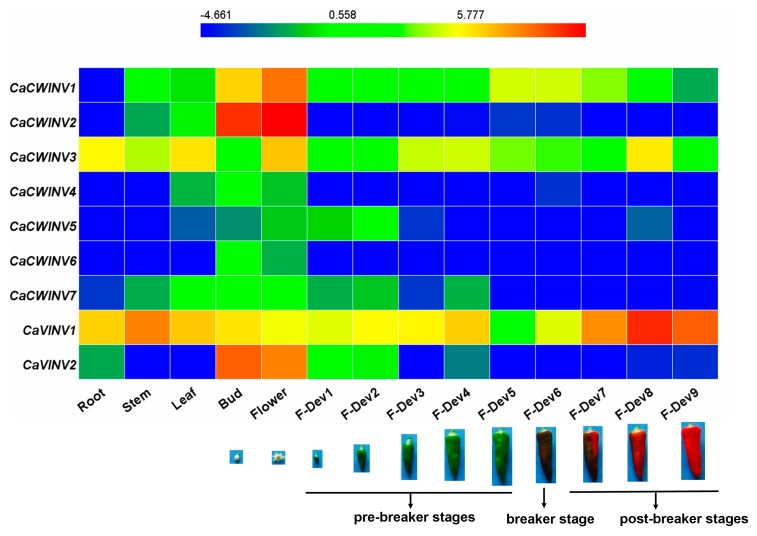
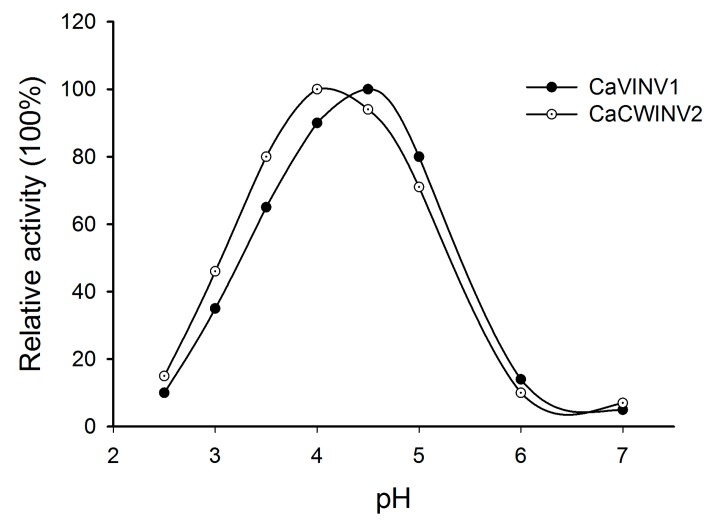
Catalytic decomposition of sucrose by acid invertases (AINVs) under acidic conditions plays an important role in the development of sink organs in plants. To reveal the function of AINVs in the development of pepper fruits, nine AINV genes of pepper were identified. Protein sequencing and phylogenetic analysis revealed that the CaAINV family may be divided into cell wall invertases (CaCWINV1⁻7) and vacuolar invertases (CaVINV1⁻2). CaAINVs contain conserved regions and protein structures typical of the AINVs in other plants. Gene expression profiling indicated that CaCWINV2 and CaVINV1 were highly expressed in reproductive organs but differed in expression pattern. CaCWINV2 was mainly expressed in buds and flowers, while CaVINV1 was expressed in developmental stages, such as the post-breaker stage. Furthermore, invertase activity of CaCWINV2 and CaVINV1 was identified via functional complementation in an invertase-deficient yeast. Optimum pH for CaCWINV2 and CaVINV1 was found to be 4.0 and 4.5, respectively. Gene expression and enzymatic activity of CaCWINV2 and CaVINV1 indicate that these AINV enzymes may be pivotal for sucrose hydrolysis in the reproductive organs of pepper.

Keywords: acid invertase; enzymatic activity; gene expression; pepper.


Conflict of interest statement

The authors declare no conflict of interest.

Figures
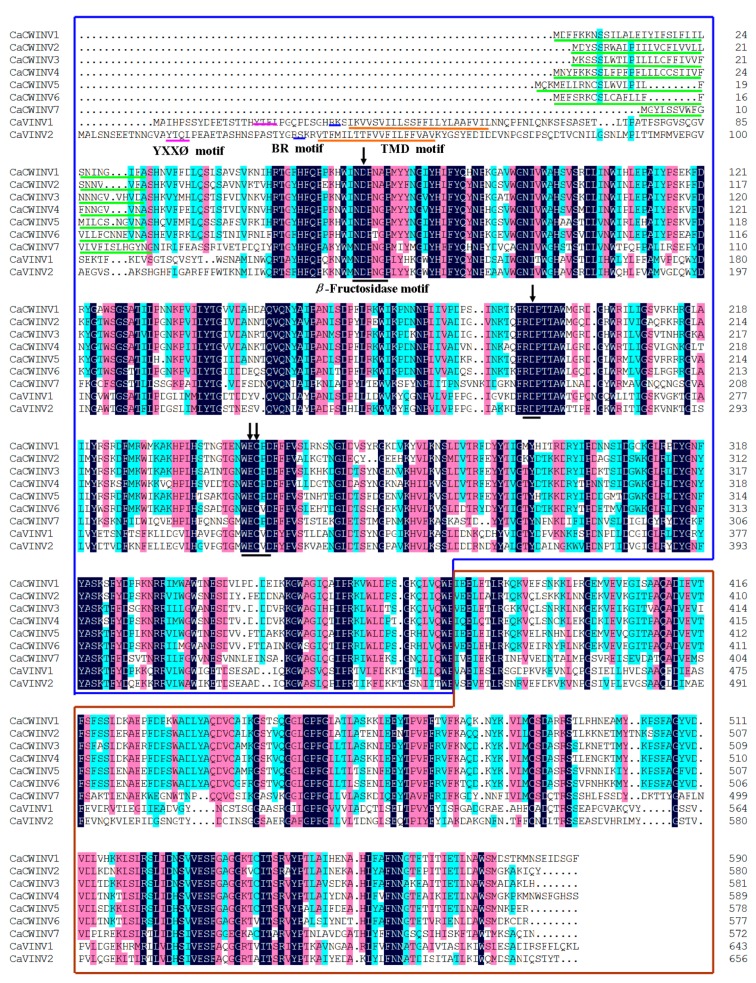
Figure 1
Figure 1
Alignment of deduced amino acid sequences of the nine pepper acid invertases. Dark-blue shading, pink shading, and light blue shading reflect 100%, 75%, and 50% amino acid residues conservation, respectively. Catalytic residues are depicted by black arrows. Green lines indicate the predicted signal peptide. Black lines indicate the conserved motif-NDPNG (β-fructosidase motif), RDP and WECP(V)D. Brown lines indicate the predicted transmembrane domain (TMD). The blue lines indicate basic region (BR) motif. The pink lines indicate YXXØ motif.
Figure 2
Figure 2
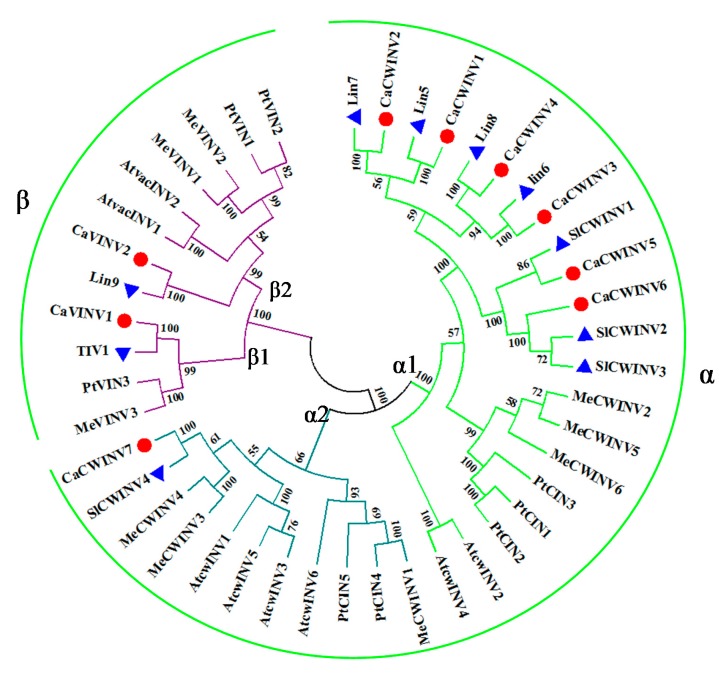
Phylogenetic analysis of acid invertase (AINV) proteins from pepper, cassava, Arabidopsis, and poplar. The phylogenetic tree was constructed via the Neighbor-Joining method (1000 bootstrap replicates) using Molecular Evolutionary Genetics Analysis 7.0 software. Red and blue dots indicate AINVs from pepper and tomato, respectively.
Figure 3
Figure 3
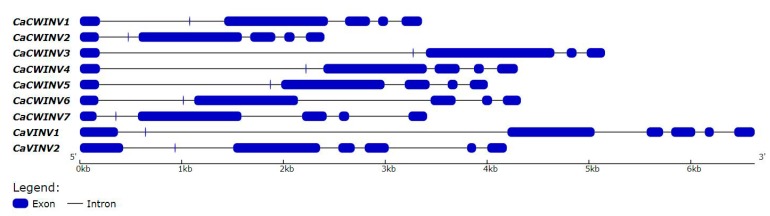
Exon–intron structure of the seven CaAINVs in pepper. Introns are depicted by black lines, exons are depicted by blue boxes.
Figure 4
Figure 4
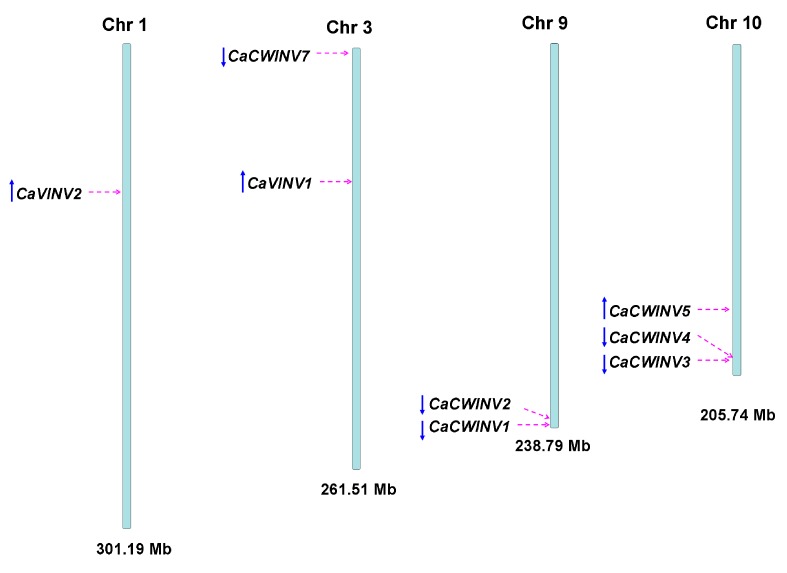
Chromosomal localization of CaAINV genes from pepper. The positions of the CaAINV genes are depicted by red arrows. The gene orientation is depicted by blue arrows.
Figure 5
Figure 5
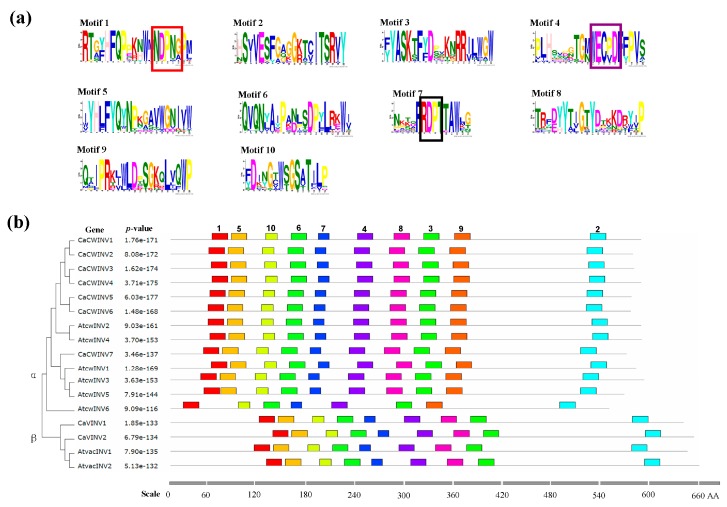
The motifs of AINV proteins from pepper and Arabidopsis according to phylogenetic relationships. (a) The ten motif sequences identified by Multiple Em for Motif Elicitation (MEME). The conserved motifs-NDPNG, RDP, and WECP(V)D are depicted by red, black, and purple boxes, respectively. (b) Motif distribution in AINVs. The phylogenetic relationship tree of CaAINVs and AtAINVs was constructed using Muscle and MEGA7 software. Gray lines depict non-conserved sequences, and each motif is depicted by a colored box. The length of the motifs in each protein is shown proportionally.
Figure 6
Figure 6
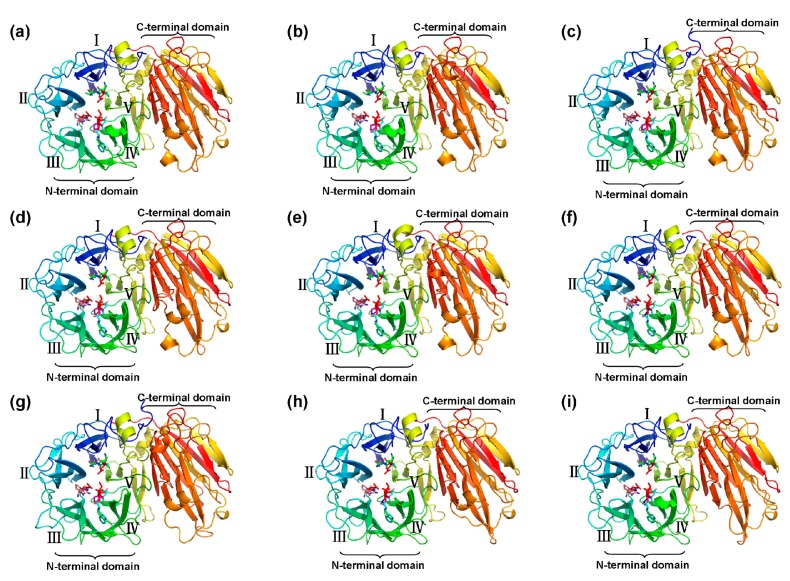
Predicted three-dimensional structure models of CaAINVs. (a) CaCWINV1; (b) CaCWINV2; (c) CaCWINV3; (d) CaCWINV4; (e) CaCWINV5; (f) CaCWINV6; (g) CaCWINV7; (h) CaVINV1; (i) CaVINV2. The five blades of the β-propeller module are indicated by roman numerals I–V, respectively. The motifs (NDPNG, RDP, and WECP(V)D) are depicted by sticks. The image was generated using the PyMOL program (Schrödinger, Inc., New York, NY, USA).
Figure 7
Figure 7
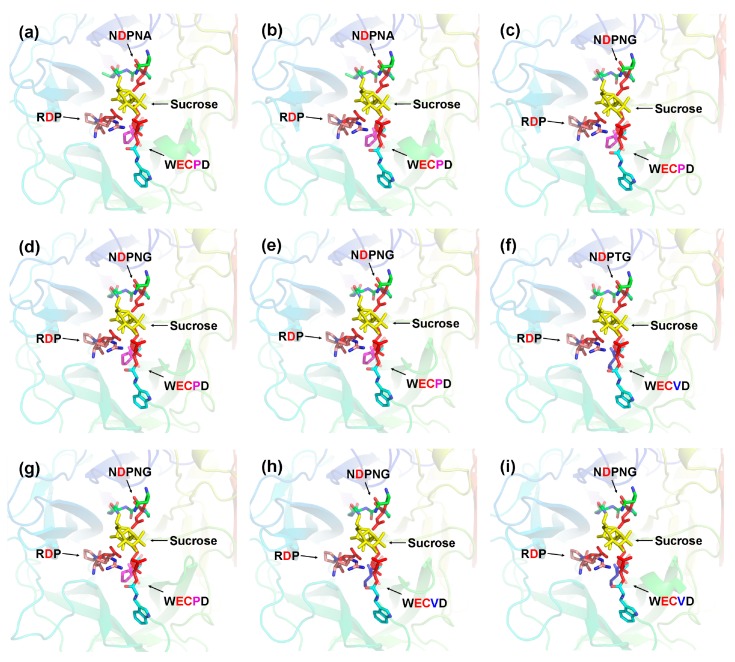
Predicted catalytic residues of CaAINV1 to 6 with sucrose molecules. (a) CaCWINV1; (b) CaCWINV2; (c) CaCWINV3; (d) CaCWINV4; (e) CaCWINV5; (f) CaCWINV6; (g) CaCWINV7; (h) CaVINV1; (i) CaVINV2. Yellow stick structures indicate sucrose molecules. The motifs (NDPNG, RDP, and WECP(V)D) are depicted by colored sticks. Red stick structures depict catalytic residues. The image was generated using the PyMOL program (Schrödinger, Inc., New York, NY, USA).
Figure 8
Figure 8
Expression profiles of nine pepper CaAINV genes in different tissues and developmental stages. The expression data were collected from Illumina RNA-sequence data from the genome sequences of the pepper cultivar, Zunla-1, [12]. Images of pepper fruit developmental stages were cited from Qin et al. [12]. The fragments kilobase of exon model per millon mapped reads (FPKM) values were log2 transformed and the heat map was generated using the HemI (Heatmap Illustrator, version 1.0) software package. The bar at the top represents log2-transformed values. Genes, highly or weakly expressed, in various tissues are colored blue and red, respectively.
Figure 9
Figure 9
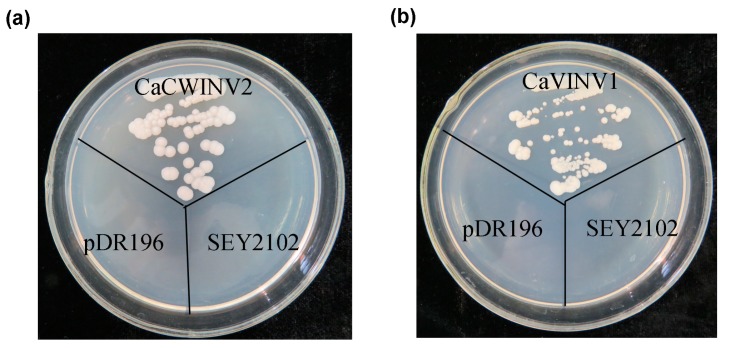
Growth of invertase-deficient strain SEY2102 transformed by pDR196-CaCWINV2 (a) and pDR196-CaVINV1 (b) on selective plates containing sucrose as the sole carbon source at 28 °C for 4 days. SEY2102 yeast cells transformed with empty pDR196 vector were used as control.
Figure 10
Figure 10
The pH dependence of the acid invertase activity of CaCWINV2 and CaVINV1.

References

    1. Elwan M.W.M., El-Hamahmy M.A.M. Improved productivity and quality associated with salicylic acid application in greenhouse pepper. Sci. Hortic. 2009;122:521–526. doi: 10.1016/j.scienta.2009.07.001. - DOI
    1. Marcelis L.F.M., Heuvelink E., Hofman-Eijer L.R.B., Bakker J.D., Xue L.B. Flower and fruit abortion in sweet pepper in relation to source and sink strength. J. Exp. Bot. 2004;55:2261–2268. doi: 10.1093/jxb/erh245. - DOI - PubMed
    1. Aloni B., Karni L., Zaidman Z., Schaffer A.A. Changes of Carbohydrates in Pepper (Capsicum annuum L.) Flowers in Relation to Their Abscission Under Different Shading Regimes. Ann. Bot. 1996;78:163–168. doi: 10.1006/anbo.1996.0109. - DOI
    1. Hubbard N.L., Pharr D.M. Developmental changes in carbohydrate concentration and activaties of sucrose metabolizing enzymes in fruits of two Capsicum annuum L. genotypes. Plant Sci. 1992;86:33–39. doi: 10.1016/0168-9452(92)90176-M. - DOI
    1. Aloni B., Peet M., Pharr M., Karni L. The effect of high temperature and high atmospheric CO2 on carbohydrate changes in bell pepper (Capsicum annuum) pollen in relation to its germination. Physiol. Plant. 2001;112:505–512. doi: 10.1034/j.1399-3054.2001.1120407.x. - DOI - PubMed

Substances

LinkOut - more resources