


Translating basic research knowledge on the biological embedding of early-life stress into novel approaches for the developmental programming of lifelong health
- PMID: 30578047
- PMCID: PMC6561839
- DOI: 10.1016/j.psyneuen.2018.12.011
Translating basic research knowledge on the biological embedding of early-life stress into novel approaches for the developmental programming of lifelong health
Abstract
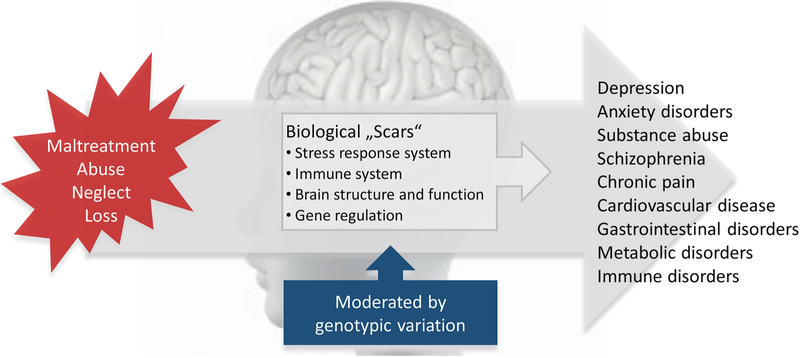
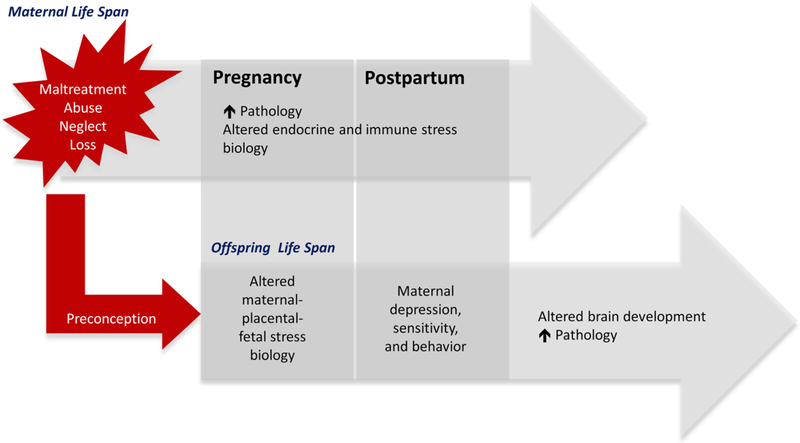
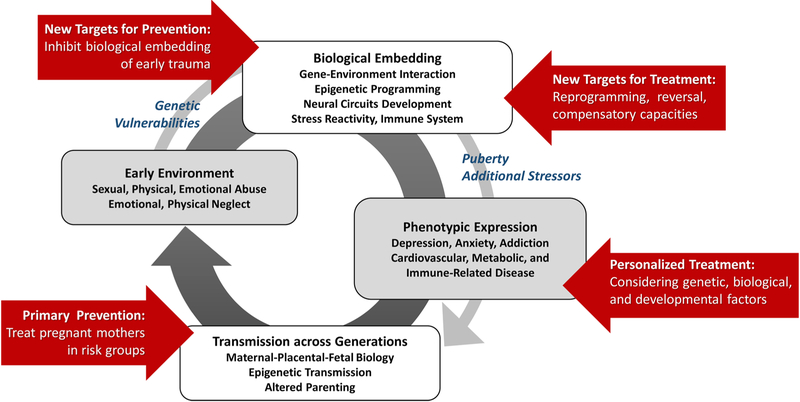
This review integrates scientific knowledge obtained over the past few decades on the biological mechanisms that contribute to the profound association between exposure to early adversity, including childhood trauma and prenatal stress, and the lifelong elevated risk to develop a broad range of diseases. We further discuss insights into gene-environment interactions moderating the association between early adversity and disease manifestation and we discuss the role of epigenetic and other molecular processes in the biological embedding of early adversity. Based on these findings, we propose potential mechanisms that may contribute to the intergenerational transmission of risk related to early adversity from the mother to the fetus. Finally, we argue that basic research knowledge on the biological embedding of early adversity must now be translated into novel intervention strategies that are mechanism-driven and sensitive to developmental timing. Indeed, to date, there are no diagnostic biomarkers of risk or mechanism-informed interventions that we can offer to victims of early adversity in order to efficiently prevent or reverse adverse health outcomes. Such translational efforts can be expected to have significant impact on both clinical practice and the public health system, and will promote precision medicine in pediatrics and across the lifespan.
Keywords: Developmental programming; Early life stress; Intergenerational transmission; Prenatal stress; Targeted intervention.
Copyright © 2018 Elsevier Ltd. All rights reserved.
Conflict of interest statement
Declarations of interest: none.
Figures
References
-
- Abbott PW, Gumusoglu SB, Bittle J, Beversdorf DQ, Stevens HE, 2018. Prenatal stress and genetic risk: how prenatal stress interacts with genetics to alter risk for psychiatric illness. Psychoneuroendocrinology 90, 9–21. - PubMed
-
- Asghar M, Hasselquist D, Hansson B, Zehtindjiev P, Westerdahl H, Bensch S, 2015. Chronicinfection. Hidden costs of infection: chronic malaria accelerates telomere degradation and senescence in wild birds. Science 347, 436–438. - PubMed
-
- Babineau V, Green CG, Jolicoeur-Martineau A, Bouvette-Turcot AA, Minde K, Sassi R, St-Andre M, Carrey N, Atkinson L, Kennedy JL, Lydon J, Steiner M, Gaudreau H, Levitan R, Meaney M, Wazana A, project M, 2015. Prenatal depression and 5-HTTLPR interact to predict dysregulation from 3 to 36 months–a differential susceptibility model. J. Child Psychol. Psychiatry 56, 21–29. - PMC - PubMed
Publication types
MeSH terms
Grants and funding
LinkOut - more resources
Full Text Sources
Medical
Miscellaneous
