


Association between viscoelastic tests-guided therapy with synthetic factor concentrates and allogenic blood transfusion in liver transplantation: a before-after study
- PMID: 30579327
- PMCID: PMC6303918
- DOI: 10.1186/s12871-018-0664-8
Association between viscoelastic tests-guided therapy with synthetic factor concentrates and allogenic blood transfusion in liver transplantation: a before-after study
Abstract
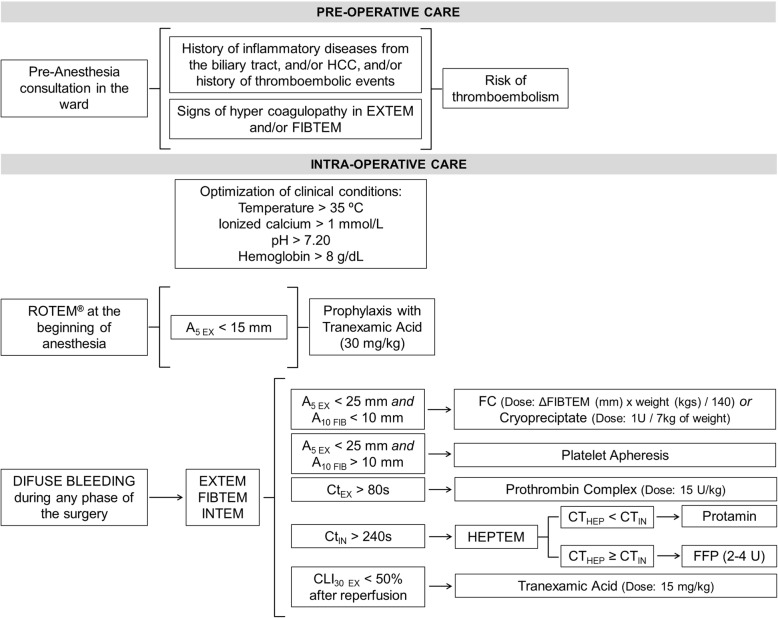
Background: Perioperative bleeding and transfusion are important causes of morbidity and mortality in patients undergoing liver transplantation. The aim of this study is to assess whether viscoelastic tests-guided therapy with the use of synthetic factor concentrates impact transfusion rates of hemocomponents in adult patients undergoing liver transplantation.
Methods: This is an interventional before-after comparative study. Patients undergoing liver transplantation before the implementation of a protocol using thromboelastometry and synthetic factor concentrates were compared to patients after the implementation. Primary outcome was transfusion of any hemocomponents. Secondary outcomes included: transfusion of red blood cells (RBC), fresh frozen plasma (FFP), cryoprecipitate or platelets, clinical complications, length of stay and in-hospital mortality.
Results: A total of 183 patients were included in the control and 54 in the intervention phase. After propensity score matching, the proportion of patients receiving any transfusion of hemocomponents was lower in the intervention phase (37.0 vs 58.4%; OR, 0.42; 95% CI, 0.20-0.87; p = 0.019). Patients in the intervention phase received less RBC (30.2 vs 52.5%; OR, 0.21; 95% CI, 0.08-0.56; p = 0.002) and FFP (5.7 vs 27.3%; OR, 0.11; 95% CI, 0.03-0.43; p = 0.002). There was no difference regarding transfusion of cryoprecipitate and platelets, complications related to the procedure, hospital length of stay and mortality.
Conclusions: Use of a viscoelastic test-guided transfusion algorithm with the use of synthetic factor concentrates reduces the transfusion rates of allogenic blood in patients submitted to liver transplantation.
Trial registration: This trial was registered retrospectively on November 15th, 2018 - clinicaltrials.gov - Identifier: NCT03756948.
Keywords: Blood coagulation disorders; Blood transfusion; Fibrinogen; Hemorrhage; Hemostasis; Liver transplantation; Prothrombin complex concentrate.
Conflict of interest statement
Ethics approval and consent to participate
The protocol was approved by the local ethics committee of Hospital Israelita Albert Einstein (Comitê de Ética do Hospital Israelita Albert Einstein, São Paulo, Brazil). Written consent was applied to patients in the prospective group (intervention group), and was waived in the restrospective group (control group).
Consent for publication
Not Applicable.
Competing interests
The author Ary Serpa Neto is a member of the editorial board (Associate Editor) of this journal.
The other authors declare no competing interests.
Publisher’s Note
Springer Nature remains neutral with regard to jurisdictional claims in published maps and institutional affiliations.
Figures
References
-
- Rana A, Petrowsky H, Hong JC, Agopian VG, Kaldas FM, Farmer D, Yersiz H, Hiatt JR, Busuttil RW. Blood transfusion requirement during liver transplantation is an important risk factor for mortality. J Am Coll Surg. 2013;216(5):902–907. - PubMed
-
- Maxwell MJ, Wilson MJA. Complications of blood transfusion. Contin Educ Anaesth Crit Care Pain. 2006;6:225–229.
Publication types
MeSH terms
Substances
Associated data
LinkOut - more resources
Full Text Sources
Medical
