


Spin locking in liquid entrapped in nanocavities: Application to study connective tissues
- PMID: 30580046
- PMCID: PMC6942517
- DOI: 10.1016/j.jmr.2018.12.012
Spin locking in liquid entrapped in nanocavities: Application to study connective tissues
Abstract
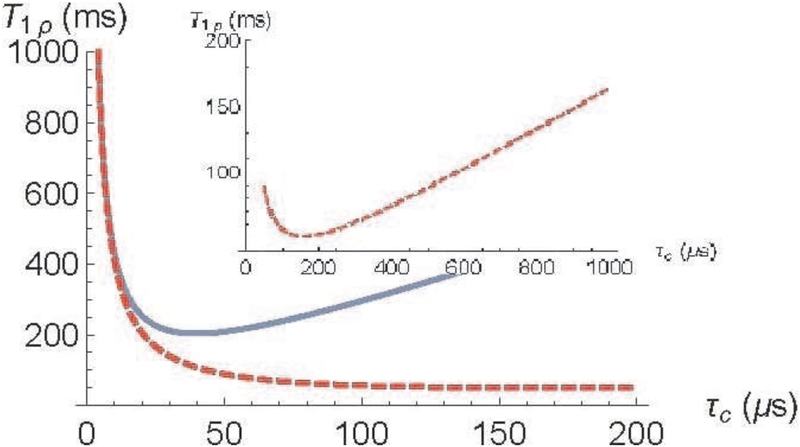
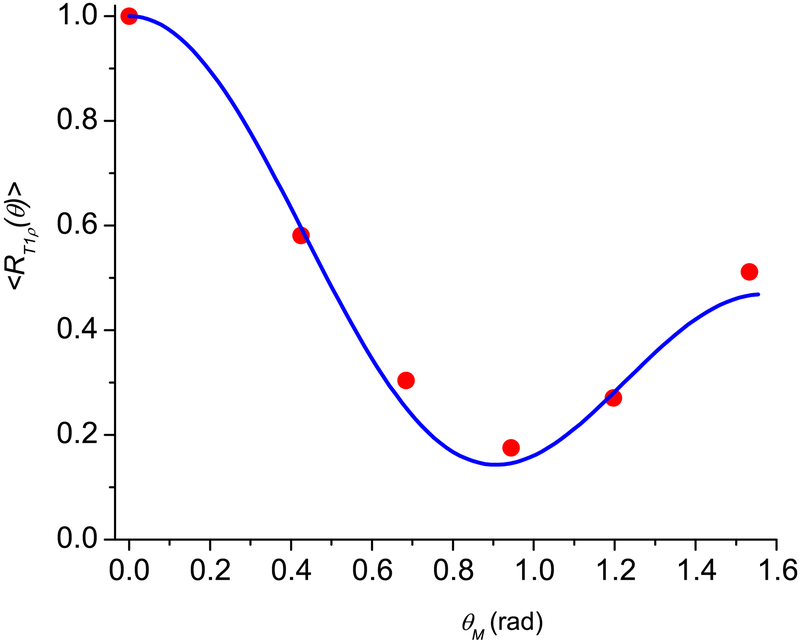
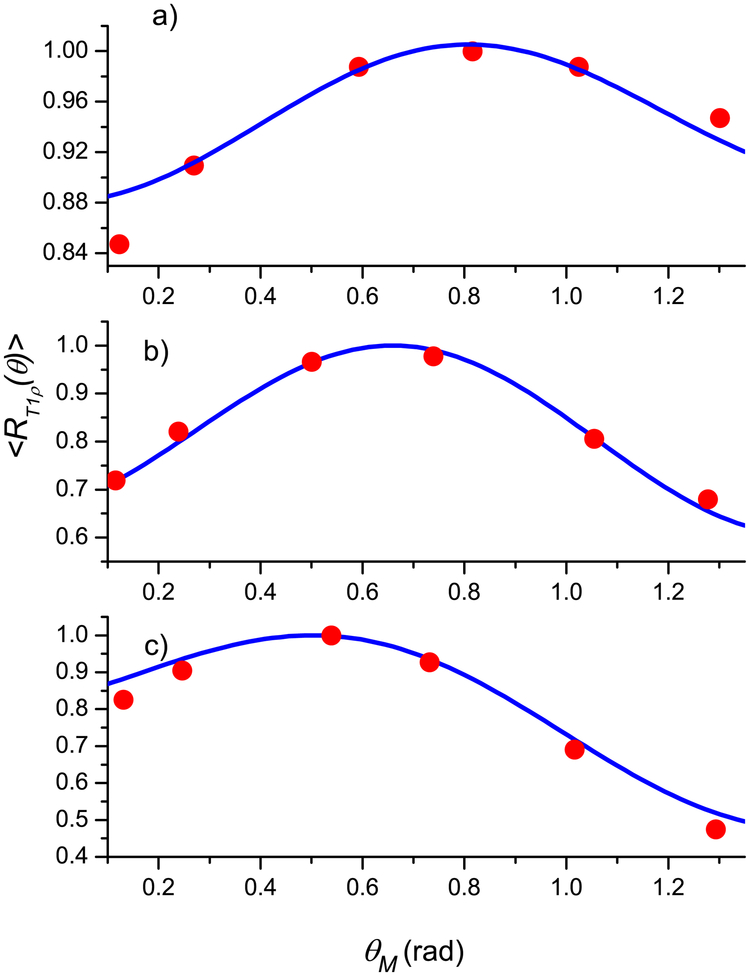
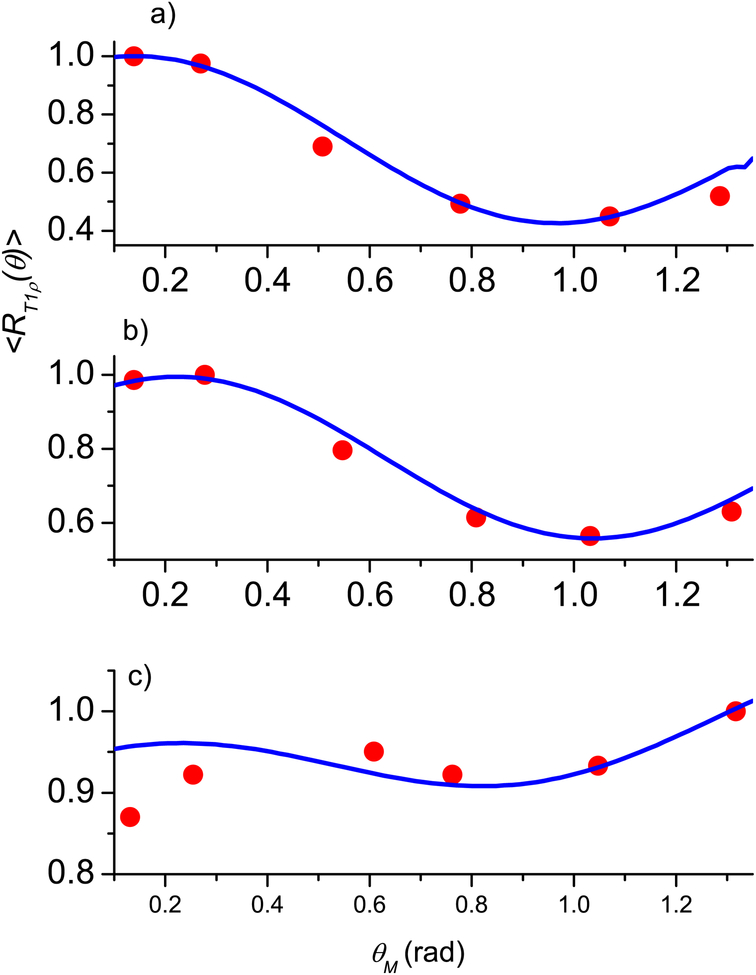
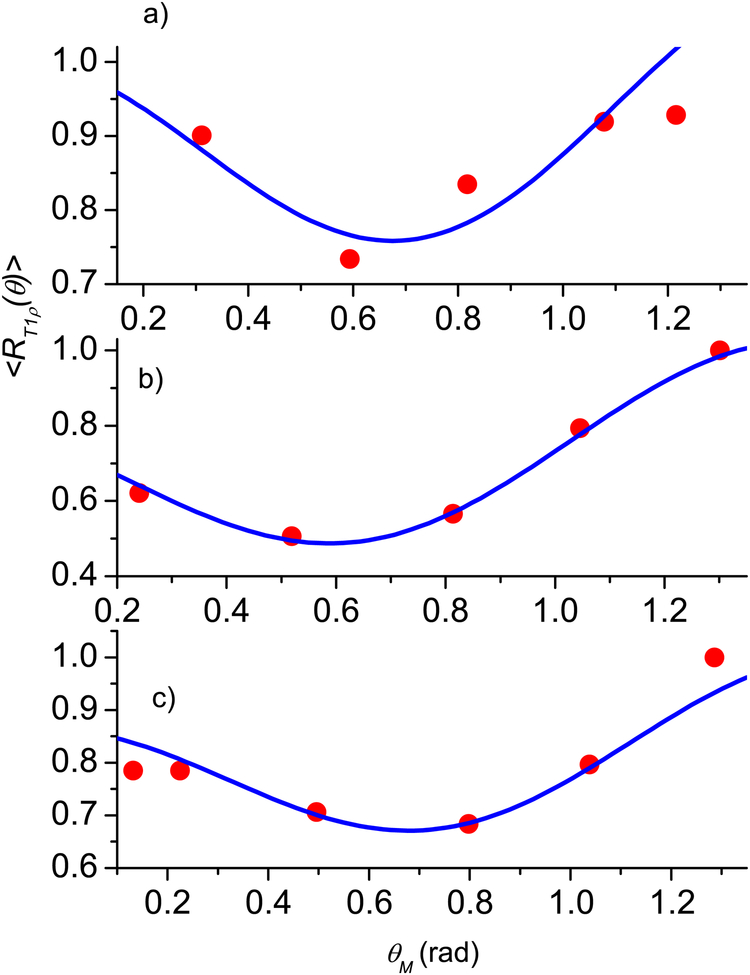
Study of the spin-lattice relaxation in the spin-locking state offers important information about atomic and molecular motions, which cannot be obtained by spin lattice relaxation in strong external magnetic fields. The application of this technique for the investigation of the spin-lattice relaxation in biological samples with fibril structures reveals an anisotropy effect for the relaxation time under spin locking, T1ρ. To explain the anisotropy of the spin-lattice relaxation under spin-locking in connective tissue a model which represents a tissue by a set of nanocavities containing water is used. The developed model allows us to estimate the correlation time for water molecular motion in articular cartilage, τc=30μs and the averaged nanocavity volume, V≃5400nm3. Based on the developed model which represents a connective tissue by a set of nanocavities containing water, a good agreement with the experimental data from an articular cartilage and a tendon was demonstrated. The fitting parameters were obtained for each layer in each region of the articular cartilage. These parameters vary with the known anatomic microstructures of the tissue. Through Gaussian distributions to nanocavity directions, we have calculated the anisotropy of the relaxation time under spin locking T1ρ for a human Achilles tendon specimen and an articular cartilage. The value of the fitting parameters obtained at matching of calculation to experimental results can be used in future investigations for characterizing the fine fibril structure of biological samples.
Keywords: Anisotropy; Cartilage; Nanocavity; Spin lattice relaxation time T(1)(ρ); Spin locking.
Copyright © 2018 Elsevier Inc. All rights reserved.
Conflict of interest statement
Figures
References
-
- Abraham A (1961) The principles of nuclear magnetism. Oxford Clarendon Press.
-
- Callaghan PT (1991) Principles of nuclear magnetic resonance microscopy. Oxford Clarendon Press.
-
- Haeberlen U and Waugh JS (1969) Spin-lattice relaxation in periodically perturbed systems. Phys Rev 185:420.
-
- Mehring M (1978) High resolution NMR spectroscopy in solids. Springer-Verlag.
-
- Haeberlen U (1978) High resolution NMR in solids. Academic Press.
Publication types
MeSH terms
Substances
Grants and funding
LinkOut - more resources
Full Text Sources
