The role of online social networking on deliberate self-harm and suicidality in adolescents: A systematized review of literature
- PMID: 30581202
- PMCID: PMC6278213
- DOI: 10.4103/psychiatry.IndianJPsychiatry_414_17
The role of online social networking on deliberate self-harm and suicidality in adolescents: A systematized review of literature
Abstract
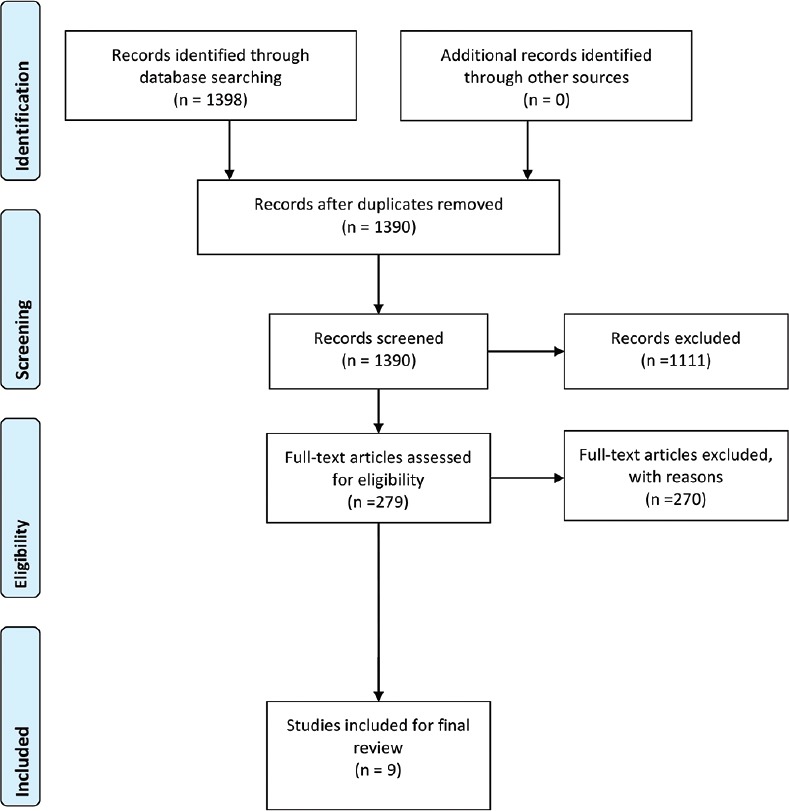
Social media use by minors has significantly increased and has been linked to depression and suicidality. Simultaneously, age-adjusted suicide rates have steadily increased over the past decade in the United States with suicide being the second most common cause of death in youth. Hence, the increase in suicide rate parallels the simultaneous increase in social media use. In addition, the rate of nonsuicidal self-injury ranges between 14% and 21% among young people. Evidence suggests that self-harming youth is more active on online social networks than youth who do not engage in self-harm behavior. The role of online social networking on deliberates self-harm and suicidality in adolescents with a focus on negative influence was assessed by conducting a systematized literature review. A literature search on "PubMed" and "Ovid Medline" using a combination of MeSH terms yielded nine articles for data extraction satisfying predefined inclusion/exclusion criteria. It was found that social networking websites are utilized by suicidal and self-harming youth as a medium to communicate with and to seek social support from other users. Online social networking also leads to increased exposure to and engagement in self-harm behavior due to users receiving negative messages promoting self-harm, emulating self-injurious behavior of others, and adopting self-harm practices from shared videos. Greater time spent on social networking websites led to higher psychological distress, an unmet need for mental health support, poor self-rated mental health, and increased suicidal ideation. In conclusion, greater time spent on online social networking promotes self-harm behavior and suicidal ideation in vulnerable adolescents.
Keywords: Adolescent; online social networking; self-harm; social media; suicidality; youth.
Conflict of interest statement
There are no conflicts of interest.
Figures
References
-
- Reid Chassiakos YL, Radesky J, Christakis D, Moreno MA, Cross C COUNCIL ON COMMUNICATIONS AND MEDIA. Children and adolescents and digital media. Pediatrics. 2016;138 pii: e20162593. - PubMed
-
- Lenhart A. Teens, Social Media & Technology Overview 2015. Washington, DC: Pew Internet and American Life Project; 2015.
-
- Felt LJ, Robb MB. San Francisco, CA: Common Sense Media; 2016. [Last accessed on 2016 May 16]. Technology Addiction: Concern, Controversy, and Finding a Balance. Available from: https://www.commonsensemedia.org/research/technology-addiction-concern-c... .
-
- Teen Fact Sheet. Pew Research Center Website. 2014. [Last accessed on 2017 Jul 13]. Available from: http://www.pewinternet.org/fact-sheets/teens-fact-sheet .
Publication types
LinkOut - more resources
Full Text Sources
Miscellaneous