


Subacute acrolein exposure to rat larynx in vivo
- PMID: 30582162
- PMCID: PMC6591102
- DOI: 10.1002/lary.27687
Subacute acrolein exposure to rat larynx in vivo
Abstract
Objectives/hypothesis: Inhaled pollutants can contact vocal fold tissue and induce detrimental voice changes. Acrolein is a pollutant in cigarette smoke and can also be inhaled during the combustion of fossil fuels, animal fats, and plastics in the environment. However, the vocal fold pathological changes induced by acrolein and the underlying inflammatory pathways are not well understood. These biologic data are needed to understand why voice problems may result from pollutant exposure.
Study design: In vivo prospective design with experimental and control groups.
Methods: Sprague-Dawley male rats (N = 36) were exposed to acrolein (3 ppm) or filtered air (control) through a whole-body exposure system for 5 hours/day, for 5 days/week, over 4 weeks. Histopathological changes, presence of edema, expression of proinflammatory cytokines and markers, and the phosphorylation of nuclear factor kappa-light-chain-enhancer of activated B cells (NF-κB) were investigated.
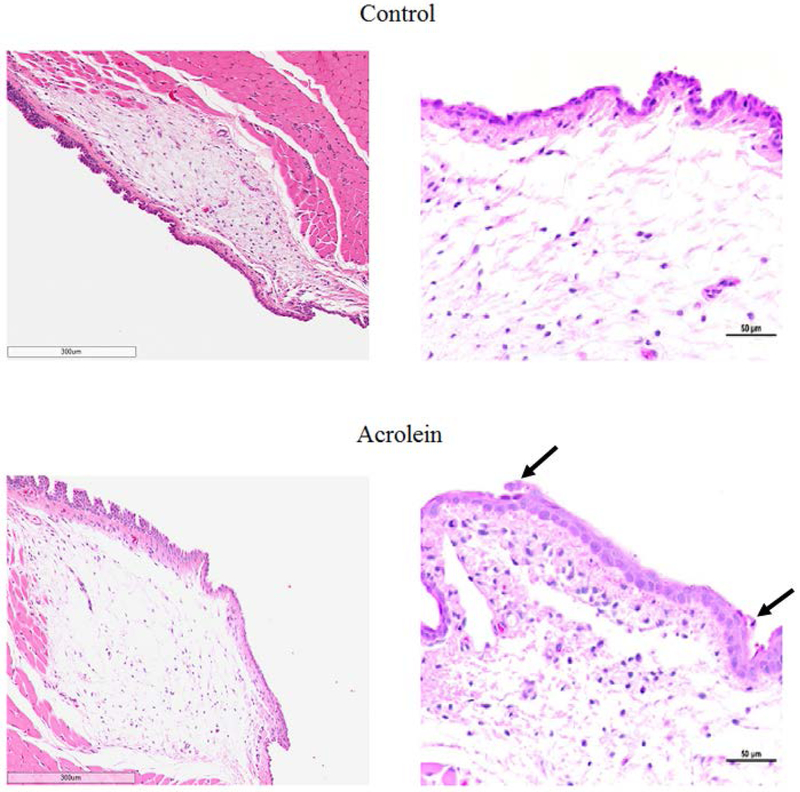
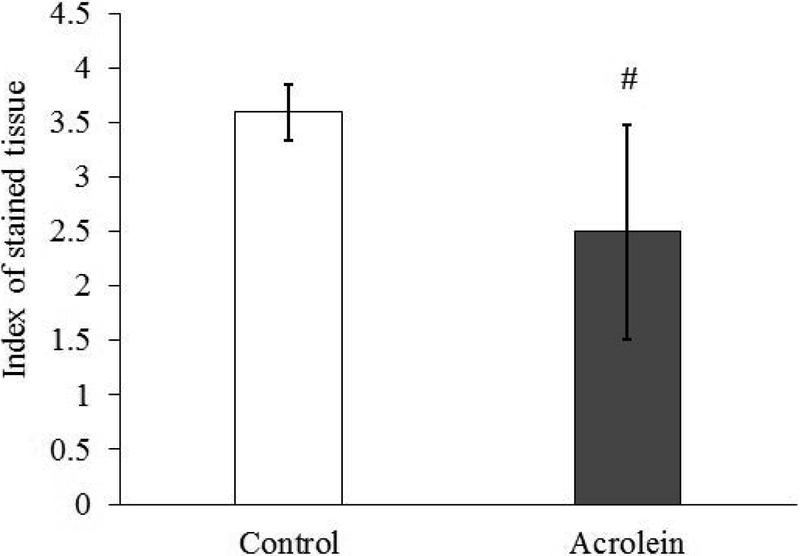
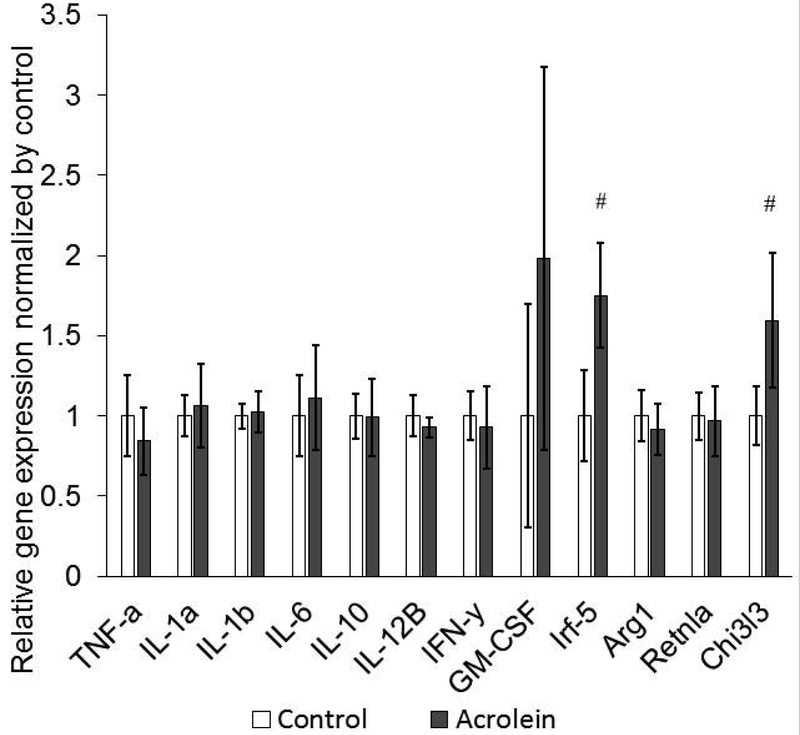
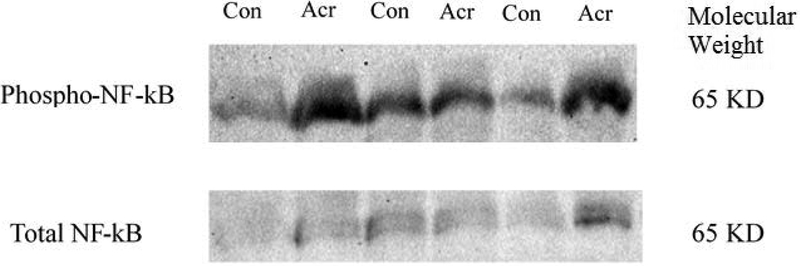
Results: Histological evaluation and quantification demonstrated that subacute acrolein exposure induced significant vocal fold edema. Acrolein exposure also induced epithelial sloughing and cell death. Quantitative polymerase chain reaction showed a significant upregulation of genes encoding interferon regulatory factor and chitinase-3-like protein 3. Western blot revealed a 76.8% increase in phosphorylation of NF-κB P65 after subacute acrolein exposure.
Conclusions: These findings suggest that 4-week exposures to 3 ppm acrolein induce vocal fold inflammation manifested as edema, related to the activation of NF-κB signaling. The edema may underlie the voice changes reported in speakers exposed to pollutants.
Level of evidence: NA Laryngoscope, 129:E313-E317, 2019.
Keywords: Acrolein; edema; inflammation; pollutants; vocal folds; voice problems.
© 2018 The American Laryngological, Rhinological and Otological Society, Inc.
Conflict of interest statement
Figures
References
-
- Yeager RP, Kushman M, Chemerynski S, Weil R, Fu X, White M, Callahan-Lyon P, Rosenfeldt H. Proposed Mode of Action for Acrolein Respiratory Toxicity Associated with Inhaled Tobacco Smoke. Toxicol Sci 2016;151:347–364. - PubMed
-
- Faroon O, Roney N, Taylor J, Ashizawa A, Lumpkin MH, Plewak DJ. Acrolein environmental levels and potential for human exposure. Toxicol Ind Health 2008;24:543–564. - PubMed
-
- Yonekawa H A clinical study of Reinke’s edema. Auris Nasus Larynx 1988;15:57–78. - PubMed
Publication types
MeSH terms
Substances
Grants and funding
LinkOut - more resources
Full Text Sources
Medical
Research Materials
