


The Role of Succinate in the Regulation of Intestinal Inflammation
- PMID: 30583500
- PMCID: PMC6356305
- DOI: 10.3390/nu11010025
The Role of Succinate in the Regulation of Intestinal Inflammation
Abstract
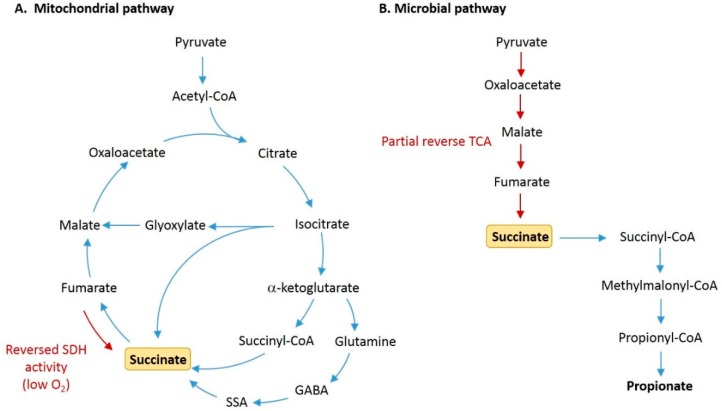
Succinate is a metabolic intermediate of the tricarboxylic acid (TCA) cycle within host cells. Succinate is also produced in large amounts during bacterial fermentation of dietary fiber. Elevated succinate levels within the gut lumen have been reported in association with microbiome disturbances (dysbiosis), as well as in patients with inflammatory bowel disease (IBD) and animal models of intestinal inflammation. Recent studies indicate that succinate can activate immune cells via its specific surface receptor, succinate receptor 1(SUCNR1), and enhance inflammation. However, the role of succinate in inflammatory processes within the gut mucosal immune system is unclear. This review includes current literature on the association of succinate with intestinal inflammation and the potential role of succinate⁻SUCNR1 signaling in gut immune functions.
Keywords: dysbiosis; inflammatory bowel disease; metabolic receptor; metabolite; microbiome.
Conflict of interest statement
JVL has received travel grants, speaker fees, educational + research grant support fromAbbvie, Aptalis, Janssen, Nestlé Health Sciences, P&G, Merck, Schering-Plough, GSK, Illumina.
Figures
References
Publication types
MeSH terms
Substances
LinkOut - more resources
Full Text Sources
Other Literature Sources
