


Hsp90 Heterocomplexes Regulate Steroid Hormone Receptors: From Stress Response to Psychiatric Disease
- PMID: 30585227
- PMCID: PMC6337637
- DOI: 10.3390/ijms20010079
Hsp90 Heterocomplexes Regulate Steroid Hormone Receptors: From Stress Response to Psychiatric Disease
Abstract
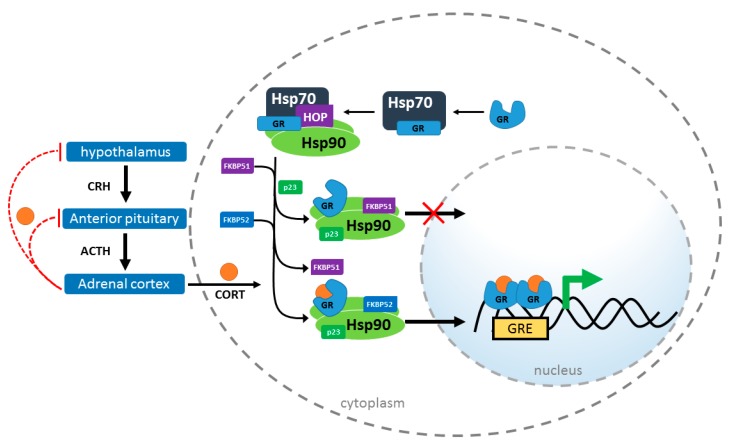
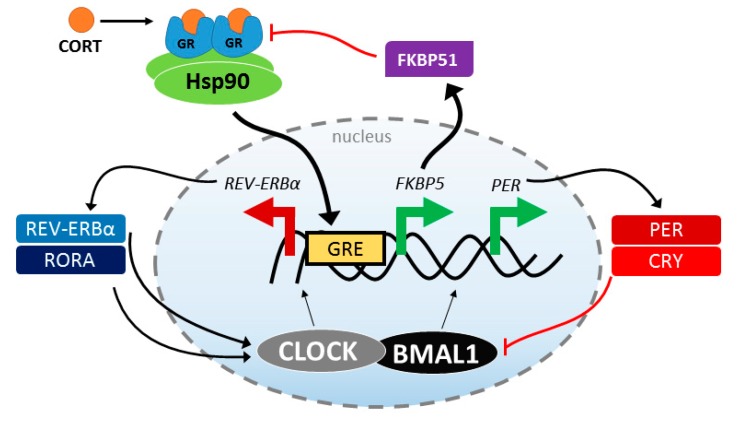
The hypothalamus-pituitary-adrenal (HPA) axis directly controls the stress response. Dysregulation of this neuroendocrine system is a common feature among psychiatric disorders. Steroid hormone receptors, like glucocorticoid receptor (GR), function as transcription factors of a diverse set of genes upon activation. This activity is regulated by molecular chaperone heterocomplexes. Much is known about the structure and function of these GR/heterocomplexes. There is strong evidence suggesting altered regulation of steroid receptor hormones by chaperones, particularly the 51 kDa FK506-binding protein (FKBP51), may work with environmental factors to increase susceptibility to various psychiatric illnesses including post-traumatic stress disorder (PTSD), major depressive disorder (MDD), and anxiety. This review highlights the regulation of steroid receptor dynamics by the 90kDa heat shock protein (Hsp90)/cochaperone heterocomplexes with an in depth look at how the structural regulation and imbalances in cochaperones can cause functional effects on GR activity. Links between the stress response and circadian systems and the development of novel chaperone-targeting therapeutics are also discussed.
Keywords: CyP40; FKBP51; FKBP52; GR; Hsp90; PP5; circadian rhythms; molecular chaperones; psychiatric disease; steroid hormones; stress response.
Conflict of interest statement
The authors declare no conflict of interest.
Figures
References
-
- Eisenlohr-Moul T.A., Miller A.B., Giletta M., Hastings P.D., Rudolph K.D., Nock M.K., Prinstein M.J. HPA axis response and psychosocial stress as interactive predictors of suicidal ideation and behavior in adolescent females: A multilevel diathesis-stress framework. Neuropsychopharmacol. Off. Publ. Am. Coll. Neuropsychopharmacol. 2018;43:2564–2571. doi: 10.1038/s41386-018-0206-6. - DOI - PMC - PubMed
Publication types
MeSH terms
Substances
Grants and funding
LinkOut - more resources
Full Text Sources
Other Literature Sources
Miscellaneous
