


People, systems and safety: resilience and excellence in healthcare practice
- PMID: 30585298
- PMCID: PMC6766951
- DOI: 10.1111/anae.14519
People, systems and safety: resilience and excellence in healthcare practice
Abstract
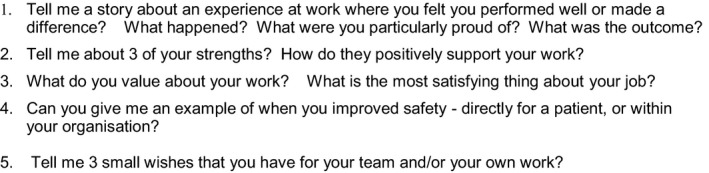
This article outlines recent developments in safety science. It describes the progression of three 'ages' of safety, namely the 'age of technology', the 'age of human factors' and the 'age of safety management'. Safety science outside healthcare is moving from an approach focused on the analysis and management of error ('Safety-1') to one which also aims to understand the inherent properties of safety systems that usually prevent accidents from occurring ('Safety-2'). A key factor in the understanding of safety within organisations relates to the distinction between 'work as imagined' and 'work as done'. 'Work as imagined' assumes that if the correct standard procedures are followed, safety will follow as a matter of course. However, staff at the 'sharp end' of organisations know that to create safety in their work, variability is not only desirable but essential. This positive adaptability within systems that allows good outcomes in the presence of both favourable and adverse conditions is termed resilience. We argue that clinical and organisational work can be made safer, not only by addressing negative outcomes, but also by fostering excellence and promoting resilience. We outline conceptual and investigative approaches for achieving this that include 'appreciative inquiry', 'positive deviance' and excellence reporting.
Keywords: quality measures: patient care; root cause analysis: essential elements.
© 2018 Association of Anaesthetists.
Figures
References
-
- Smith AF, Carlisle JC. Reviews, systematic reviews and Anaesthesia. Anaesthesia 2015; 70: 644–70. - PubMed
-
- Hale A, Hovden J. Management and culture: the third age of safety – a review of approaches to organisational aspects of safety, health and environment In: Feyer A, Williamson A, eds. Occupational injury: risk prevention and intervention. London, UK: Taylor and Francis, 2001.
-
- Heinrich HW. Industrial accident prevention: a scientific approach. New York, NY: Mc Craw Hill, 1931.
-
- Smith AF, Boult M, Woods I, Johnson S. Promoting patient safety through prospective risk identification: example from perioperative care. Quality and Safety in Health Care 2010; 19: 69–73. - PubMed
-
- Hollnagel E. Safety‐I and Safety‐II: the past and future of safety management Aldershot, UK: Ashgate; 2014.
Publication types
MeSH terms
LinkOut - more resources
Full Text Sources
Medical
