The role of self-esteem in Internet addiction within the context of comorbid mental disorders: Findings from a general population-based sample
- PMID: 30585501
- PMCID: PMC6376382
- DOI: 10.1556/2006.7.2018.130
The role of self-esteem in Internet addiction within the context of comorbid mental disorders: Findings from a general population-based sample
Abstract
Background and aims: Internet Addiction (IA) has consistently been related to comorbid psychiatric disorders and lowered self-esteem. However, most studies relied on self-report questionnaires using non-representative samples. This study aims to analyze the relative impact of self-esteem and comorbid psychopathology with lifetime IA in a population-based sample of excessive Internet users using clinical diagnoses assessed in a personal interview.
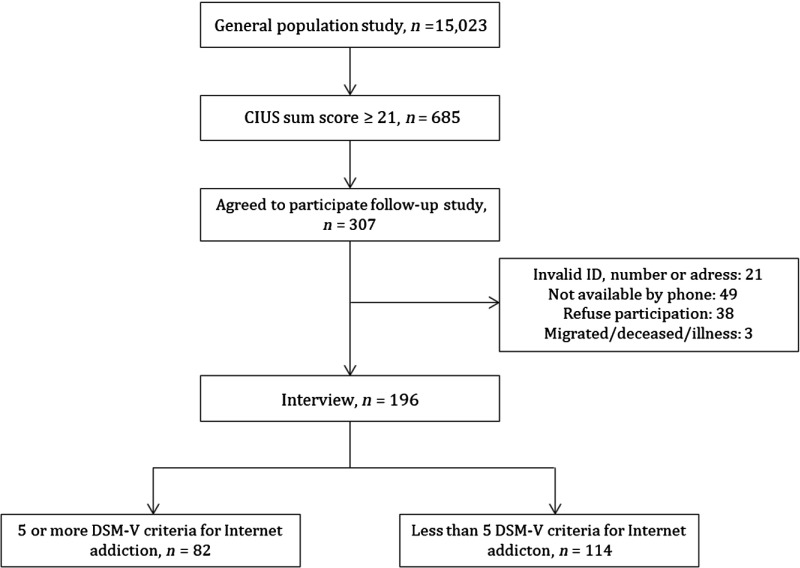
Methods: The sample of this study is based on a general population survey. Using the Compulsive Internet Use Scale, all participants with elevated Internet use scores were selected and invited to a follow-up interview. Current DSM-5 criteria for Internet gaming disorder were rephrased to apply to all Internet activities. Out of 196 participants, 82 fulfilled the criteria for IA. Self-esteem was measured with the Rosenberg's Self-Esteem Scale.
Results: Self-esteem is significantly associated with IA. For every unit increase in self-esteem, the chance of having IA decreased by 11%. By comparison, comorbidities such as substance-use disorder (excluding tobacco), mood disorder, and eating disorder were significantly more likely among Internet-addicted than in the non-addicted group. This could not be reported for anxiety disorders. A logistic regression showed that by adding self-esteem and psychopathology into the same model, self-esteem maintains its strong influence on IA.
Discussion and conclusions: Self-esteem was associated with IA, even after adjustment for substance-use disorders, mood disorder, and eating disorder. Self-esteem and psychopathology should be considered in prevention, intervention measures, as well as in the conception of etiological models.
Keywords: Internet addiction; comorbidity; prevalence; psychopathology; self-esteem.
References
-
- Akin A., Iskender M. (2011). Internet addiction and depression, anxiety and stress. International Online Journal of Educational Sciences, 3(1), 138–148.
-
- American Psychiatric Association. (2013). Diagnostic and statistical manual of mental disorders (DSM-5®). Washington, DC: American Psychiatric Association.
-
- Andreassen C. S., Billieux J., Griffiths M. D., Kuss D. J., Demetrovics Z., Mazzoni E., Pallesen S. (2016). The relationship between addictive use of social media and video games and symptoms of psychiatric disorders: A large-scale cross-sectional study. Psychology of Addictive Behaviors, 30(2), 252–262. doi: 10.1037/adb000016010.1037/adb0000160 - DOI - PubMed