


An experimental randomized study on the analgesic effects of pharmaceutical-grade cannabis in chronic pain patients with fibromyalgia
- PMID: 30585986
- PMCID: PMC6430597
- DOI: 10.1097/j.pain.0000000000001464
An experimental randomized study on the analgesic effects of pharmaceutical-grade cannabis in chronic pain patients with fibromyalgia
Abstract
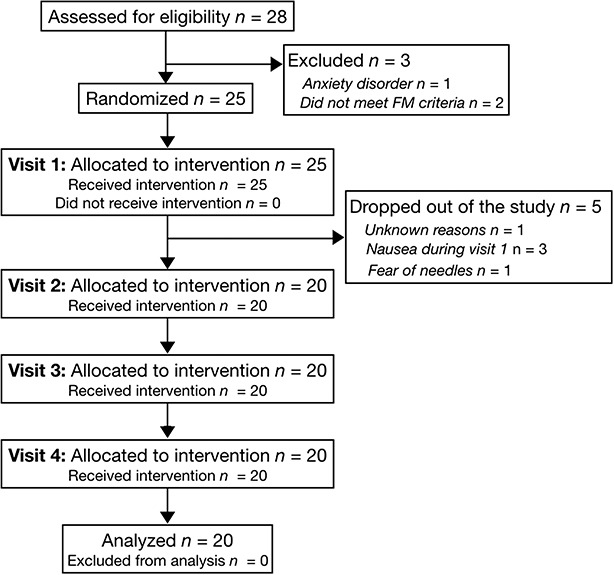
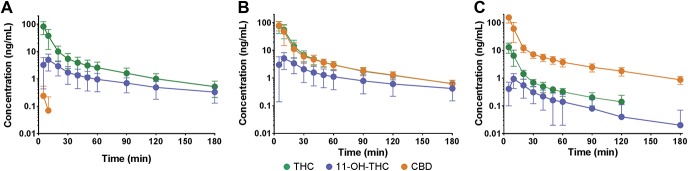
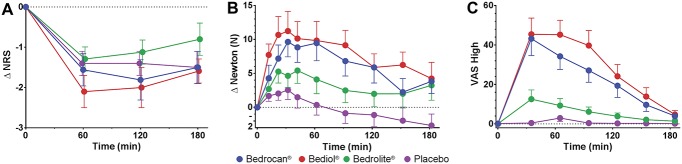
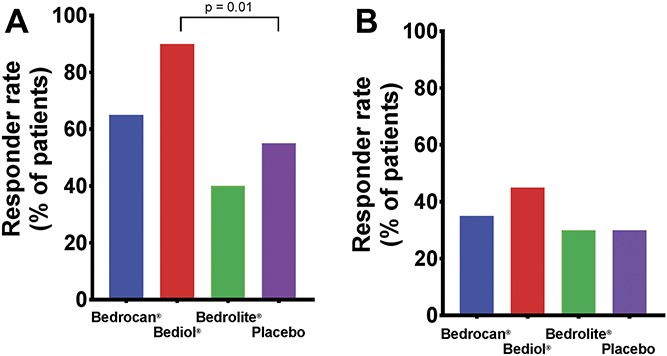
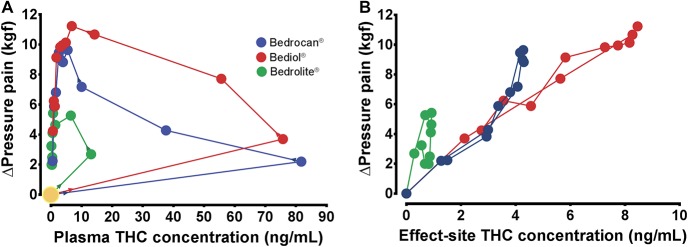
In this experimental randomized placebo-controlled 4-way crossover trial, we explored the analgesic effects of inhaled pharmaceutical-grade cannabis in 20 chronic pain patients with fibromyalgia. We tested 4 different cannabis varieties with exact knowledge on their [INCREMENT]-tetrahydrocannabinol (THC) and cannabidiol (CBD) content: Bedrocan (22.4-mg THC, <1-mg CBD; Bedrocan International BV, Veendam, the Netherlands), Bediol (13.4-mg THC, 17.8-mg CBD; Bedrocan International BV, Veendam, the Netherlands), Bedrolite (18.4-mg CBD, <1-mg THC; Bedrocan International BV, Veendam, the Netherlands), and a placebo variety without any THC or CBD. After a single vapor inhalation, THC and CBD plasma concentrations, pressure and electrical pain thresholds, spontaneous pain scores, and drug high were measured for 3 hours. None of the treatments had an effect greater than placebo on spontaneous or electrical pain responses, although more subjects receiving Bediol displayed a 30% decrease in pain scores compared to placebo (90% vs 55% of patients, P = 0.01), with spontaneous pain scores correlating with the magnitude of drug high (ρ = -0.5, P < 0.001). Cannabis varieties containing THC caused a significant increase in pressure pain threshold relative to placebo (P < 0.01). Cannabidiol inhalation increased THC plasma concentrations but diminished THC-induced analgesic effects, indicative of synergistic pharmacokinetic but antagonistic pharmacodynamic interactions of THC and CBD. This experimental trial shows the complex behavior of inhaled cannabinoids in chronic pain patients with just small analgesic responses after a single inhalation. Further studies are needed to determine long-term treatment effects on spontaneous pain scores, THC-CBD interactions, and the role of psychotropic symptoms on pain relief.
Conflict of interest statement
Sponsorships or competing interests that may be relevant to content are disclosed at the end of this article.
Figures
References
-
- Bang H, Ni L, Davis C. Assessment of blinding in clinical trials. Control Clin Trials 2004;25:143–56. - PubMed
-
- Bisogno T, Hanuš L, De Petrocellis L, Tchilibon S, Ponde D, Brandi I, Moriello AS, Davis JB, Mechoulam R, Di Marzo V. Molecular targets for cannabidiol and its synthetic analogues: effect on vanilloid VR1 receptors and on the cellular uptake and enzymatic hydrolysis of anandamide. Br J Pharmacol 2001;134:845–52. - PMC - PubMed
-
- Bond A, Lader M. The use of visual analogue scales in rating of subjective feelings. Br J Med Psychol 1974;47:211–8.
-
- Bowdle TA, Radant AD, Cowley DS, Kharasch ED, Strassman RJ, Roy-Byrne PP. Psychedelic effects of ketamine in healthy volunteers. Anesthesiology 1998;88:82–8. - PubMed
-
- Calandre EP, Rico-Villadermoros F, Slim M. An update on pharmacotherapy for the treatment of fibromyalgia. Expert Opin Pharmacother 2015;16:1347–68. - PubMed
Publication types
MeSH terms
Substances
LinkOut - more resources
Full Text Sources
Medical
