


Changing epidemiological patterns of HIV and AIDS in China in the post-SARS era identified by the nationwide surveillance system
- PMID: 30587142
- PMCID: PMC6307199
- DOI: 10.1186/s12879-018-3551-5
Changing epidemiological patterns of HIV and AIDS in China in the post-SARS era identified by the nationwide surveillance system
Abstract
Background: China has made substantial progress in tackling its HIV and AIDS epidemic. But the changing patterns of HIV and AIDS incidence based on the longitudinal observation data were rarely studied.
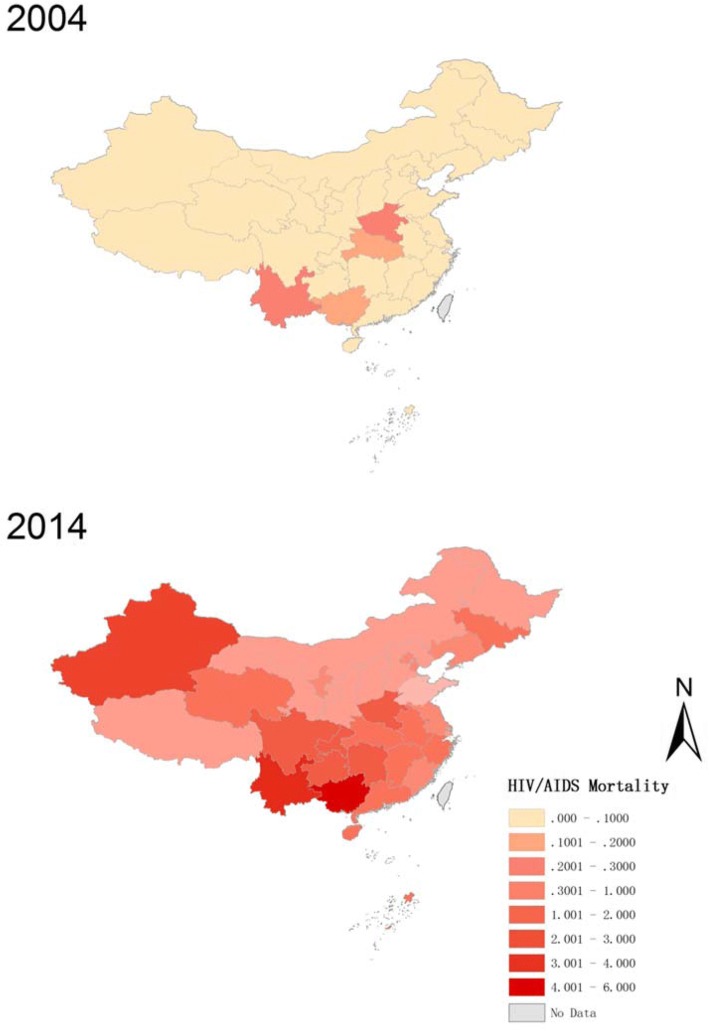
Methods: The reporting incidence (RI) and mortality data on HIV and AIDS in China covering 31 provinces from 2004 to 2014 were collected from the Chinese Public Health Science Data Center. To decompose the time-series data, Empirical Mode Decomposition (EMD) was applied to properly describe the trends of HIV and AIDS incidence. A mathematical model was used to estimate the relative change of incidence among provinces and age groups.
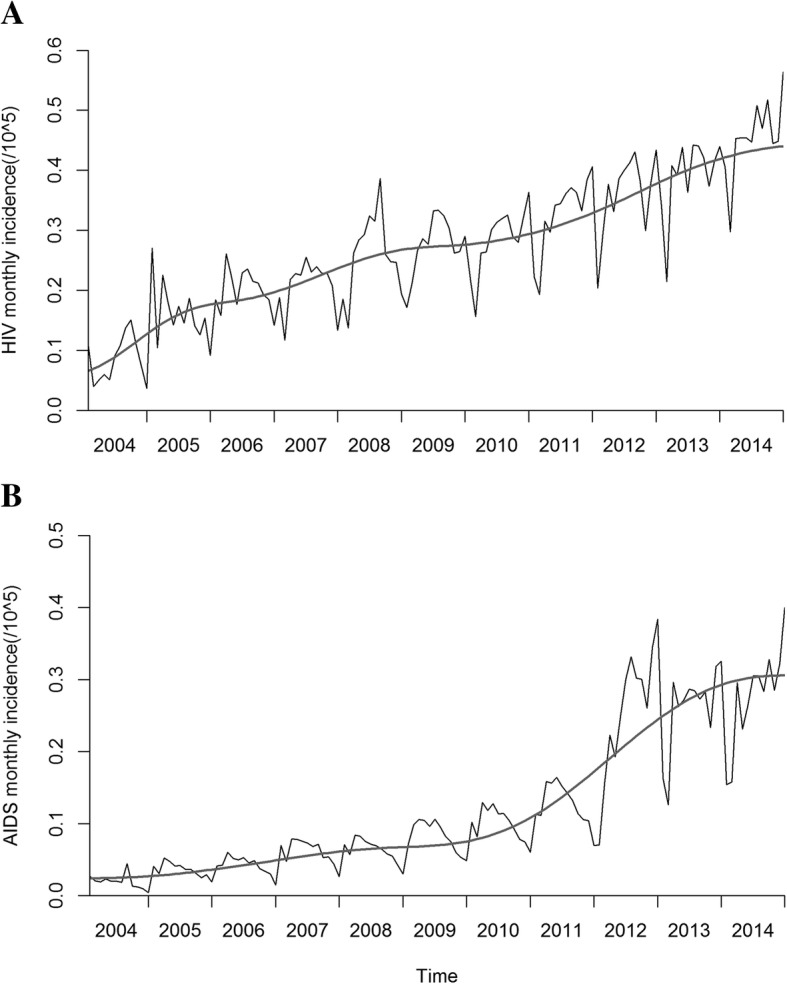
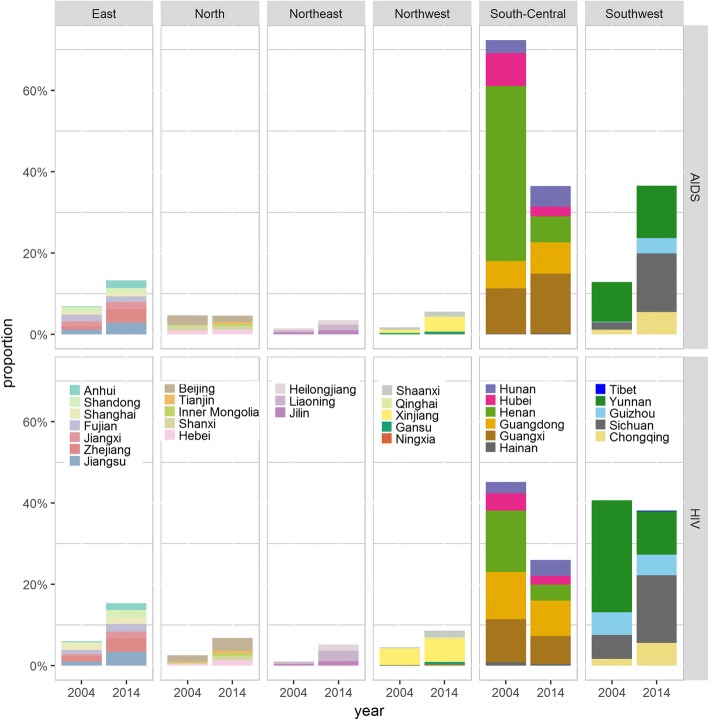
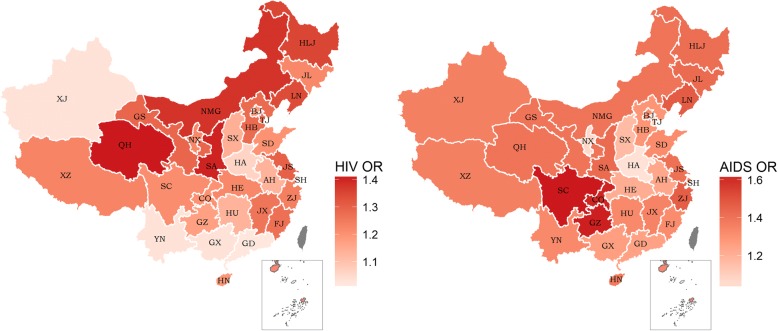
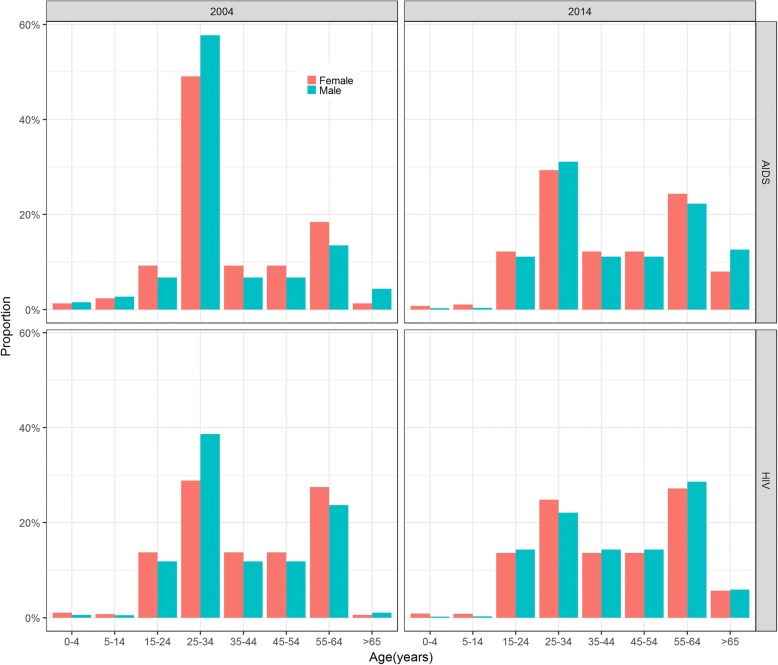
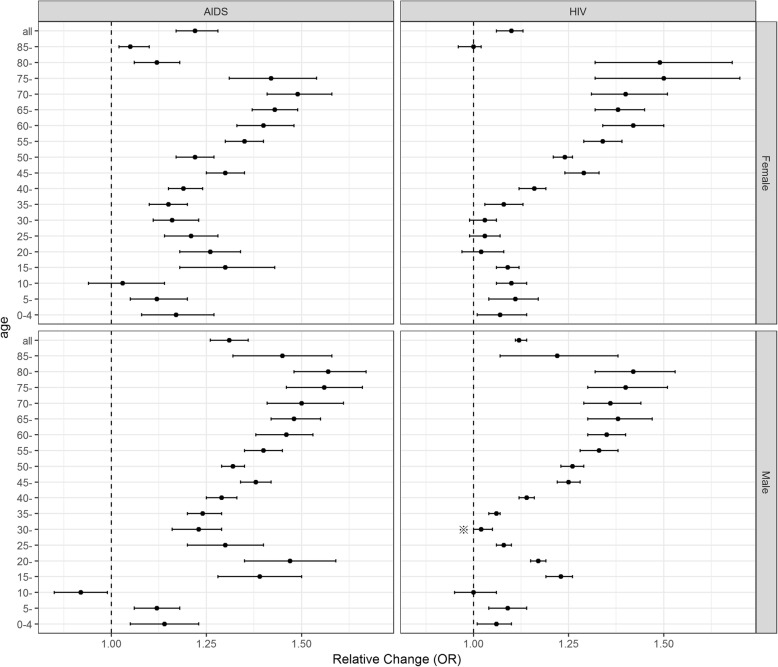
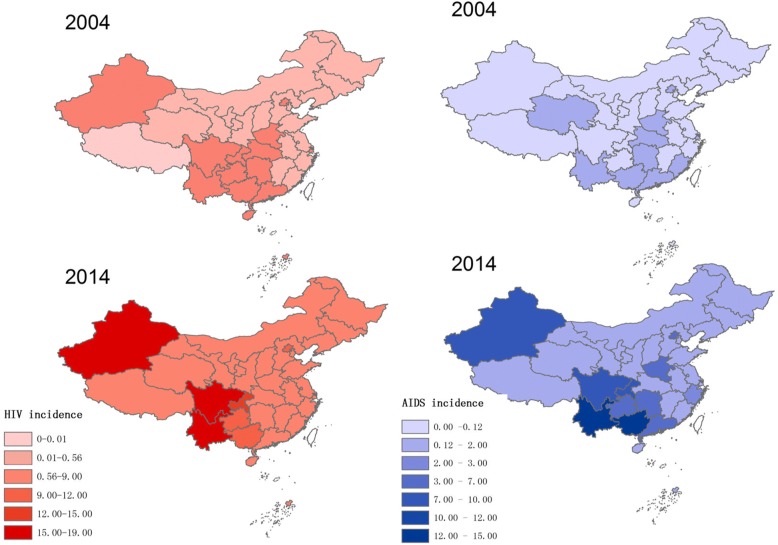
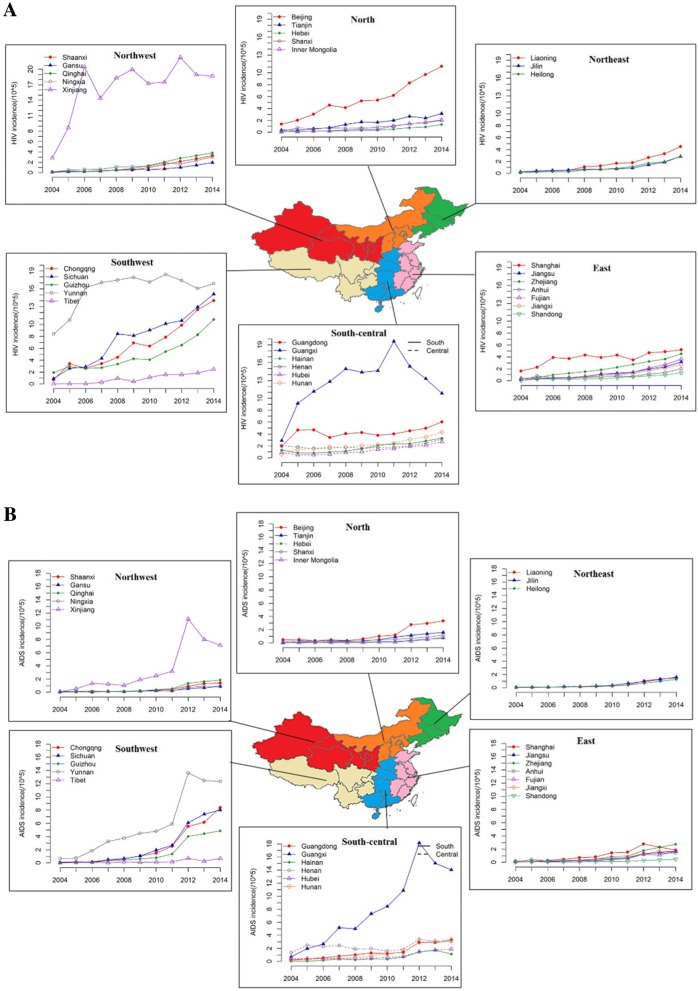
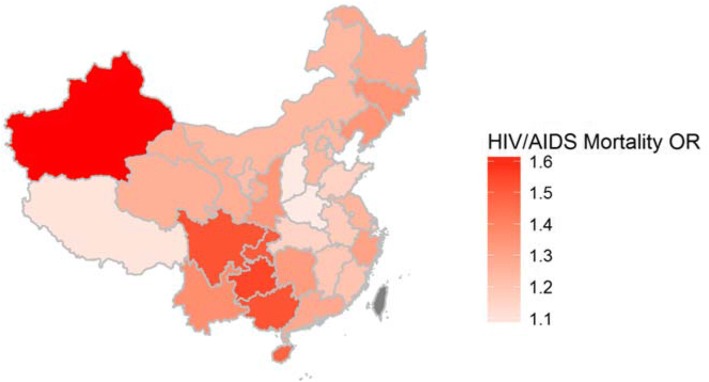
Results: A total of 483,010 newly HIV infections and 214,205 AIDS cases were reported between 2004 and 2014 nationwide. HIV infection increased from 13,258 in 2004 (RI 1.02 per 100,000 person years) to 74,048 in 2014 (RI 5.46 per 100,000). The number of AIDS cases increased from 3054 in 2004 (RI 0.23 per 100,000) to 45,145 in 2014 (RI 3.33 per 100,000). The overall relative changes for HIV infection and AIDS incidence were 1.11 (95% confidence interval [CI] 1.10-1.13) and 1.28 (95% CI 1.23-1.33), respectively. The relative increase for HIV and AIDS RI was higher in northwest provinces while lower in Henan, Xinjiang, Guangxi and Yunnan. The overall relative changes for HIV infection were 1.12 (95% CI 1.11-1.14) in males and 1.10 (95% CI 1.06-1.13) in females. For AIDS RI, the relative increases were 1.31 (95% CI 1.26-1.36) in males and 1.22 (95% CI 1.17-1.28) in females. The lowest relative increase was detected among young adults, while the largest relative increase (odds ratio [OR] > 1.30) was detected in people aged 55 years or above.
Conclusions: HIV and AIDS showed an increasing trend in China from 2004 to 2014, respectively, but the epidemic tended to be under control among provinces and young people that used to have a high HIV and AIDS incidence. Northwest China and older people could be new "hop-spots" for HIV and AIDS risk.
Keywords: China; Epidemiology; HIV and AIDS; Incidence; Surveillance.
Conflict of interest statement
Ethics approval and consent to participate
This study was undertaken with the retrospective analysis of data collected from the Chinese Public Health Science Data Center, and the data used in the analysis were anonymized and no additional contact was made with patients to obtain further information as a part of this study, therefore, no ethical approval was required.
Consent for publication
Not applicable.
Competing interests
The authors declare that they have no competing interests.
Publisher’s Note
Springer Nature remains neutral with regard to jurisdictional claims in published maps and institutional affiliations.
Figures
References
MeSH terms
Grants and funding
LinkOut - more resources
Full Text Sources
Medical
Miscellaneous
