


Differential control of human Treg and effector T cells in tumor immunity by Fc-engineered anti-CTLA-4 antibody
- PMID: 30587582
- PMCID: PMC6329979
- DOI: 10.1073/pnas.1812186116
Differential control of human Treg and effector T cells in tumor immunity by Fc-engineered anti-CTLA-4 antibody
Abstract
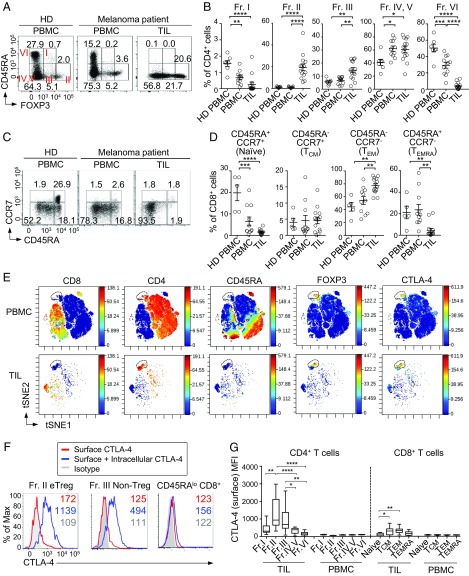
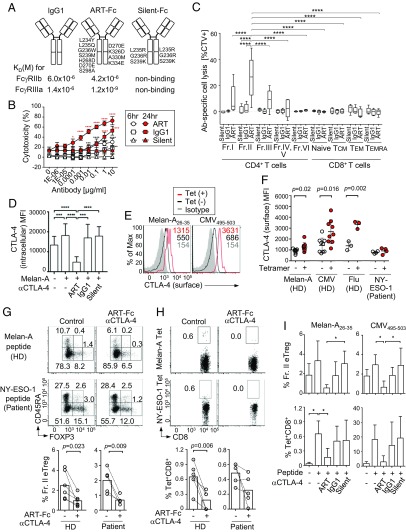
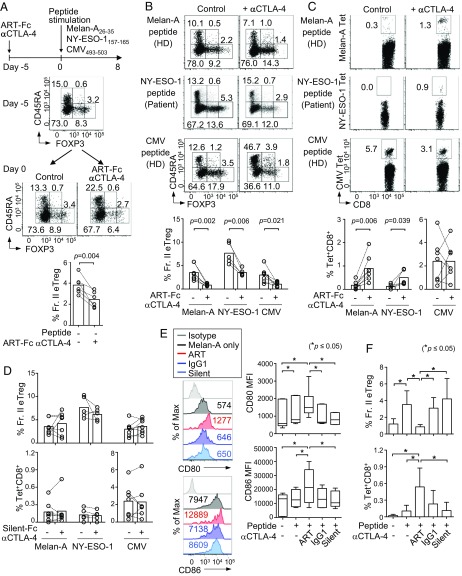
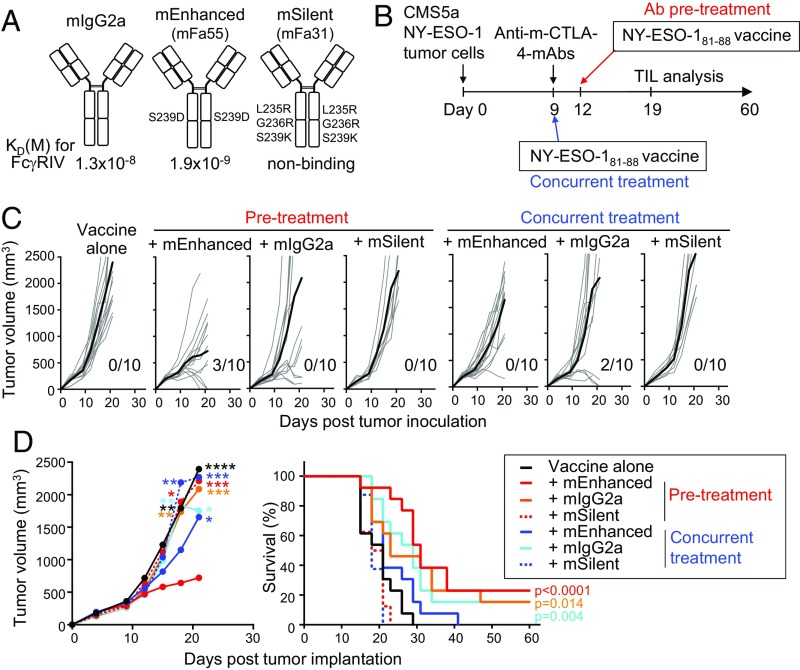
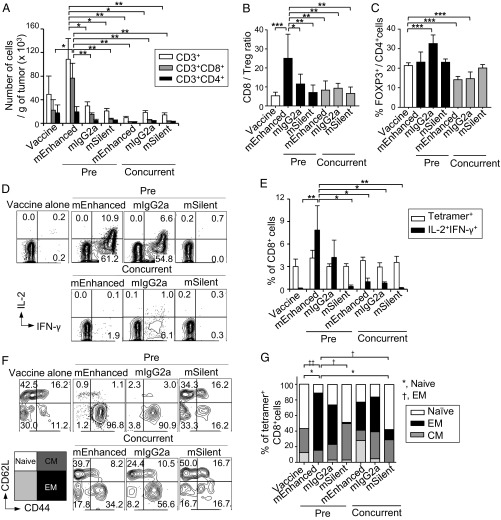
Anti-CTLA-4 mAb is efficacious in enhancing tumor immunity in humans. CTLA-4 is expressed by conventional T cells upon activation and by naturally occurring FOXP3+CD4+ Treg cells constitutively, raising a question of how anti-CTLA-4 mAb can differentially control these functionally opposing T cell populations in tumor immunity. Here we show that FOXP3high potently suppressive effector Treg cells were abundant in melanoma tissues, expressing CTLA-4 at higher levels than tumor-infiltrating CD8+ T cells. Upon in vitro tumor-antigen stimulation of peripheral blood mononuclear cells from healthy individuals or melanoma patients, Fc-region-modified anti-CTLA-4 mAb with high antibody-dependent cell-mediated cytotoxicity (ADCC) and cellular phagocytosis (ADCP) activity selectively depleted CTLA-4+FOXP3+ Treg cells and consequently expanded tumor-antigen-specific CD8+T cells. Importantly, the expansion occurred only when antigen stimulation was delayed several days from the antibody treatment to spare CTLA-4+ activated effector CD8+T cells from mAb-mediated killing. Similarly, in tumor-bearing mice, high-ADCC/ADCP anti-CTLA-4 mAb treatment with delayed tumor-antigen vaccination significantly prolonged their survival and markedly elevated cytokine production by tumor-infiltrating CD8+ T cells, whereas antibody treatment concurrent with vaccination did not. Anti-CTLA-4 mAb modified to exhibit a lesser or no Fc-binding activity failed to show such timing-dependent in vitro and in vivo immune enhancement. Thus, high ADCC anti-CTLA-4 mAb is able to selectively deplete effector Treg cells and evoke tumor immunity depending on the CTLA-4-expressing status of effector CD8+ T cells. These findings are instrumental in designing cancer immunotherapy with mAbs targeting the molecules commonly expressed by FOXP3+ Treg cells and tumor-reactive effector T cells.
Keywords: CTLA-4; FOXP3; antibody-dependent cell-mediated cytotoxicity; cancer immunotherapy; regulatory T cells.
Conflict of interest statement
Conflict of interest statement: H.N. received a research grant from Bristol Myers Squibb. S.S. received a research grant from Chugai Pharmaceutical Co., Ltd. T.K. is employed by Chugai Pharmaceutical Co., Ltd. which provided some of the antibodies used in this study.
Figures
References
-
- Sakaguchi S. Naturally arising CD4+ regulatory T cells for immunologic self-tolerance and negative control of immune responses. Annu Rev Immunol. 2004;22:531–562. - PubMed
-
- Zou W. Regulatory T cells, tumour immunity and immunotherapy. Nat Rev Immunol. 2006;6:295–307. - PubMed
-
- Shimizu J, Yamazaki S, Sakaguchi S. Induction of tumor immunity by removing CD25+CD4+ T cells: A common basis between tumor immunity and autoimmunity. J Immunol. 1999;163:5211–5218. - PubMed
Publication types
MeSH terms
Substances
LinkOut - more resources
Full Text Sources
Other Literature Sources
Research Materials
