


Volatile unsaturated hydrocarbons emitted by seedlings of Brassica species provide host location cues to Bagrada hilaris
- PMID: 30589910
- PMCID: PMC6307740
- DOI: 10.1371/journal.pone.0209870
Volatile unsaturated hydrocarbons emitted by seedlings of Brassica species provide host location cues to Bagrada hilaris
Abstract
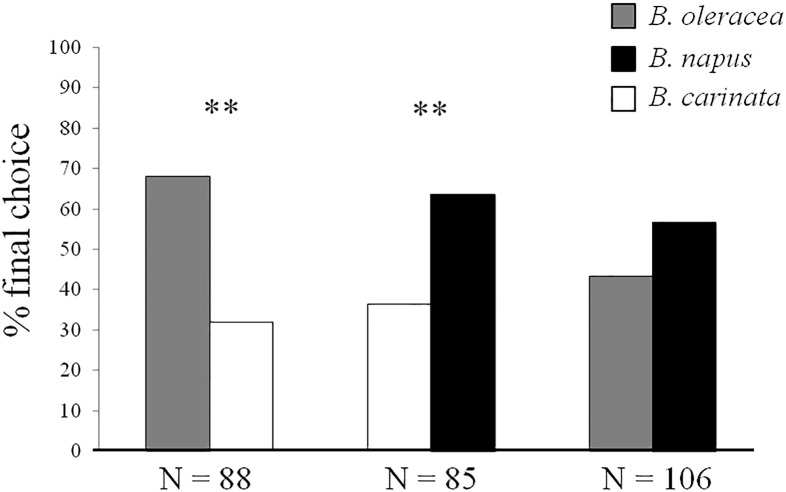
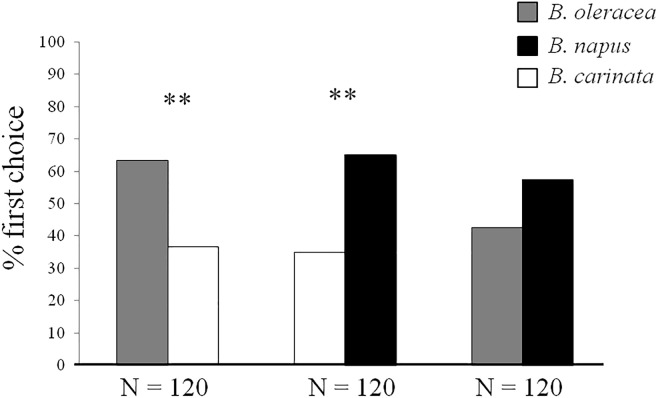
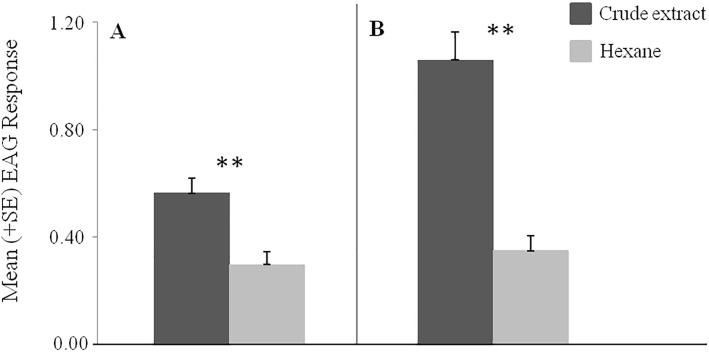
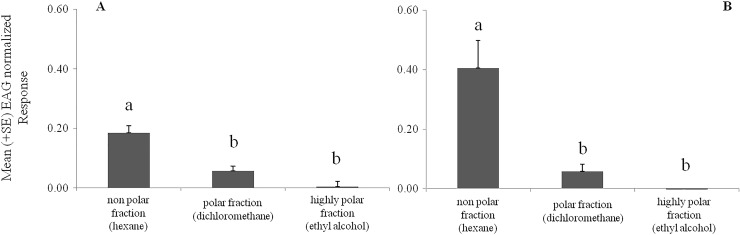
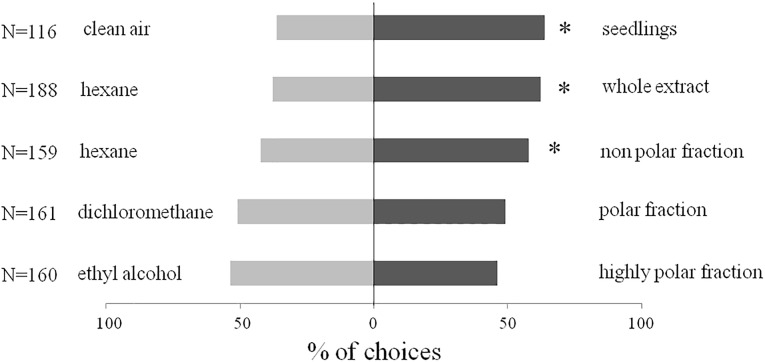
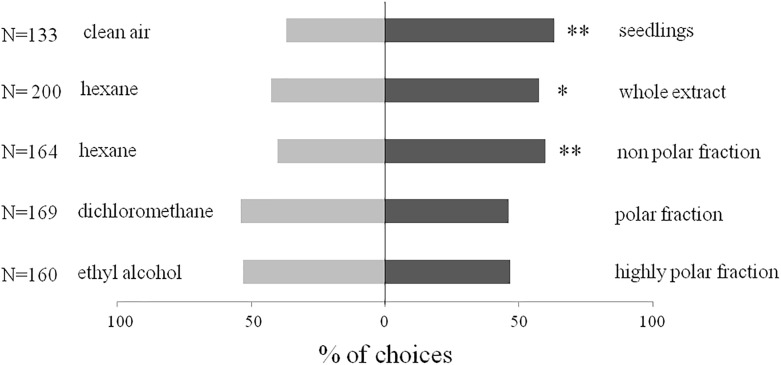
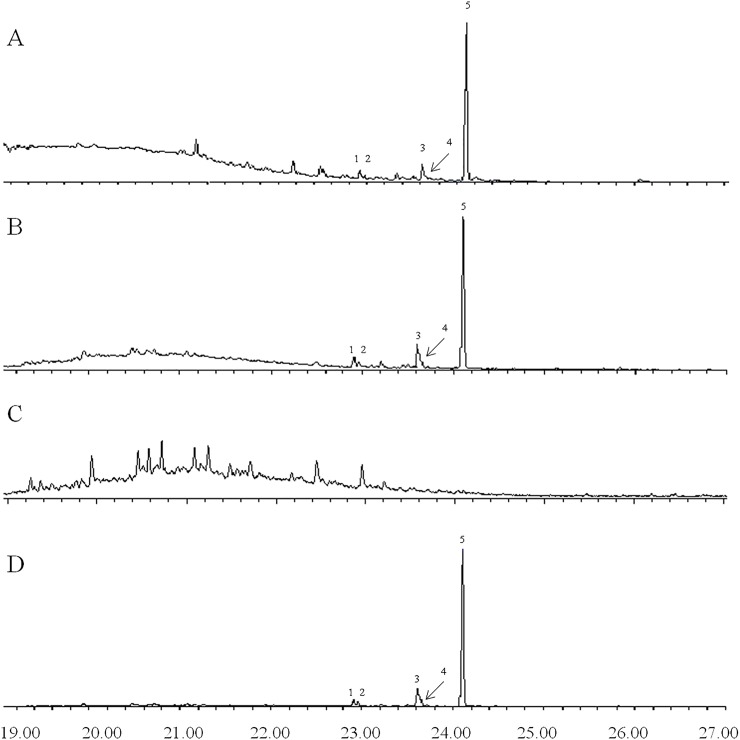
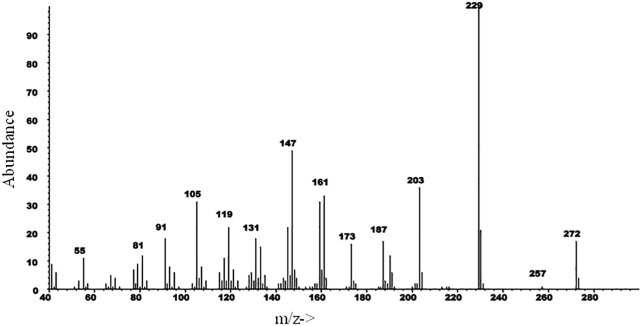
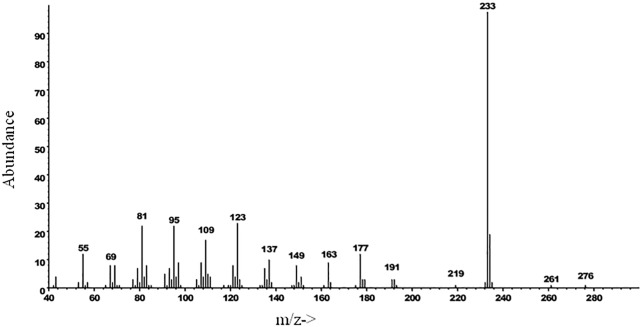
Bagrada hilaris Burmeister, is a stink bug native to Asia and Africa and invasive in the United States, Mexico, and more recently, South America. This species can cause serious damage to various vegetable crops in the genus Brassica, with seedlings being particularly susceptible to B. hilaris feeding activity. In this study, the role of volatile organic compounds (VOCs) emitted by seedlings of three Brassica species on the host preference of B. hilaris was evaluated. In dual choice arena and olfactometer bioassays, adult painted bugs preferred B. oleracea var. botrytis and B. napus over B. carinata. Volatiles from B. oleracea seedlings were collected and bioassayed with B. hilaris adults and late stage nymphs, using electroantennographic (EAG) and behavioral (olfactometer) techniques. When crude extracts of the VOCs from B. oleracea var. botrytis seedlings and liquid chromatography fractions thereof were bioassayed, B. hilaris adults and nymphs were attracted to the crude extract, and to a non-polar fraction containing hydrocarbons, whereas there were no responses to the more polar fractions. GC-MS analysis indicated that the main constituents of the non-polar fraction was an as yet unidentified diterpene hydrocarbon, with trace amounts of several other diterpene hydrocarbons. The major diterpene occurred in VOCs from both of the preferred host plants B. oleracea and B. napus, but not in VOCs of B. carinata. Our results suggest that this diterpene, alone or in combination with one or more of the minor compounds, is a key mediator in this insect-plant interaction, and could be a good candidate for use in lures for monitoring B. hilaris in the field.
Conflict of interest statement
The authors have declared that no competing interests exist.
Figures
References
-
- Huang T-I, Reed DA, Perring TM, Palumbo JC. Feeding damage by Bagrada hilaris (Hemiptera: Pentatomidae) and impact on growth and chlorophyll content of Brassicaceous plant species. Arthropod-Plant Interactions. 2014;8(2):89–100.
-
- Reed DA, Palumbo JC, Perring TM, May C. Bagrada hilaris (Hemiptera: Pentatomidae), an invasive stink bug attacking cole crops in the southwestern United States. Journal of Integrated Pest Management. 2013;4(3):C1–C7.
-
- Bundy CS, Perring TM, Reed DA, Palumbo JC, Grasswitz TR, Jones WA. Bagrada hilaris In: McPherson JE (ed) Invasive Stink Bugs and Related Species (Pentatomoidea): Biology, Higher Systematics, Semiochemistry, and Managemen, CRC Press, Boca Raton, FL: 2018; 205–242.
-
- Palumbo JC, Natwick ET. The bagrada bug (Hemiptera: Pentatomidae): A new invasive pest of cole crops in Arizona and California. Plant Health Prog 2010;10.
-
- Bundy CS, Grasswitz T, Sutherland C. First report of the invasive stink bug Bagrada hilaris (Burmeister)(Heteroptera: Pentatomidae) from New Mexico, with notes on its biology. Southwestern Entomologist. 2012;37(3):411–4.
Publication types
MeSH terms
Substances
LinkOut - more resources
Full Text Sources
Miscellaneous
