


Orexin/hypocretin receptor modulation of anxiolytic and antidepressive responses during social stress and decision-making: Potential for therapy
- PMID: 30590027
- PMCID: PMC6591110
- DOI: 10.1016/j.brainres.2018.12.036
Orexin/hypocretin receptor modulation of anxiolytic and antidepressive responses during social stress and decision-making: Potential for therapy
Abstract
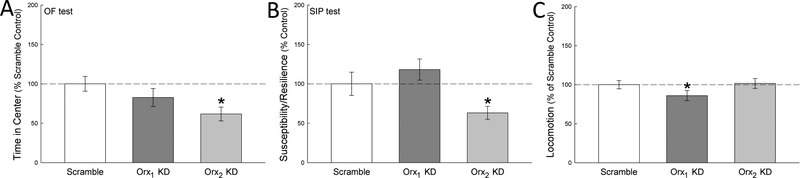
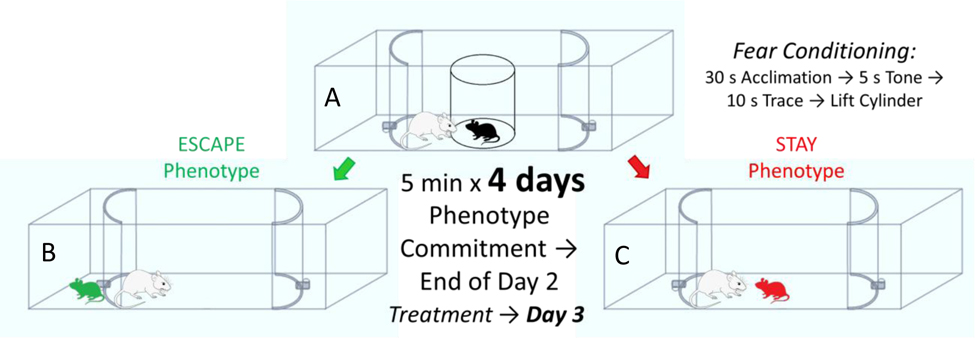
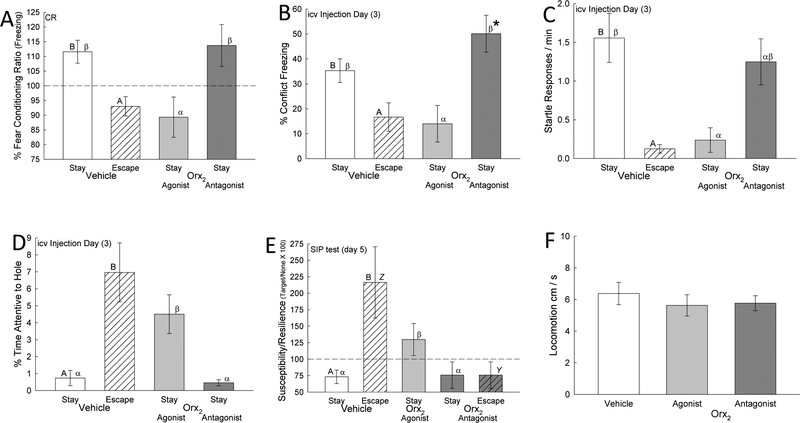
Hypothalmic orexin/hypocretin (Orx) neurons in the lateral and dorsomedial perifornical region (LH-DMH/PeF) innervate broadly throughout the brain, and receive similar inputs. This wide distribution, as well as two Orx peptides (OrxA and OrxB) and two Orx receptors (Orx1 and Orx2) allow for functionally related but distinctive behavioral outcomes, that include arousal, sleep-wake regulation, food seeking, metabolism, feeding, reward, addiction, and learning. These are all motivational functions, and tie the orexin systems to anxiety and depression as well. We present evidence, that for affective behavior, Orx1 and Orx2 receptors appear to have opposing functions. The majority of research on anxiety- and depression-related outcomes has focused on Orx1 receptors, which appear to have primarily anxiogenic and pro-depressive actions. Although there is significant research suggesting contrary findings, the primary potential for pharmacotherapies linked to the Orx1 receptor is via antagonists to block anxious and depressive behavior. Dual orexin receptor antagonists have been approved for treatment of sleep disorders, and are likely candidates for adaptation for affect disorder treatments. However, we present evidence here that demonstrates the Orx2 receptors are anxiolytic and antidepressive. Using a new experimental pre-clinical model of anxious and depressive behavior stimulated by social stress and decision-making that produces two stable behavioral phenotypes, Escape/Resilient and Stay/Susceptible, we tested the effects of intracerebroventricular injections of Orx2 agonist and antagonist drugs. Over ten behavioral measures, we have demonstrated that Orx2 agonists promote resilience, as well as anxiolytic and antidepressive behavior. In contrast, Orx2 antagonists or knockdown kindle anxious and pro-depressive behavior plus increase susceptibility. The results suggest that the Orx2 receptor may be a useful target for pharmacotherapies to treat anxiety and depression.
Keywords: Anxiety; Depression; Fear conditioning; Orexin 2 receptor; Social defeat; Stress-Alternatives Model.
Copyright © 2018 The Authors. Published by Elsevier B.V. All rights reserved.
Figures
References
-
- Aboul-Fotouh S, Habib M, Asaad T, Kassim SK, Ghanem MH, 2018. Behavioral effects of toll-like receptor-4 antagonist ‘eritoran’ in an experimental model of depression: role of prefrontal and hippocampal neurogenesis and gamma-aminobutyric acid/glutamate balance. Behav Pharmacol. - PubMed
-
- Achua JK, Callahan LB, Brudvig JJ, Summers CH, Ronan PJ, 2014. Cross-talk between orexin/hypocretin and corticotropin releasing factor systems: a combined re trograde tracer immunohistochemical study Society for Neuroscience Abstracts. 40, 78.06.
-
- Allard JS, Tizabi Y, Shaffery JP, Trouth CO, Manaye K, 2004. Stereological analysis of the hypothalamic hypocretin/orexin neurons in an animal model of depression. Neuropeptides. 38, 311–5. - PubMed
-
- Allcoat D, Greville WJ, Newton PM, Dymond S, 2015. Frozen with fear: Conditioned suppression in a virtual reality model of human anxiety. Behav Processes. 118, 98–101. - PubMed
Publication types
MeSH terms
Substances
Grants and funding
LinkOut - more resources
Full Text Sources
Other Literature Sources
Medical
Miscellaneous
