


Higher Fecal Short-Chain Fatty Acid Levels Are Associated with Gut Microbiome Dysbiosis, Obesity, Hypertension and Cardiometabolic Disease Risk Factors
- PMID: 30591685
- PMCID: PMC6356834
- DOI: 10.3390/nu11010051
Higher Fecal Short-Chain Fatty Acid Levels Are Associated with Gut Microbiome Dysbiosis, Obesity, Hypertension and Cardiometabolic Disease Risk Factors
Abstract
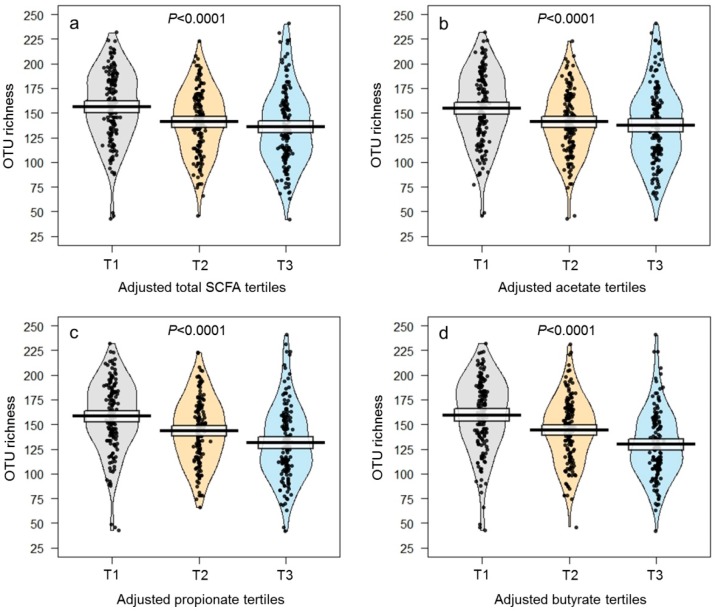
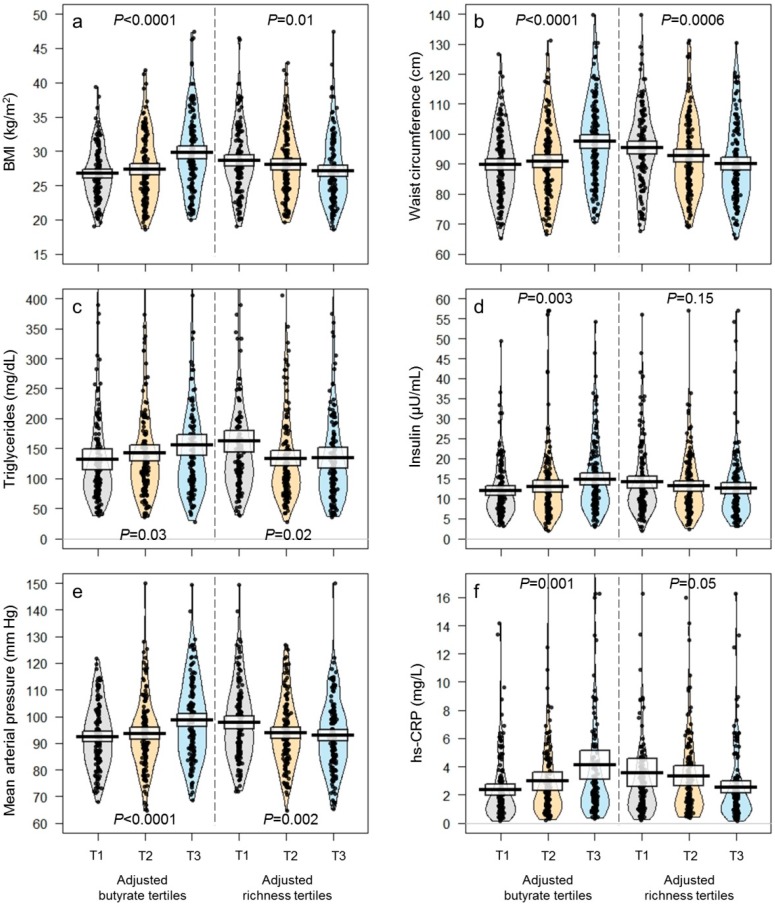
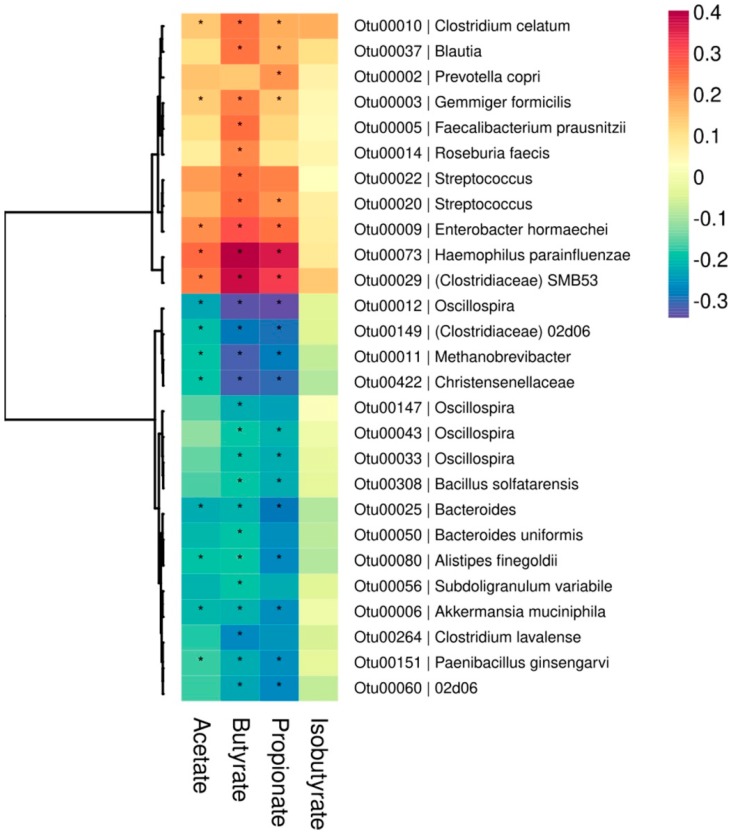
Fiber fermentation by gut microbiota yields short-chain fatty acids (SCFAs) that are either absorbed by the gut or excreted in feces. Studies are conflicting as to whether SCFAs are beneficial or detrimental to cardiometabolic health, and how gut microbiota associated with SCFAs is unclear. In this study of 441 community-dwelling adults, we examined associations of fecal SCFAs, gut microbiota diversity and composition, gut permeability, and cardiometabolic outcomes, including obesity and hypertension. We assessed fecal microbiota by 16S rRNA gene sequencing, and SCFA concentrations by gas chromatography/mass spectrometry. Fecal SCFA concentrations were inversely associated with microbiota diversity, and 70 unique microbial taxa were differentially associated with at least one SCFA (acetate, butyrate or propionate). Higher SCFA concentrations were associated with a measure of gut permeability, markers of metabolic dysregulation, obesity and hypertension. Microbial diversity showed association with these outcomes in the opposite direction. Associations were significant after adjusting for measured confounders. In conclusion, higher SCFA excretion was associated with evidence of gut dysbiosis, gut permeability, excess adiposity, and cardiometabolic risk factors. Studies assessing both fecal and circulating SCFAs are needed to test the hypothesis that the association of higher fecal SCFAs with obesity and cardiometabolic dysregulation is due to less efficient SCFA absorption.
Keywords: SCFA; adiposity; butyrate; gut microbiota; gut permeability; hypertension; metabolic dysregulation.
Conflict of interest statement
While engaged in this project, J.d.l.C.-Z., E.P.V.-M., J.A.S., V.C.-A., and J.S.E. were employed by a food company; J.A.C. and J.M.A. were employed by health provider companies; N.T.M. and R.A.-Q. declare no conflicts of interest. The funders had no role in the design of the study; in the collection, analyses, or interpretation of data; in the writing of the manuscript, or in the decision to publish the results.
Figures
References
-
- Den Besten G., Lange K., Havinga R., van Dijk T.H., Gerding A., van Eunen K., Muller M., Groen A.K., Hooiveld G.J., Bakker B.M., et al. Gut-derived short-chain fatty acids are vividly assimilated into host carbohydrates and lipids. AJP Gastrointest. Liver Physiol. 2013;305:G900–G910. doi: 10.1152/ajpgi.00265.2013. - DOI - PubMed
-
- Kelly C.J., Zheng L., Campbell E.L., Saeedi B., Scholz C.C., Bayless A.J., Wilson K.E., Glover L.E., Kominsky D.J., Magnuson A., et al. Crosstalk between microbiota-derived short-chain fatty acids and intestinal epithelial HIF augments tissue barrier function. Cell Host Microbe. 2015;17:662–671. doi: 10.1016/j.chom.2015.03.005. - DOI - PMC - PubMed
MeSH terms
Substances
Grants and funding
LinkOut - more resources
Full Text Sources
Medical
