


Transforming brain signals related to value evaluation and self-control into behavioral choices
- PMID: 30593684
- PMCID: PMC6865472
- DOI: 10.1002/hbm.24379
Transforming brain signals related to value evaluation and self-control into behavioral choices
Erratum in
-
Corrigendum to Zha (2019), Transforming brain signals related to value evaluation and self-control into behavioural choices.Hum Brain Mapp. 2020 Oct 1;41(14):4148-4149. doi: 10.1002/hbm.25113. Epub 2020 Jul 16. Hum Brain Mapp. 2020. PMID: 33448516 Free PMC article. No abstract available.
Abstract
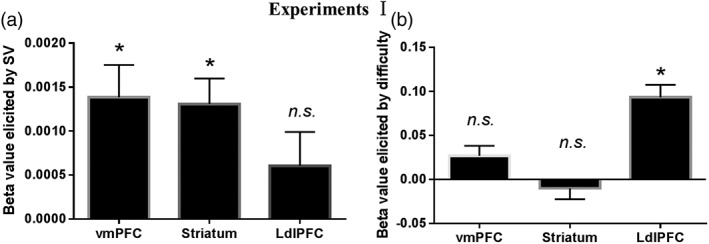
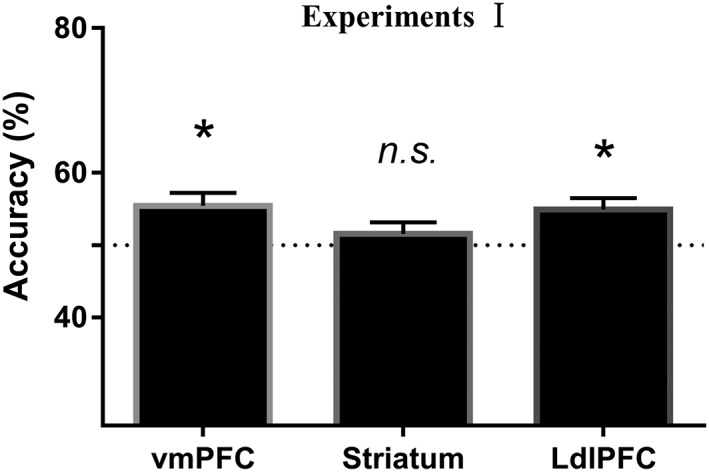
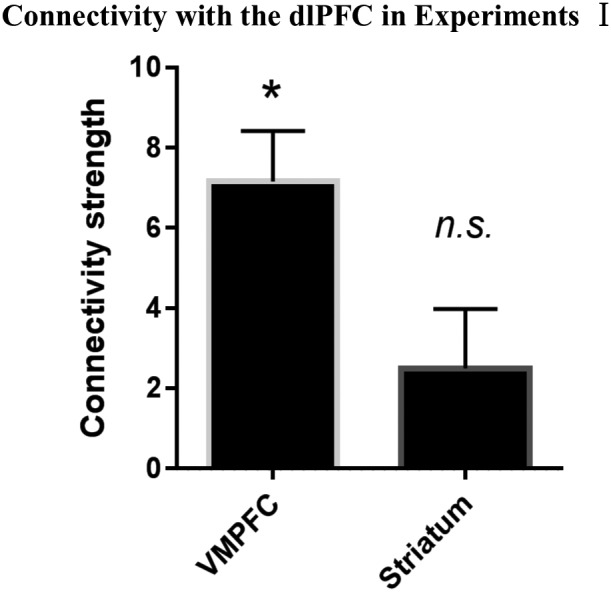
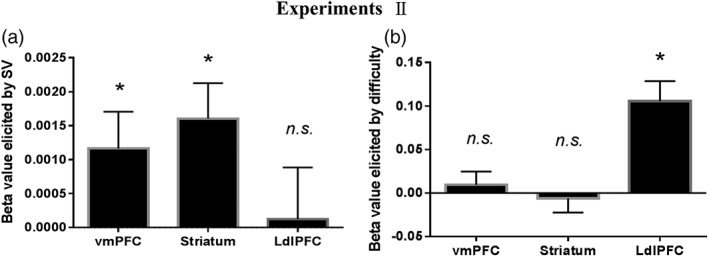
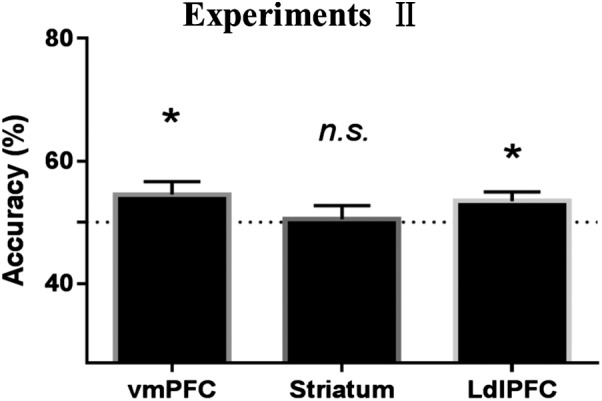
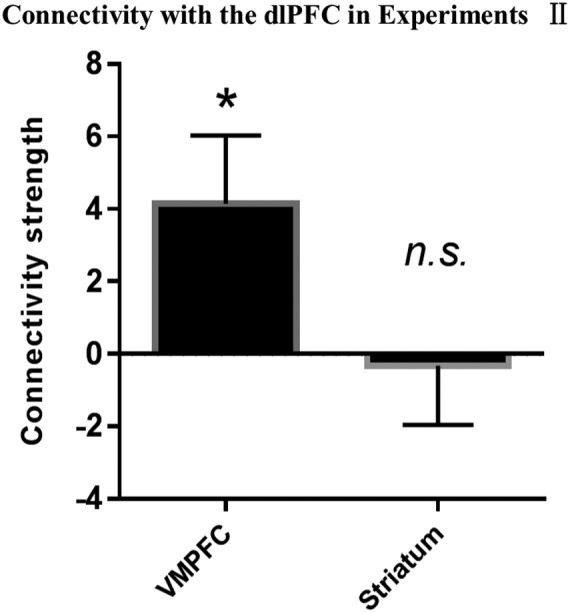
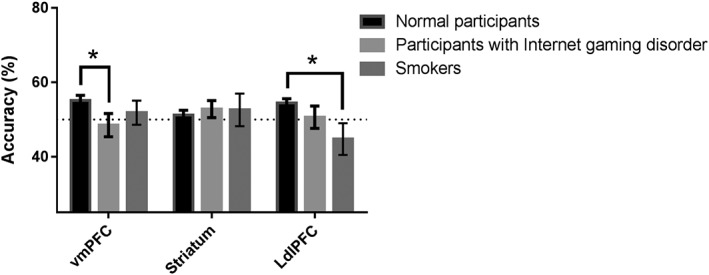
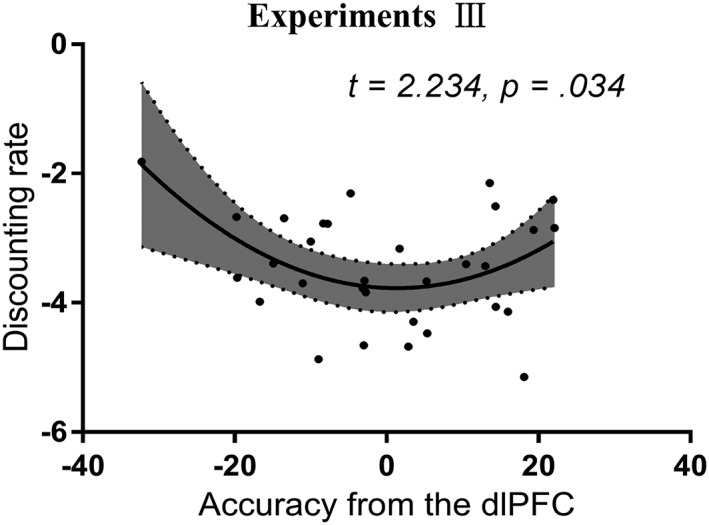
The processes involved in value evaluation and self-control are critical when making behavioral choices. However, the evidence linking these two types of processes to behavioral choices in intertemporal decision-making remains elusive. As the ventromedial prefrontal cortex (vmPFC), striatum, and dorsolateral prefrontal cortex (dlPFC) have been associated with these two processes, we focused on these three regions. We employed functional magnetic resonance imaging during a delayed discounting task (DDT) using a relatively large sample size, three independent samples. We evaluated how much information about a specific choice could be decoded from local patterns in each brain area using multivoxel pattern analysis (MVPA). To investigate the relationship between the dlPFC and vmPFC/striatum regions, we performed a psychophysiological interaction (PPI) analysis. In Experiment I, we found that the vmPFC and dlPFC, but not the striatum, could determine choices in healthy participants. Furthermore, we found that the dlPFC showed significant functional connectivity with the vmPFC, but not the striatum, when making decisions. These results could be replicated in Experiment II with an independent sample of healthy participants. In Experiment III, the choice-decoding accuracy in the vmPFC and dlPFC was lower in patients with addiction (smokers and participants with Internet gaming disorder) than in healthy participants, and decoding accuracy in the dlPFC was related to impulsivity in addicts. Taken together, our findings may provide neural evidence supporting the hypothesis that value evaluation and self-control processes both guide the intertemporal choices, and might provide potential neural targets for the diagnosis and treatment of impulsivity-related brain disorders.
Keywords: functional magnetic resonance imaging; intertemporal decision-making; multivoxel pattern analysis; self-control; valuation.
© 2018 Wiley Periodicals, Inc.
Conflict of interest statement
The authors declare no potential conflict of interests.
Figures
References
-
- Al Omari, O. , Razeq, N. M. A. , & Fooladi, M. M. (2016). Experience of menarche among Jordanian adolescent girls: An interpretive phenomenological analysis. Journal of Pediatric and Adolescent Gynecology, 29, 246–251. - PubMed
Publication types
MeSH terms
Grants and funding
- 2016YFA0400900/The National Key Basic Research Program/International
- 2018YFC0831101/The National Key Basic Research Program/International
- 31471071/National Natural Science Foundation of China/International
- 31771221/National Natural Science Foundation of China/International
- 31800927/National Natural Science Foundation of China/International
LinkOut - more resources
Full Text Sources
Research Materials
Miscellaneous
