


Acute caffeine supplementation in combat sports: a systematic review
- PMID: 30594211
- PMCID: PMC6310931
- DOI: 10.1186/s12970-018-0267-2
Acute caffeine supplementation in combat sports: a systematic review
Abstract
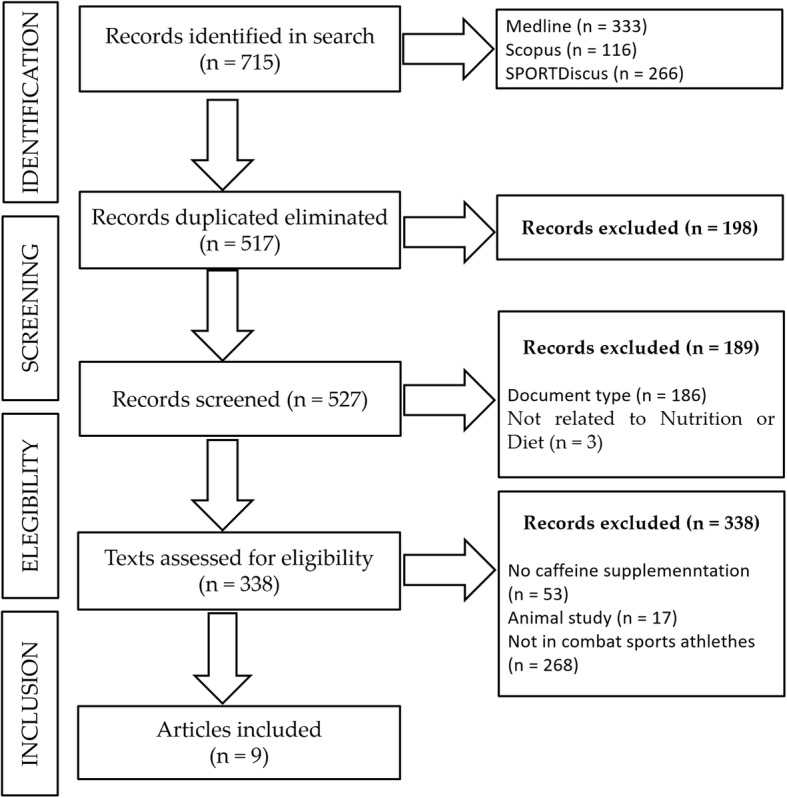
Caffeine used as a supplement has been shown to improve physical and cognitive performance in several sport modalities due to its effects on the central nervous system. This review assesses the direct effects of caffeine supplementation on performance in combat sports. Using the PRISMA (Preferred Reporting Items for Systematic Review and Meta-Analysis) guidelines, relevant studies were identified through the Medline, Scopus and SPORTDiscus databases. Of 1053 search results, only 9 articles fulfilled the inclusion criteria. Of these, three studies detected no ergogenic effect of caffeine supplementation, while six studies did observe a significant positive effect. Supplementation with 3-6 mg/kg of caffeine was found to increase the glycolytic contribution to energy metabolism during the execution of real or simulated combats, as indicated by elevated blood lactate concentrations. Caffeine intake was also noted to improve levels of strength, power and upper arm muscular endurance. These effects were not paralleled by an increase in the exertion perceived by the athlete.
Keywords: Athlete; Ergogenic aid; Sport performance; Sport supplements.
Conflict of interest statement
Ethics approval and consent to participate
Not applicable
Consent for publication
Not applicable
Competing interests
The authors declare that they have no competing interests.
Publisher’s Note
Springer Nature remains neutral with regard to jurisdictional claims in published maps and institutional affiliations.
Figures
References
-
- Domínguez R, Mata-Ordoñez F, Sánchez-Oliver AJ. Nutrición Deportiva Aplicada: Guía para Optimizar el Rendimiento. ICB Editores, editor. Malaga, España; 2017. 397 p. Available from: https://books.google.es/books?hl=en&lr=&id=ChkwDwAAQBAJ&oi=fnd&pg=PT12&d... [cited 22 Aug 2018]
-
- Mata F, Sanchez-Oliver A, Domínguez R. Importancia de la nutrición en las estrategias de pérdida de peso en deportes de combate. J Sport Heal Res. 2018;10:1–12.
Publication types
MeSH terms
Substances
LinkOut - more resources
Full Text Sources
Medical
