


Trauma Technical Skill and Management Exposure for Junior Surgical Residents - The "SAVE Lab 1.0"
- PMID: 30595474
- PMCID: PMC6615483
- DOI: 10.1016/j.jsurg.2018.12.003
Trauma Technical Skill and Management Exposure for Junior Surgical Residents - The "SAVE Lab 1.0"
Abstract
Objective: The "Surgery for Abdomino-thoracic ViolencE (SAVE)" animate lab engages surgical residents in the management of complex penetrating injuries. We hypothesized that residents will improve their understanding of the management of trauma patients and will perform skills that they have not previously performed in training.
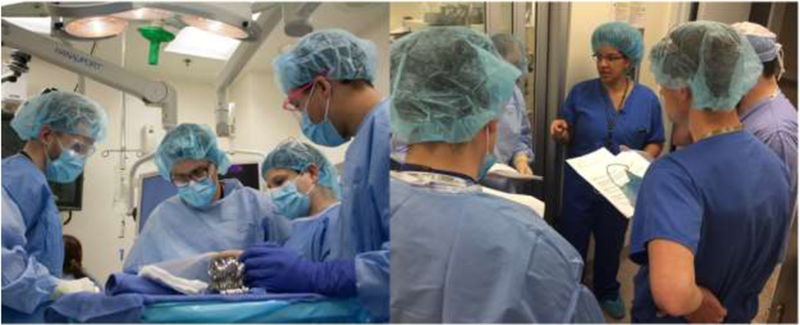
Design: Pre- and postlab assessments were reviewed from surgical residents participating in the SAVE lab over 2 years (2017-2018). Residents of varying levels were grouped and reviewed "real-life" trauma scenarios with supplemental imaging. Seniors were tasked with creating injuries while juniors performed as primary surgeons under supervision. Each successive scenario increased in difficulty, from hollow viscus injury and solid organ disruption, to great vessel and cardiac injuries with the goal to "SAVE" the patient. Assessments included a pre- and postlab multiple-choice questionnaire of trauma management knowledge and a survey of completed technical skills.
Setting: Academic General Surgery residency program.
Participants: General, Vascular, Urology, and Plastic Surgery PGY1 to PGY5 residents.
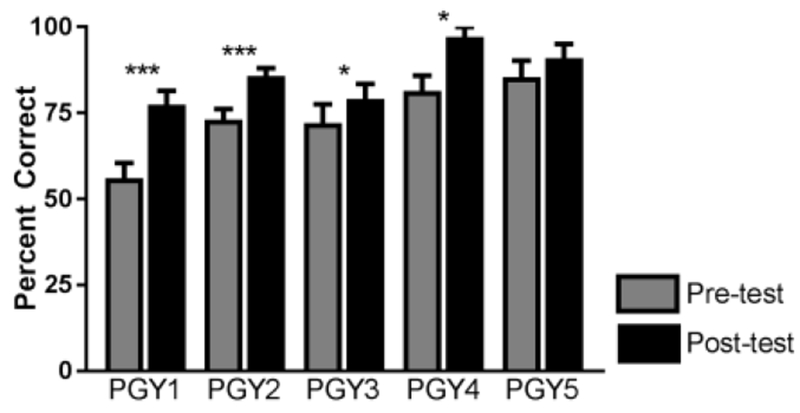
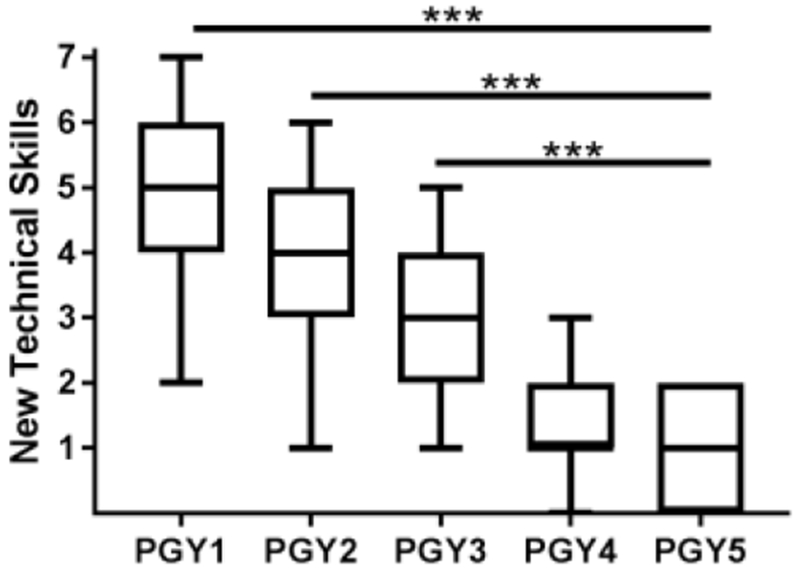
Results: One hundred and nineteen residents participated in the SAVE lab in 2017 and 2018. PGY1 to PGY4 residents showed significant improvement in knowledge of trauma management on matched pre- and postlab assessments. The most significant improvement was seen in the PGY1 and PGY2 residents, with scores increasing by 21% (p < 0.001) and 13% (p < 0.001), respectively. PGY1-3 residents had a significant increase in new technical skills acquisition. PGY5 residents showed no significant changes in either realm.
Conclusions: The SAVE lab was effective in increasing junior surgical residents' technical skills as well as fund of knowledge related to complex trauma care. While seniors had previously performed most of these skills as reflected in their assessments, the SAVE lab provided a way for them to assume the role of team leader, guiding management of complex, and high acuity situations. Future endeavors include teamwork and leadership skills' assessment through the SAVE lab.
Keywords: Interpersonal and Communication Skills; Medical Knowledge; Patient Care; curriculum; developing individual competence; resident education; surgery simulation; team learning; trauma.
Copyright © 2018 Association of Program Directors in Surgery. Published by Elsevier Inc. All rights reserved.
Figures
References
-
- American College of Surgeons. National Trauma Data Bank Report 2016. Chicago, IL: American College of Surgeons; 2016.
-
- National Center for Injury Prevention and Control. WISQARS database query: Fatal Injury Reports. Center for Disease Control and Prevention; 1999-2016.
-
- (ACGME) ACGME. ACGME Program Requirements for Graduate Medical Education in General Surgery 2017.
-
- Mirabile F Chicago Still Isn’t the Murder Capital of America. The Trace. January 18, 2017.
MeSH terms
Grants and funding
LinkOut - more resources
Full Text Sources
Miscellaneous
